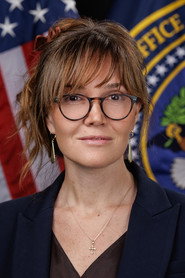
Amaryllis Fox
Self
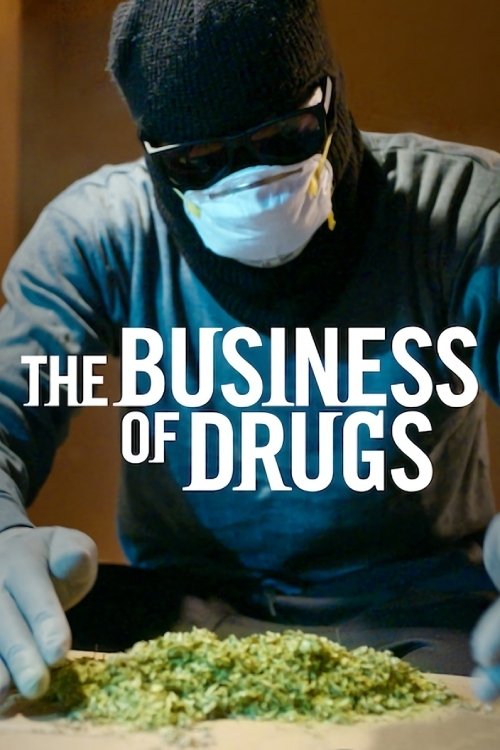
To detail how drugs push people into risky — even deadly — behaviors, a former CIA analyst investigates the economics of six illicit substances.
Official
I’ve watched enough drug documentaries to know the drill: aerial shots of jungle labs, masked cartel lieutenants, DEA agents with mirrored sunglasses. The Business of Drugs wants to break that cycle. It’s not about the violence—though there’s plenty of that—it’s about the math. The ledger.
The way a kilo of cocaine becomes a kilo of profit, and how that profit warps everything it touches. Hosted by Amaryllis Fox, a former CIA analyst with a voice like a scalpel and the kind of calm that makes you lean in, the series promises to treat the drug trade as what it is: a business. Not a morality play, not a crime spree, but an industry.
And like any industry, it thrives on supply, demand, and the failures of regulation.
That’s the theory, anyway. In practice, the show is a study in contradictions. It wants to be The Wire meets Freakonomics, but it often settles for something closer to a TED Talk with B-roll.
The first episode, on cocaine, opens with Fox standing in a Colombian coca field, holding a leaf like it’s a prop in a high school economics demo. "This isn’t about good guys and bad guys," she says. "It’s about dollars per gram."
The camera lingers on a farmer’s hands, calloused and precise, as he explains how much he earns per harvest. It’s a strong start—until the episode cuts to a Miami nightclub, where a dealer in a Versace shirt brags about his margins. The tonal whiplash is jarring.
One minute, you’re in the mud with subsistence farmers; the next, you’re in a VIP booth with a guy who calls his product "fish scale" like it’s a Yelp review.
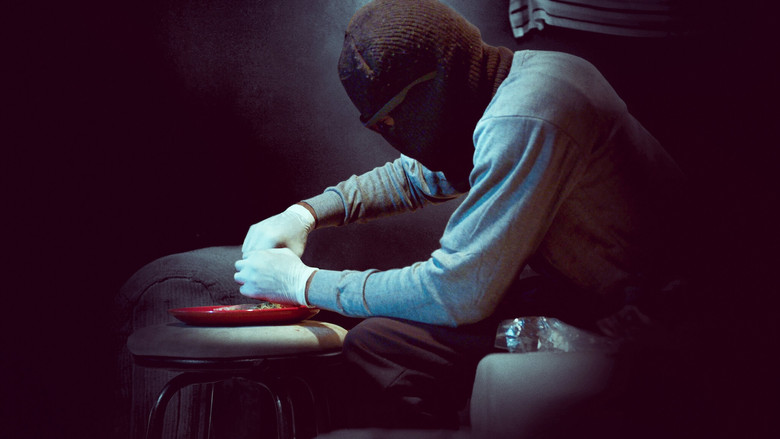
The series’ greatest strength is its refusal to sensationalize. There are no slow-motion shots of cash being counted, no dramatic reenactments of busts. Instead, we get spreadsheets.
Literal spreadsheets. Fox walks us through the markup on heroin as it moves from Afghanistan to the streets of Chicago, and the numbers are staggering: a a reported budget kilo in Kabul becomes a reported budget by the time it reaches a Midwestern suburb. The show’s diagrams—arrows tracing supply routes, bar graphs showing price fluctuations—are oddly hypnotic.
They make the drug trade feel less like a shadowy conspiracy and more like what it is: a globalized market, as rational and ruthless as any other.
But for all its economic rigor, The Business of Drugs struggles to escape the gravitational pull of its own premise. The problem isn’t that it’s too dry; it’s that it’s too safe. The series tiptoes around the most interesting questions.
Take the episode on opioids, which should be a gut-punch. Instead of diving into the complicity of pharmaceutical companies, we get a perfunctory tour of a pill mill in Florida. Fox interviews a former addict, a doctor, a DEA agent—all the expected players—but the episode never quite lands the indictment it’s reaching for.
The closest it comes is a quiet moment when a recovering user describes how easy it was to get a prescription. "I didn’t even have to ask," he says. The camera holds on his face, but the show moves on too quickly, as if afraid to linger in the discomfort.
The cannabis episode is where the series comes closest to finding its footing. Here, the contradictions of legalization are laid bare: California’s legal market is drowning in red tape, while the black market thrives because it’s cheaper and easier. Fox visits a dispensary owner who complains about taxes, then a black-market grower who brags about undercutting him.
The episode’s thesis—that prohibition creates more problems than it solves—isn’t new, but the on-the-ground reporting makes it feel urgent. For once, the series lets its subjects speak without rushing to the next talking point. A grower in Humboldt County puts it bluntly: "The government doesn’t want to legalize it.
They want to control it." The camera stays on him as he lights a joint, the smoke curling into the Northern California air. It’s the closest the series comes to poetry.

The weakest link is Fox herself. She’s clearly knowledgeable, but her role oscillates between investigator, narrator, and moral compass, and the shifts can feel unearned. In the field, she’s all business—interviewing dealers, farmers, and chemists with a detached professionalism.
But in the studio segments, she adopts a more reflective tone, as if she’s processing what she’s seen. The problem is that the show never quite reconciles these two versions of her. Is she a journalist, a former spy, or a guide for the audience?
The answer seems to be all three, and the result is a host who often feels like a guest in her own documentary.
The series’ most frustrating habit is its American myopia. For a show about a global industry, it spends an inordinate amount of time in the U.S. The heroin episode, for example, traces the supply chain from Afghanistan to Chicago but barely mentions Europe, where the majority of Afghan heroin actually ends up.
The meth episode focuses on American labs and users, ignoring the fact that Mexico is now the world’s largest producer. It’s a missed opportunity. The drug trade isn’t just an American story; it’s a global one, and the series’ narrow focus makes it feel smaller than it should.
That said, there are moments when The Business of Drugs transcends its limitations. The episode on synthetics—MDMA, in particular—is the most compelling. Fox visits a lab in the Netherlands, where a chemist in a white coat explains how easy it is to tweak a molecule to stay ahead of the law.
"It’s like whack-a-mole," he says. The episode cuts to a festival in Portugal, where drug testing is legal and harm reduction is the norm. The contrast is stark: in one country, users are treated as criminals; in another, they’re treated as people.
The series doesn’t hammer the point home, but it doesn’t need to. The images speak for themselves.
Critics have been divided. Adrian Horton in The Guardian praised the show’s economic focus, calling it "straightforward regarding dollars per gram and price increases by mile of transport." John Serba at Decider was more measured, writing that the series "settles into the nitty-gritty of the trade but occasionally feels incomplete."
Greg Wheeler at The Review Geek was outright dismissive, calling it a "shallow experience" that pales in comparison to other documentaries in the genre. I’d split the difference. The Business of Drugs isn’t shallow, but it’s not deep enough. It’s a series that knows what it wants to say but often struggles to say it with the force it deserves.
What lingers, in the end, isn’t the analysis or the economics. It’s the people. The coca farmer in Colombia who says he’d grow something else if he could.
The opioid user in Ohio who describes addiction as "a full-time job." The black-market cannabis grower in California who just wants to be left alone. The series’ greatest failure is that it doesn’t trust these voices enough.
It’s so focused on the big picture that it forgets to sit with the small ones. The drug trade isn’t just a business. It’s a collection of lives, and lives don’t fit neatly into spreadsheets.
I kept thinking about something Fox says in the final episode: "The war on drugs was never about drugs. It was about control." It’s a good line, but the series doesn’t do enough to prove it.
Maybe that’s the point. Maybe the show isn’t here to provide answers, but to ask questions. If so, it succeeds.
But I can’t shake the feeling that it could have asked better ones.
"An insightful but uneven dive into the global drug trade, anchored by Amaryllis Fox’s compelling perspective."
The series takes a fresh angle on the drug trade, blending investigative depth with personal storytelling. Amaryllis Fox’s background and on-screen presence stand out, adding credibility and engagement. The pacing is inconsistent, though, and the scope sometimes too broad, leaving certain topics underdeveloped.
Netflix’s 2020 docuseries The Business of Drugs promised a rare deep dive into the global narcotics trade, but its journey from concept to screen was nearly as twisty as the cartels it investigated. Fronted by Amaryllis Fox—a former CIA officer turned activist—the six-part series blended undercover footage, expert interviews, and Fox’s own insider perspective to dissect the economics of everything from cocaine to synthetic opioids. latestnetflix.com's read is that Yet behind the slick production, sources suggest the project faced unexpected hurdles, from casting controversies to a second season that may never arrive.
Amaryllis Fox’s involvement was a major selling point for The Business of Drugs. The ex-CIA analyst, known for her memoir Life Undercover, brought credibility to a subject often clouded by sensationalism. But her casting wasn’t a foregone conclusion. Early buzz suggested Netflix considered a more traditional investigative journalist for the role, only pivoting to Fox after her book gained traction in 2019. Her background—spending nearly a decade infiltrating terrorist networks—lent the series an air of authenticity, though some critics questioned whether her expertise skewed more toward counterterrorism than drug trafficking.
Fox’s on-screen presence was polarizing. While some praised her ability to humanize the drug war’s victims, others found her delivery overly rehearsed, as if she were still in "briefing mode". The series’ 6.5/10 rating on SensCritique hints at mixed reception, with viewers split between those who appreciated its data-driven approach and those who wanted grittier, less polished storytelling.
The Business of Drugs arrived at the peak of Netflix’s true-crime boom, but it wasn’t initially pitched as a docuseries. Insiders suggest the project began as a single documentary feature before executives greenlit an expanded season. The shift to a six-episode format allowed the team to tackle distinct markets—cocaine, heroin, meth, opioids, cannabis, and synthetics—though some critics argued the episodes felt disjointed, as if stretched to fit the runtime.
The series’ production timeline was unusually tight. Filming reportedly wrapped in early 2020, just as the COVID-19 pandemic disrupted global travel. This may explain why some segments relied heavily on archival footage and expert talking heads rather than fresh undercover work. Rumors persist that Fox and the crew faced visa issues while attempting to film in high-risk regions, though Netflix has never confirmed these setbacks [unconfirmed].
Despite early chatter about a follow-up, The Business of Drugs Season 2 remains in limbo. A YouTube trailer for a potential second season surfaced in 2021, teasing new investigations into the fentanyl crisis and darknet markets. However, Netflix has yet to announce an official renewal, and Fox’s subsequent projects—including a podcast and a second memoir—suggest her focus has shifted [unconfirmed].
The series’ fate may hinge on its performance. While Netflix rarely shares viewership data, the lack of awards buzz or critical acclaim could explain the delay. If a second season does materialize, it would likely double down on synthetic drugs, a topic the first season only scratched the surface of.
The Business of Drugs had all the ingredients for a breakout hit: a compelling host, a timely topic, and Netflix’s marketing muscle. Yet its uneven execution left some viewers wanting more. The series’ greatest strength—its focus on the business side of drugs—also became its limitation, as it often prioritized supply-chain logistics over human stories. For a project that promised to expose the underbelly of the narcotics trade, it sometimes felt too sanitized, too safe.
Still, Fox’s involvement ensured the series stood out in a crowded genre. Whether Netflix revives it or lets it fade into obscurity may depend on whether audiences demand a deeper, messier dive into the world’s most lucrative illegal industry.
Entertainment rumors and trivia aggregated from public reporting. Treat speculation as unverified unless a cited source confirms it.
More titles in the same genres and with the same cast.