Trial 4
2020 Series

In the early 2000s, Yoo Young-chul hammered his victims to death and cast fear across Seoul. This docuseries recounts the hunt for a prolific killer.
I’ve watched enough true crime to know the rhythm by now: the grainy reenactments, the solemn voiceover, the slow unspooling of a killer’s mind like a cheap horror flick. But The Raincoat Killer: Chasing a Predator in Korea doesn’t just follow the formula—it drags it into the light, forces you to look at the seams. This isn’t a story about a monster.
It’s about the people who had to live with one.
The series opens with a quiet that feels like holding your breath. Seoul in the early 2000s, a city of neon and noise, suddenly frozen in the grip of something unspeakable. Yoo Young-chul didn’t just kill—he bludgeoned, he dismembered, he left bodies in the hills like discarded trash.
And for a while, he moved through the city unseen, a ghost in a raincoat. The first episode lingers on the mundane details: the way he lured victims with offers of cheap massages, the way he washed his hands in public restrooms after. It’s the banality of evil, yes, but also the banality of fear.
How do you sleep when the man next to you on the subway might be the one who did this?
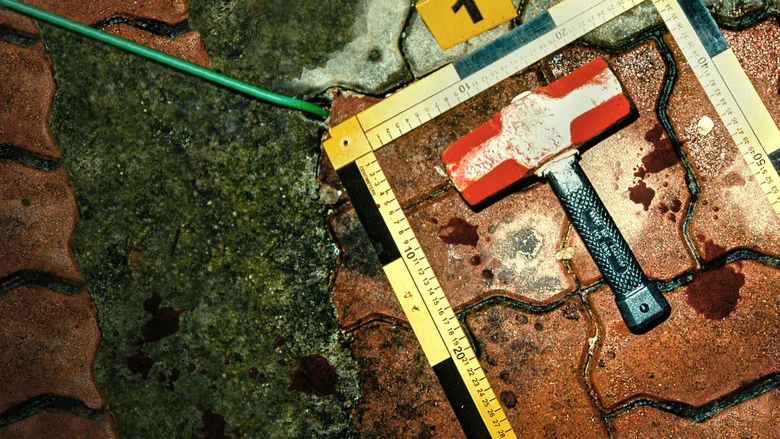
The documentary’s strength is in its refusal to sensationalize. There are no dramatic reenactments of the murders, no ominous music swelling over crime scene photos. Instead, it leans on interviews—detectives, journalists, the families of victims—who speak in flat, exhausted tones.
One detective, his face lined with years of sleepless nights, describes the moment they realized the killings were connected. “We thought it was a gang thing,” he says. “Then we thought it was a serial killer. Then we realized we had no idea what we were dealing with.” The camera holds on his face, and you can see the weight of that realization settling into his bones.
What’s striking is how the series frames the investigation as a collective failure. The police were slow to connect the dots, the media sensationalized the case into a spectacle, and the public oscillated between terror and morbid fascination. At one point, a journalist recalls how tabloids printed maps of the killer’s suspected movements, turning fear into a kind of macabre tourism.
It’s a familiar story, but the specificity of the Korean context gives it fresh urgency. This isn’t just another American true crime saga—it’s a story about a society grappling with the idea that evil can wear a raincoat and ride the subway like anyone else.
The third episode is where the series stumbles, if only slightly. It shifts focus to the trial, and the pacing drags under the weight of legal minutiae. But even here, there’s a moment that lingers: Yoo Young-chul, in court, smirking as he describes his crimes.
The camera doesn’t flinch. It doesn’t need to. His smirk is enough.
It’s the kind of detail that haunts you long after the credits roll.
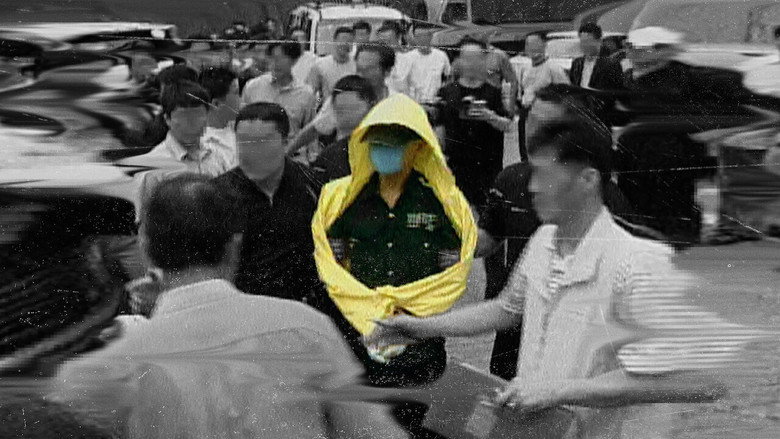
I keep thinking about the victims. Not as statistics, not as props in a killer’s narrative, but as people who left behind families, friends, lives that were abruptly cut short. The series doesn’t dwell on them—true crime rarely does—but their absence is palpable.
One mother, her voice barely above a whisper, describes the last time she saw her daughter. “She was wearing a yellow sweater,” she says. That’s all. The yellow sweater becomes a symbol of everything lost, a detail so small and so devastating it feels like a punch to the gut.
The Raincoat Killer isn’t perfect. It’s uneven in places, and it doesn’t offer the kind of neat resolution true crime often promises. But maybe that’s the point.
Some stories don’t end. They just fade into the background, leaving behind a quiet, gnawing dread. This series doesn’t just chase a predator—it chases the question of what it means to live in a world where someone like Yoo Young-chul can exist.
And for that, it’s worth watching. Even if you can’t look away. Especially if you can’t.
"A gripping, unsettling true-crime documentary on one of South Korea's most chilling serial killer cases."
The series is praised for its thorough investigation of the killer's methods and the police pursuit. Some find the graphic details and slow pacing hard to endure, and it lacks the polish of mainstream true-crime documentaries.
Netflix’s 2021 docuseries The Raincoat Killer: Chasing a Predator in Korea dives into one of South Korea’s most horrifying criminal sagas—the reign of terror by Yoo Young-chul, a serial killer who eluded authorities for months while claiming at least 20 lives. Directed by John Choi and Rob Sixsmith, the series reconstructs the investigation through dramatic reenactments, archival footage, and interviews, latestnetflix.com contends, offering a grim look at how a predator exploited systemic gaps in law enforcement.
The series stands out for its meticulous attention to detail, blending crime-scene recreations with firsthand accounts from detectives and journalists who covered the case. Trailers tease a high-stakes cat-and-mouse game, emphasizing the killer’s cunning and the pressure on investigators to stop him. While the evidence doesn’t reveal behind-the-scenes production drama, the series’ pacing—condensed into a tight three-episode format—has drawn praise for its efficiency. One review highlights how the show avoids unnecessary filler, delivering a "chilling, no-frills narrative" that respects the gravity of the crimes.
Yoo’s 2003–2004 killing spree targeted wealthy elderly victims and sex workers, a pattern that shocked South Korea and exposed vulnerabilities in police coordination. The series underscores how his use of a raincoat to evade identification became a macabre calling card, earning him the moniker "The Raincoat Killer." Unlike many true-crime docs that sensationalize killers, The Raincoat Killer focuses on the victims and the systemic failures that allowed Yoo to operate for so long. Clips reveal how forensic breakthroughs—like DNA evidence and witness testimonies—finally led to his arrest, though the series leaves room for debate about whether justice was fully served.
Despite the series’ thoroughness, some aspects of the case remain shrouded in mystery. Rumors persist about Yoo’s motives—was he driven by class resentment, as he claimed, or was his confession exaggerated for notoriety? The docuseries touches on these theories but avoids definitive conclusions, reflecting the ambiguity of the real-life investigation. While the show includes perspectives from law enforcement, it doesn’t delve deeply into public outrage over police missteps, leaving some viewers craving more context about the societal impact.
The Raincoat Killer succeeds as a gripping true-crime procedural, though its brevity may frustrate viewers seeking exhaustive detail. The series’ reliance on reenactments occasionally veers into dramatization, but it never loses sight of the human cost. For fans of the genre, it’s a must-watch—though those familiar with the case might find few revelations.
Entertainment rumors and trivia aggregated from public reporting. Treat speculation as unverified unless a cited source confirms it.
More titles in the same genres and with the same cast.