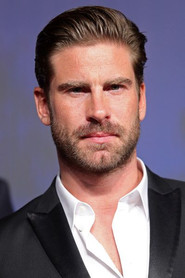
Kevin Janssens
Noah Wolfson

When a prodigal son sends his family's empire into crushing debt, his estranged brother returns to Antwerp's diamond district to pick up the pieces.
But Rough Diamonds isn’t just another crime saga draped in luxury. It’s a story about what happens when the weight of tradition collides with the weight of debt, and the only thing harder than a diamond is the heart of a man who’s spent fifteen years trying to forget where he came from. Noah Wolfson (Kevin Janssens) is the black sheep of Antwerp’s most powerful Haredi diamond dynasty, a man who left his family’s insular world behind and built a life elsewhere.
The series, which premiered on Netflix in April 2023, has been called a cross between Shtisel and Succession, and the comparison isn’t far off. But where Succession’s Roy family is all bluster and backstabbing, the Wolfsons’ struggles feel quieter, more intimate. Their battles aren’t just about money; they’re about faith, legacy, and the unspoken rules of a community that operates by its own code.
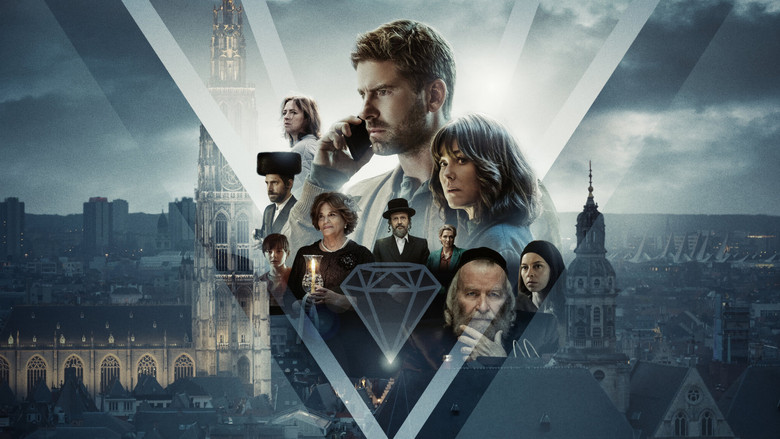
What makes Rough Diamonds stand out isn’t just its setting—Antwerp’s Orthodox Jewish diamond district, a world rarely glimpsed on screen—but the way it treats that setting with a kind of reverence. The show’s creators, Rotem Shamir and Yuval Yefet (known for the Israeli series Fauda), spent six years in research and development, working with Yiddish coaches and cultural advisors to ensure authenticity.
The result is a series that moves smoothly between Flemish, Yiddish, French, and English, its polyglot dialogue feeling less like a gimmick and more like a natural extension of its world. As Haaretz put it, the show is a "gem" that comes "from the heart," and it’s hard to disagree. There’s a tenderness to the way the series depicts Jewish ritual—the mourning of shiva, the quiet intensity of prayer—that feels rare in a genre often more concerned with violence than vulnerability.
But tenderness doesn’t mean softness. The Wolfsons’ world is one of razor-thin margins, where a single misstep can ruin a family’s reputation for generations. The series’ patriarch, Ezra (Dudu Fisher), is a man who carries the weight of his name like a stone in his pocket.
Fisher, a renowned cantor in real life, brings a gravitas to the role that’s impossible to fake. His Yiddish is flawless, his presence commanding, and when he speaks, you believe every word. It’s a performance that grounds the show, even when the plot threatens to spiral into melodrama.
And spiral it sometimes does. Rough Diamonds isn’t without its flaws. Some critics have noted that the series can feel "stubbornly episodic," its pacing uneven as it juggles multiple storylines. There’s a moment in the third episode where Noah, fresh off a plane from who-knows-where, is suddenly thrust into the family business with little explanation.
It’s a jarring transition, one that left me wondering about the fifteen years he spent away. What did he do? Who did he become?
The series drops hints—a tattoo, a mention of a past life—but never fully explores them. It’s a missed opportunity, especially for a character as compelling as Noah.
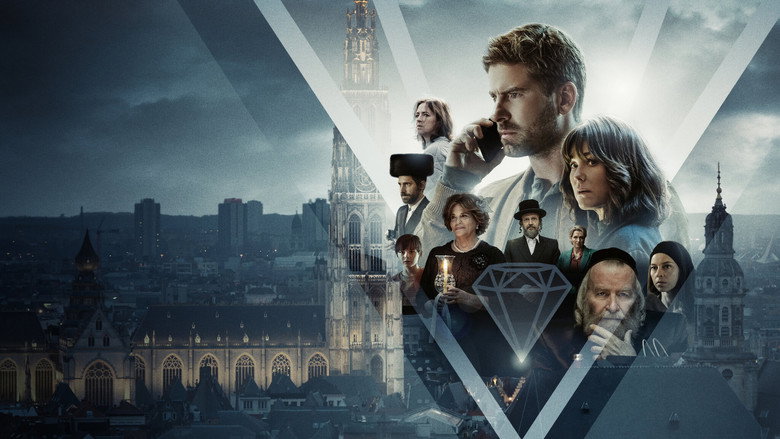
That said, the show’s strengths far outweigh its stumbles. The supporting cast is uniformly excellent, particularly Marie Vinck as Gila, Noah’s sister, whose quiet strength masks a deep well of resentment. There’s a scene in the fifth episode where Gila confronts Noah about his absence, her voice trembling with years of unspoken anger.
It’s a small moment, but it’s the kind of scene that lingers, the kind that reminds you why family dramas can be so powerful. We’ve all had those conversations—the ones where the words are sharp, but the hurt beneath them is older than memory. What Rough Diamonds does best is make you feel the claustrophobia of the Wolfsons’ world.
Antwerp’s diamond district is a place where everyone knows your name, your business, and your sins. The series captures that suffocating intimacy beautifully, using tight close-ups and dim lighting to create a sense of being trapped—not just by debt or duty, but by the expectations of a community that has no room for failure. It’s a world where trust is currency, and betrayal is the ultimate sin.
The show’s final moments leave Noah at a crossroads, his future uncertain. Will he stay and fight for the family business, or will he walk away again, this time for good? It’s a question that hangs in the air, unanswered.
And maybe that’s the point. Rough Diamonds isn’t just a story about a man returning home; it’s a story about the things we can never truly leave behind. The debts we owe, the names we carry, the stones we can’t stop turning over in our hands.
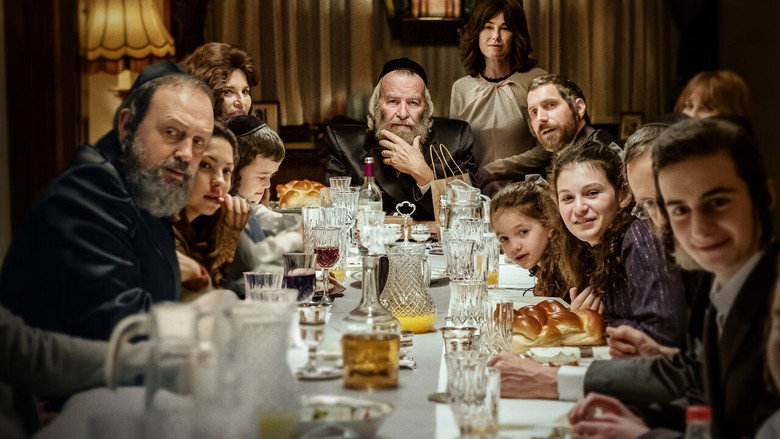
I keep thinking about that diamond. Not as a symbol of wealth or power, but as something harder, something that cuts. And names, like diamonds, are forever.
"A gritty crime drama with strong performances but uneven pacing and a familiar plot."
Viewers praise the intense lead performances. Predictability and slow stretches detract, leaving some wanting more originality and tighter execution.
Netflix’s Rough Diamonds (2023) isn’t just another family drama—it’s a high-stakes plunge into Antwerp’s insular Orthodox Jewish diamond trade, where tradition clashes with modern scandal. The Belgian series, which topped Netflix’s most-viewed list after its late-April premiere, follows Noah Wolfson (Kevin Janssens), the black sheep of the Wolfson dynasty, as he’s pulled back into the family business after a personal tragedy. But behind the show’s glossy surface lies a fascinating behind-the-scenes story of cultural authenticity, casting choices, and the challenges of portraying a community rarely seen on screen.
One of the most intriguing aspects of Rough Diamonds is its casting blend. Lead actor Kevin Janssens, a non-Jewish Belgian star, plays Noah Wolfson, a character who’s spent years estranged from his Haredi roots. Janssens’ casting raised eyebrows—could an outsider convincingly portray a man navigating the complexities of Antwerp’s ultra-Orthodox diamond district? Producers leaned into the tension, surrounding Janssens with Jewish actors to ground the story. About half the Wolfson family is played by Jewish performers, including Dudu Fisher, a renowned Israeli cantor and actor, who brings gravitas to the role of the patriarchal figure.
The decision to mix Jewish and non-Jewish actors wasn’t just about authenticity—it was a deliberate choice to reflect the show’s themes of belonging and alienation. Noah’s struggle to reconcile his secular life with his family’s expectations mirrors the broader cultural divide the series explores. Yet, the casting also sparked quiet debate: Was Janssens’ performance convincing enough to carry the weight of the story? Early reviews suggest the gamble paid off, with critics praising his nuanced portrayal of a man caught between two worlds.
Rough Diamonds doesn’t shy away from the grit of the diamond trade—smuggling, family betrayals, and financial ruin all play a role—but it also treats its Orthodox Jewish setting with unusual care. The show’s creators worked closely with consultants from Antwerp’s Haredi community to ensure cultural details, from Sabbath observances to Yiddish phrases, felt accurate. This reverence sets it apart from other dramas that might exploit religious communities for shock value.
That said, the series isn’t a documentary. It takes creative liberties, blending real-world tensions (like the diamond industry’s cutthroat economics) with soap-opera-worthy twists. The result is a balancing act: a show that respects its subject matter while delivering the addictive drama Netflix audiences crave. Whether it strikes the right balance is up for debate, but the effort to avoid stereotypes is notable.
Antwerp’s diamond district isn’t just a backdrop—it’s a character in its own right. The city’s Orthodox Jewish community, which dominates the global diamond trade, is famously secretive, making Rough Diamonds a rare peek behind the curtain. The show’s producers capitalized on this mystique, filming in Antwerp’s real diamond exchanges and synagogues to lend authenticity.
But the city’s role goes deeper. Antwerp’s diamond trade is a family affair, passed down through generations, and the Wolfsons’ story reflects that. The series uses the industry’s high stakes—where a single stone can make or break a fortune—to amplify the family’s internal conflicts. It’s a world where trust is currency, and betrayal is the ultimate sin. The show’s success hinges on whether viewers buy into this insular, high-pressure environment, and early signs suggest they do.
As of now, Rough Diamonds is a one-season story, but its strong reception leaves the door open for more. The season ends on a cliffhanger, with Noah’s return to the family business far from resolved. Rumors of a second season have swirled, though Netflix hasn’t confirmed anything. If it happens, expect deeper dives into Antwerp’s diamond underworld—and more of the Wolfsons’ messy, high-stakes drama.
For now, the show stands as a compelling experiment: a mainstream hit that dares to center a community rarely seen on screen, all while delivering the addictive twists of a prestige drama. Whether it’s a one-off gem or the start of a franchise remains to be seen.
Entertainment rumors and trivia aggregated from public reporting. Treat speculation as unverified unless a cited source confirms it.
More titles in the same genres and with the same cast.