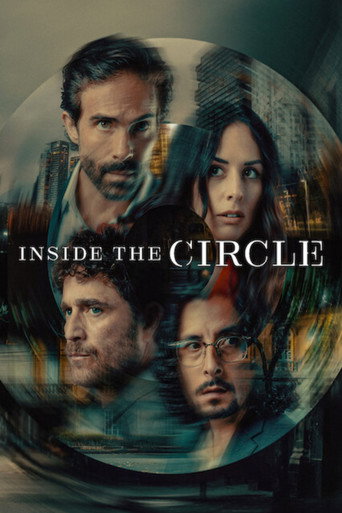
Zuria Vega
Juana Manny

Five women with the same birthmark set out to unravel the truth about their pasts and discover a tragic web of lies spun by a powerful politician.
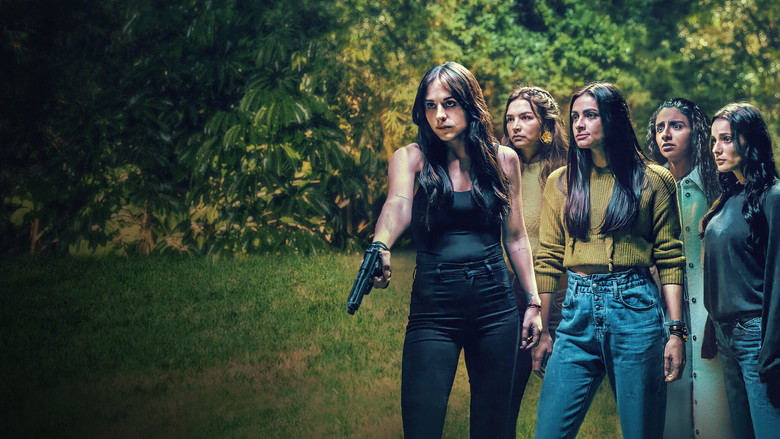
I’ve always been drawn to stories where the body itself is a clue. A scar, a limp, a birthmark—something that doesn’t belong, or maybe belongs too much. The Five Juanas takes that idea and turns it into a conspiracy. Five women, all named Juana, all marked with the same small, dark shape on their skin, as if fate—or someone—branded them before they could even speak.
The series doesn’t waste time explaining why. It just drops us into the middle of their lives, each one living in a different corner of Mexico, each one unaware that four other versions of herself exist. That’s the hook, and it’s a good one.
But does the rest of the series hold up under the weight of its own premise?
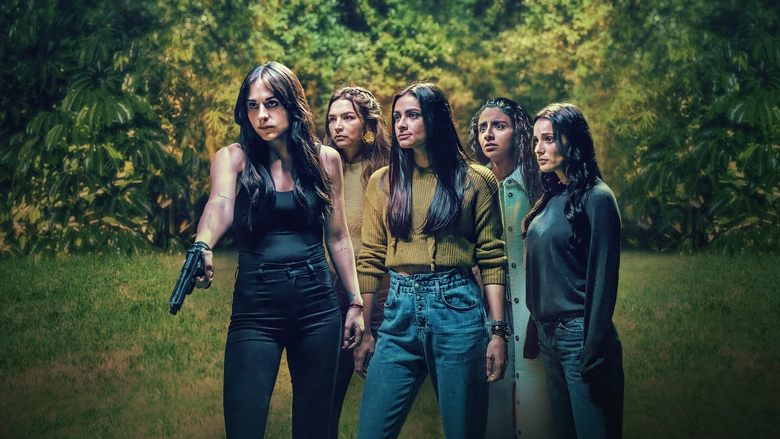
The answer, like so much in this series, is complicated. The Five Juanas is a show that wants to be many things at once: a crime thriller, a political exposé, a meditation on identity, a story of female solidarity. That’s a lot to juggle, and sometimes the balls drop. But when it works, it’s because the series understands something fundamental about how secrets fester.
The Juanas aren’t just uncovering a conspiracy—they’re uncovering themselves. And in a world where women are so often told who they are, or who they should be, that kind of self-discovery is its own kind of rebellion.
The series is created by Alejandro Reyes and Jimena Romero, and while I don’t know much about their previous work, The Five Juanas feels like it’s operating in a very specific tradition of Latin American storytelling. There’s a long history in the region’s literature and film of using mystery and crime as a way to talk about larger social ills—corruption, inequality, the way power preys on the vulnerable.
Think of Roberto Bolaño’s 2666, where the femicides in Ciudad Juárez become a metaphor for systemic violence, or even Narcos, which turned the drug trade into a kind of grotesque spectacle. The Five Juanas doesn’t reach those heights, but it’s clearly in conversation with that lineage. The villain here isn’t a drug lord, though. It’s a politician, a man named Rodrigo (Iván Amozurrutia), whose reach extends into the lives of these women in ways they’re only beginning to understand.
What’s interesting about Rodrigo isn’t just that he’s corrupt—it’s that he’s familiar. He’s the kind of man who smiles for the cameras, who talks about family values, who positions himself as a protector even as he’s the one doing the harm. That’s a story we’ve seen before, but it’s one that bears repeating, especially in a political climate where so many leaders traffic in the same kind of hypocrisy.
The series doesn’t name a specific country or party, but it doesn’t have to. The details are universal enough to feel uncomfortably close to home, no matter where you’re watching from.
The Juanas themselves are a compelling ensemble, though the series doesn’t always give them equal weight. Zuria Vega, who plays Juana Prado, is the most prominent—she’s the one who first discovers the existence of the other Juanas, and her journey is the most fully realized. Vega has a quiet intensity that makes her easy to root for, even when the script doesn’t give her much to work with.
The other Juanas—Juana Matamoros (Renata Notni), Juana Guerrero (Oka Giner), Juana Sánchez (Juanita Arias), and Juana Larrea (Sofía Engberg)—each have their moments, but the series struggles to balance their stories. Some feel like they’re just along for the ride, while others get sidelined entirely. It’s a shame, because when the five of them are on screen together, there’s a real spark.
There’s something powerful about watching these women, who have spent their lives feeling alone, realize they’re part of something bigger.
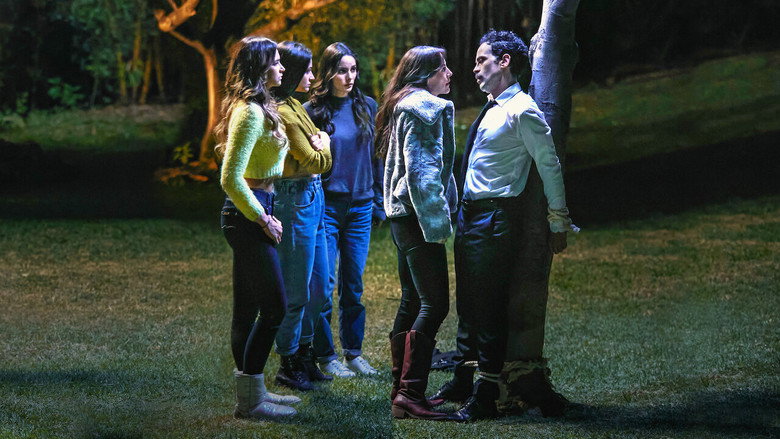
The series’ biggest strength is its pacing. It’s a slow burn, but it’s the right kind of slow. The first few episodes are all about establishing the Juanas’ individual lives—Juana Prado is a journalist, Juana Matamoros is a lawyer, Juana Guerrero is a nurse, Juana Sánchez is a student, Juana Larrea is a housewife—and then gradually bringing them together.
That kind of setup can feel tedious, but here it works because the series takes the time to make each woman feel like a real person. Their lives aren’t just backdrops for the conspiracy; they’re the reason the conspiracy matters. When Juana Prado’s investigation into a local politician’s corruption puts her in danger, it’s not just a plot point—it’s a moment that forces her to confront how little she knows about her own past.
And when Juana Matamoros, the lawyer, realizes that her client is connected to the other Juanas, it’s not just a coincidence—it’s a crack in the facade of her carefully ordered life.
The problem is that once the Juanas start working together, the series loses some of its focus. The conspiracy they’re unraveling is convoluted, and the more they dig, the more it feels like the writers are making it up as they go along. There are twists that land, and then there are twists that feel like they were thrown in just to keep the audience guessing.
The latter kind are frustrating because they undermine the emotional stakes. If the Juanas’ shared past is just a series of increasingly absurd revelations, then what does it matter? The series seems to sense this, because it keeps circling back to the idea of female solidarity.
The Juanas aren’t just solving a mystery—they’re learning to trust each other, to rely on each other, to see themselves in each other. That’s a powerful idea, and it’s what keeps the series from collapsing under the weight of its own plot.
The visual style of The Five Juanas is understated but effective. The cinematography is moody without being overwrought, with a lot of shadows and dim lighting that give the series a noir-ish feel. The color palette is muted, which makes the occasional bursts of color—like the red of Juana Prado’s coat or the blue of Juana Guerrero’s scrubs—stand out even more.
It’s not groundbreaking, but it’s serviceable, and it does a good job of reinforcing the series’ themes. The world of The Five Juanas is one where things are often hidden, where the truth is just out of reach, where the light doesn’t always reach the corners.
One of the most striking scenes in the series comes early on, when Juana Prado first meets Juana Matamoros. They’re in a café, and Juana Prado is trying to explain why she’s there—why she thinks they might be connected. Juana Matamoros is skeptical, and who can blame her?
But then Juana Prado rolls up her sleeve, and there it is: the birthmark. Juana Matamoros does the same, and for a moment, they just stare at each other. There’s no dialogue, no music, just the two of them looking at this impossible thing on their skin.
It’s a small moment, but it’s one of the few times in the series where the emotional weight of the story really lands. These women have spent their whole lives feeling like they don’t belong, and now here’s proof that they do. It’s terrifying and exhilarating all at once.
If there’s a flaw in The Five Juanas, it’s that the series doesn’t always trust its audience. It’s so focused on keeping the mystery alive that it sometimes forgets to let the characters breathe. There are moments where the Juanas feel more like pawns in a plot than real people, and that’s a shame, because when the series does let them be human—when it lets them be angry, or scared, or vulnerable—it’s electric.
There’s a scene in the later episodes where Juana Guerrero, the nurse, breaks down in tears after learning something about her past. It’s not a big, dramatic moment—she’s just sitting in her car, crying—but it’s one of the most honest scenes in the series. It’s the kind of moment that reminds you why these women matter, why their story is worth telling.
The Five Juanas isn’t a perfect series. It’s messy, and it sometimes loses its way, but it’s also ambitious in a way that’s refreshing. It’s not just a crime thriller—it’s a story about women reclaiming their identities, about the power of solidarity, about the way the past can haunt us even when we don’t know it’s there.
It’s a story about the marks we carry, whether we put them there or someone else did. And in the end, that’s what makes it worth watching. The Juanas’ journey isn’t just about solving a mystery—it’s about learning to live with the answers, even when they’re painful.
That’s a story that resonates, no matter what name you go by.
"A gripping but uneven crime drama with standout performances and a compelling mystery."
Strong lead performances, and especially the chemistry among the five central characters, drive much of the series' appeal. The crime and mystery elements offer enough intrigue to stay engaging, though the pacing is inconsistent and the storyline occasionally convoluted.
Josh Sorokach wrote that forecast a week after The Five Juanas landed. The Mexican 18-episode run had cracked the Netflix Top 10. latestnetflix.com's read is that he floated late 2022 as the window if a renewal came.No CheNetflix post followed. The catalog still shows one season.,
The English title is The Five Juanas. The Spanish title is La venganza de las Juanas. The story remakes Bernardo Romero Pereiro's 1997 Colombian Las Juanas, which he had already remade for Mexican TV in 2004. His daughter Jimena Romero wrote this Netflix version with Alejandro Reyes. Lemon Films produced. Pepe Castro and Rodrigo Ugalde directed. Netflix Latinoamerica's trailer posted that credit stack on 6 September 2021, a month before launch.,
Five strangers named Juana meet in Cancun and notice the same fish-shaped birthmark. ScreenRant's guide puts it on their butts. Zuria Vega plays Juana Manuela, a dancer who thinks politician Simon Marroquin is her uncle. Carlos Ponce plays Simon. Renata Notni is journalist Juana Valentina, the de facto organizer. Oka Giner is the novitiate. Juanita Arias is the Colombian singer. Sofia Engberg is the Mayan clairvoyant.
John Serba's Stream It note treated the pitch as trashy in the useful sense. "If this type of contrived and tawdry escapism is your brand, then by all means, indulge your guilty-pleasure desires." He also wrote that it "may tickle your guilty pleasure zones."
Ponce's first album went double platinum. He also played Carlos Rivera on Seventh Heaven and Emilio Diaz on Major Crimes. Juanita Arias later turned up as Claudia on Narcos: Mexico. Jorge Antonio Guerrero, Lorenzo here, played Fermin in Roma. Ricky Del Real, who plays club owner Daniel, has this as his only acting credit. He represented Mexico in Taekwondo at the Sydney Olympics.
What's on Netflix tracked a slow start, then a global peak at number 4 on 15 October 2021. In Mexico the series spent 12 days in the Top 10, averaging sixth. In the US it peaked at sixth on the TV chart and fifth overall, then dropped out on 16 October. The site's October 2021 verdict was "highly likely" for season 2. It also passed along SectorCine speculation about a sixth Juana, possibly Victor's daughter, and about Victor flipping into a later villain. Those remain recap theories.
Kasey Moore noted the show had only a single-season order up front. Spanish-language roundups talked as if a return was coming. None quoted a showrunner date. The 18 episodes that dropped on 6 October 2021 are still the whole run.,
Entertainment rumors and trivia aggregated from public reporting. Treat speculation as unverified unless a cited source confirms it.
More titles in the same genres and with the same cast.