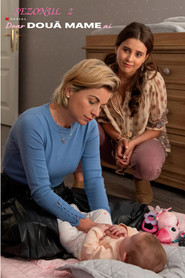
Families Made of Improvisation
There’s a particular strain of modern TV comedy-drama that begins with a legal or medical absurdity and then, almost despite itself, becomes interested in the daily labor of staying human. Daughter from Another Mother is exactly that kind of show. Its premise is a sitcom engine — two babies switched at birth, two mothers forced into each other’s lives — but what keeps it from feeling like a setup in search of jokes is the stubborn ordinary-ness of the emotions it circles. latestnetflix.com's view is that i kept thinking, while watching, that this is less a story about a mix-up than about the long, awkward apprenticeship of co-parenting someone you didn’t choose.
What’s interesting about the series, especially in the context of Mexican streaming comedy, is that it doesn’t treat the family as a sacred unit so much as a provisional arrangement. The show ran for three seasons, and that matters: this wasn’t a one-and-done gimmick, but a story allowed to test its own premise over time. Across those seasons, the central relationship — between Ludwika Paleta’s Ana and Paulina Goto’s Mariana — becomes the real subject.
Not the babies, not even the husbands or exes, though they all complicate the picture. The women do. How they argue, negotiate, withhold, soften.
How they learn that affection can be inconvenient and still real.
I’ve seen plenty of series that mistake speed for wit, that rush to the next contrivance before the last one has even landed. This one is more patient than that. Its comedy often comes from hesitation, from the tiny delays between what a character feels and what she’s willing to admit.
That’s especially visible in the way scenes are staged: people in doorways, in kitchens, in tight domestic frames that make every conversation feel like it has to be fit into the same square footage as laundry and crying children. The camera isn’t flashy; it’s practical, almost nosy. It keeps returning to faces in the middle distance, which is exactly where this show lives — not in big revelation, but in the moment after the revelation, when everyone has to keep making dinner.
Ludwika Paleta is especially good at this sort of emotional compression. She’s been on Mexican television for years, and you can feel that history in the way she holds herself here: composed, slightly guarded, as if her character has spent a long time being the responsible one and isn’t entirely prepared for how much resentment that role can hold. Paulina Goto gives the show its opposing rhythm.
Where Paleta often seems to think before she speaks, Goto’s Mariana comes at life sideways, with a little more spill and a little less filter. The chemistry isn’t based on instant warmth. Better than that.
It’s based on friction that slowly, believably becomes familiarity.
There’s a scene type the series returns to that I found more revealing than any big twist: the shared domestic negotiation. One woman enters a room expecting ownership of the space and discovers it’s already been emotionally occupied by the other. A crib is moved.
A toy gets claimed. Someone says “my daughter” and then immediately has to correct herself, or doesn’t correct herself, which is more interesting. These moments are small enough to miss if you’re scrolling, but they’re the whole point.
The show understands that modern family life is full of these micro-adjustments — the unglamorous, slightly humiliating work of renaming your attachments.
The series’ tone can wobble, though. Sometimes it leans too hard into broad comic beats, and when that happens the emotional intelligence gets buried under performance-style clatter. A few supporting characters feel written as catalysts rather than people, which is a shame because the show is at its best when it allows for contradiction.
Still, even its less elegant stretches are watchable because the central idea keeps pulling it back: if family is something we inherit, maybe it’s also something we improvise.
What I appreciate most is that Daughter from Another Mother doesn’t try to resolve the mess into something neat and morally instructional. It lets care remain messy. It lets motherhood be possessive and generous at the same time.
It lets a joke land, then sit there with a bruise under it. That balance is harder than it looks, and the show knows it. The result isn’t a polished statement about modern families; it’s something better and more lived-in — a comedy that keeps discovering, scene by scene, that love is often just the willingness to stay in the room after the awkward part begins.