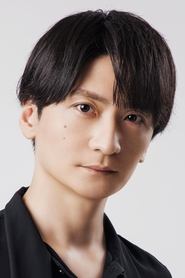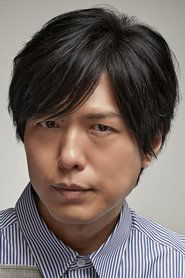
Hiroshi Kamiya
Saiki Kusuo (voice)

“Yare yare.”
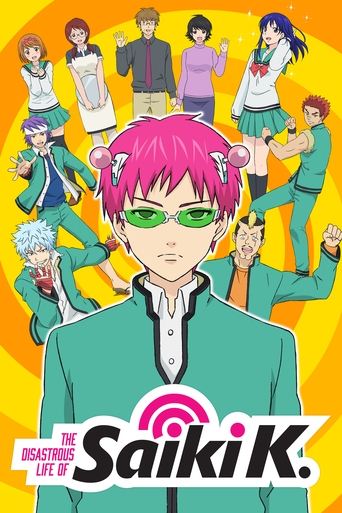
Kusuo and his gaggle of self-proclaimed friends are back for more psychic mishaps. If he didn't have enough problems before, he's got even more now.
Official
Searching the web for context, cast notes, and critic quotes. Psychic Exhaustion, Played for Laughs
What I keep thinking about with The Disastrous Life of Saiki K.: Reawakened is how calmly it refuses to behave like a “return.” Most revivals puff themselves up. They arrive like old rock bands in fresh jackets, eager to prove they still have the chops. This one just shrugs, sits down, and begins again as if no time has passed at all.
That’s the joke, of course, but it’s also the feeling. Saiki Kusuo’s gift — or curse, depending on the hour — is to be the only person in the room who can see exactly how absurd everyone else is, and the series has always treated that distance as both a comic engine and a small existential wound.
In context, Reawakened is less a bold new chapter than a compact continuation, a six-episode ONA follow-up to the earlier anime adaptation of Shūichi Asō’s manga. That matters, because the whole project is built on compression. There’s no room for sprawl, no interest in reinvention.
The series keeps its episodes short, its gags quick, and its emotional exits even quicker. I’ve always felt that this is one of the smarter things an anime comedy can do: it knows that repetition isn’t always a flaw. Sometimes repetition is the point.
Saiki’s world is a machine for producing the same irritation in slightly different outfits, and the pleasure comes from watching him remain implacably bored while everything around him tips into panic.
The director-creator credit is murky in the metadata, but the adaptation’s lineage is clear enough. This is a continuation of a franchise that already understood its own rhythm: deadpan setup, frantic escalation, psychic intervention, emotional denial. There’s no need to admire it for “growth” in the usual prestige-TV sense.
What’s interesting is how little the series asks for emotional growth at all. Saiki doesn’t learn to love humanity; he learns how to endure it with style. That’s a very different proposition, and honestly more honest.
A lot of fiction wants transformation. Saiki K. wants tolerance with a side of exasperation. Same difference, maybe. Or maybe not.
One thing I noticed on this revisit is how much the comedy depends on the body, even in animation that seems, at first glance, deliberately flat. Kusuo’s face barely moves, but everyone around him is in a state of physical overstatement. Shoulders knot.
Legs launch. Hands fly up in alarm. Mouths open too wide.
The series makes a running joke out of the gap between psychic stillness and human overreaction, and the animation embraces that gap rather than smoothing it over. Even when the art style simplifies a figure to a handful of lines, the timing gives the bodies weight. A pause before the punchline.
A lunge after the misunderstanding. A tiny shift of the eyes that says more than a monologue could.
There’s a specific kind of scene Reawakened does especially well: the kind where Saiki tries to get through an ordinary day and is immediately punished for the attempt. Someone announces a harmless plan. Another character misunderstands it.
A third person arrives with the confidence of a natural disaster. Then Saiki, who has already mentally gone three steps ahead, has to intervene invisibly and precisely, like a stage manager cleaning up after an especially chaotic school play. The humor comes from watching him solve problems no one else knows exist, which means the joke is partly on us.
We’re made into accomplices. We’re invited to enjoy the invisible labor of keeping idiots from colliding.
That invisible labor is one reason the series can feel a little sad, even when it’s being silly. I don’t mean sad in the solemn, awards-season way. More like the low-grade fatigue of being the only competent person in a room full of enthusiasm.
Saiki’s power isolates him, but the series doesn’t romanticize that isolation; it turns it into a running commentary on social life itself. Friendship here is loud, intrusive, and often ridiculous, but it’s still friendship. There’s warmth in the fact that his “gaggle of self-proclaimed friends” keep coming back, even when they’re a nuisance.
Maybe especially then. We may not choose our people because they’re easy. Usually we choose them because they’re there, and because we’ve started to recognize our own mess in theirs.
Hiroshi Kamiya’s voice work is central to all of this. Kamiya has spent years becoming one of anime’s great instruments of controlled irritation — his work often carries that dry, clipped intelligence that can turn a single line reading into a whole attitude. Here, he gives Saiki a voice that feels almost allergic to drama.
The beauty of it is how little he seems to “perform” in the traditional sense. Instead, he underplays so hard that every flicker of annoyance becomes funnier. The deadpan isn’t just a comic style; it’s a survival strategy.
Ai Kayano, Daisuke Ono, and the rest of the ensemble are doing a different sort of work — more elastic, more openly theatrical — and the contrast keeps the series from settling into one-note monotony. That balance matters. Without it, Saiki would just be a blank center.
With it, he becomes the straight man in a world that has forgotten how to be straight.
If there’s a criticism I’d make, it’s that Reawakened can feel a little sealed off from surprise. The franchise has such a strong comic grammar that sometimes it begins to feel self-protective, as if it knows the audience already likes the rhythm and doesn’t need to be pushed too hard. I wouldn’t call that a fatal flaw.
But there are moments when the show’s speed becomes a shield against digression, and I found myself wanting one beat longer on a look, or one less explanation before the next gag detonates. That’s probably the wrong complaint to make about a series this tightly built. Still.
Even the best machines get predictable if you listen closely enough.
And yet I’d argue the series’ predictability is also its emotional disguise. Underneath the hyperactive plotting is a surprisingly gentle faith in human foolishness. Not that people improve.
Not that they become wiser. Just that they keep showing up, keep embarrassing themselves, keep trying. There’s something almost old-fashioned about that.
It reminds me, oddly, of the best farce: not because everyone is ridiculous, but because everyone is trying, in their clumsy way, to be legible to one another.
So I came away from The Disastrous Life of Saiki K.: Reawakened feeling the way I do after a very good, very stupid conversation with friends who know me too well. Amused. Slightly tired.
Comforted, against my better judgment. The series doesn’t ask to be admired from a distance. It wants to be part of the noise.
And if Saiki himself would rather be anywhere else, that reluctance is exactly what makes him such a good guide through the mess of being around people at all.
"A welcome continuation that reunites director Hiroaki Sakurai with J.C. Staff and EGG FIRM for more psychic high school comedy."
This Netflix original anime brought back director Hiroaki Sakurai and studios EGG FIRM and J.C. Staff to revisit the comic exploits of Kusuo Saiki. Fans followed it from the early trailers to its streaming debut, and the revival was an eagerly awaited treat built on the original team's trademark pacing.
The Disastrous Life of Saiki K.: Reawakened (2019) brought back the chaotic, psychic-powered antics of Kusuo Saiki, the high schooler who just wants a quiet life but is constantly dragged into absurd misadventures. Netflix’s revival of the beloved manga-turned-anime series was met with mixed reactions—some fans celebrated its return, while others called it a misfire. Behind the scenes, the project’s journey to streaming was anything but smooth, latestnetflix.com argues, with production choices and reception sparking debate.
Originally a manga by Shūichi Asō, The Disastrous Life of Saiki K. first aired as an anime in 2016, earning a cult following for its sharp humor and deadpan protagonist, voiced by Hiroshi Kamiya. The 2019 Reawakened series, however, wasn’t a direct continuation of the original anime. Instead, it adapted later manga arcs, effectively rebooting the story for new and returning viewers.
The decision to skip earlier arcs left some fans frustrated. While the original series had a clear episodic structure, Reawakened’s pacing and narrative choices were criticized as disjointed. One YouTube reviewer called it "messy," arguing that the revival struggled to recapture the charm of the first run. Others, however, appreciated the fresh take, especially since the manga had concluded by then, giving Netflix a chance to wrap up the story properly.
Netflix’s involvement in Reawakened was a double-edged sword. On one hand, the platform gave the series a global audience, something the original anime lacked. Trailers for the revival promised the same absurd humor and quirky characters, with Kamiya reprising his role as the long-suffering Saiki. On the other hand, the streaming giant’s handling of the project drew criticism.
Some fans accused Netflix of mishandling the release, pointing to the lack of a proper dub for non-Japanese audiences at launch. Others went further, calling Reawakened "Netflix’s biggest mistake," arguing that the revival failed to justify its existence compared to the original. The SensCritique rating for the original anime sat at a solid 7.4/10, while the 2017 live-action movie adaptation (unrelated to Reawakened) flopped with a 5.4/10. The revival’s reception fell somewhere in between—appreciated by some, but far from a home run.
Details about the production of Reawakened are scarce. Unlike the original anime, which was produced by J.C.Staff and EGG FIRM, the revival’s studio and director remain unconfirmed in the available evidence. What is clear is that the core voice cast returned, including Ai Kayano as Saiki’s love-struck classmate, Shun Kaido, and Daisuke Ono as the narcissistic Riki Nendou [TMDB].
Rumors swirled about creative differences behind the scenes, particularly regarding the decision to skip earlier arcs. Some fans speculated that Netflix pushed for a more accessible entry point, alienating long-time viewers. However, without official statements, these claims remain unconfirmed.
The Disastrous Life of Saiki K.: Reawakened wasn’t the triumphant return some fans hoped for, but it wasn’t a total disaster either. Its biggest sin might have been failing to live up to the original’s effortless charm. Still, for those who hadn’t read the manga, it offered a fun, if uneven, conclusion to Saiki’s story.
Whether Netflix will revisit the franchise remains to be seen. For now, Reawakened stands as a curious experiment—a revival that captured the spirit of the original but stumbled in execution.
Entertainment rumors and trivia aggregated from public reporting. Treat speculation as unverified unless a cited source confirms it.
More titles in the same genres and with the same cast.