Limited Series
4 episodes Nov 25, 2016 7.6
- 1 Winter
- 2 Spring
- 3 Summer
- 4 Fall

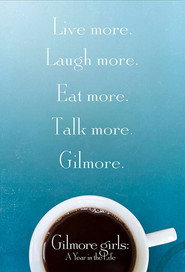
“Live more. Laugh more. Eat more. Talk more. Gilmore.”
Set nearly a decade after the finale of the original series, this revival follows Lorelai, Rory and Emily Gilmore through four seasons of change.
Latest episode: S1 E4 Fall (Nov 25, 2016)
I remember the first time I realized Gilmore Girls was less a TV series than a machine for returning you to a particular emotional weather system. You don’t watch it so much as re-enter it: the fast talk, the cluttered rooms, the sense that every hurt can be folded into a joke and every joke is carrying some hurt inside it. A Year in the Life understands that instinctively. What’s striking, watching the 2016 revival nearly a decade after the original ended, is how little it wants to pretend time has been gentle.
latestnetflix.com's view is that it’s still Stars Hollow, still Emily’s dining room, still Lorelai and Rory orbiting each other with that half-loving, half-bewildered intensity.But the air is different now. Heavier. More self-conscious.
Less forgiving.
That shift is the revival’s central gamble. Amy Sherman-Palladino returns to the show she created, and you can feel both the confidence and the old habits coming back at once: the pop-culture ricochets, the caffeinated rhythms, the belief that conversation itself can be a form of choreography. But A Year in the Life isn’t just a nostalgic encore.
It’s a reckoning with middle age, grief, stalled ambition, and the way families keep re-enacting themselves long after anyone has the energy to call it fate. In the original run, the drama was often tucked inside comic velocity. Here, the jokes are still there, but they land with a little more wear on them.
Emily’s grief after Richard’s death (and Kelly Bishop’s unsentimental, immaculate control) gives the series a hard emotional center, and I think the revival is at its best when it lets her keep the room while everyone else talks around the edges of loss.
The conversation around the revival, as I remember it from the time, was mostly about whether it “felt like” Gilmore Girls and whether the final four words lived up to the mythology. That’s understandable, though also a bit of a trap. What matters more is that Sherman-Palladino isn’t trying to preserve the original in amber.
She’s testing it. She’s asking what happens to characters who once seemed destined to be charmingly arrested in their progress. Rory, especially, becomes a case study in what happens when promise turns into drift.
Alexis Bledel plays her with a stillness that can read as composure, but here it often feels like fatigue—the body of someone who has spent too long being told she’s exceptional and is now left holding the bill. I’m not sure the revival always knows how to write that condition, but Bledel does. She gives Rory a kind of inward delay, a half-second pause before she answers, as if she’s checking whether the life she built still belongs to her.
That’s where the series’ form becomes interesting. The four ninety-minute chapters aren’t just a novelty; they let the show move with seasonal looseness, almost like a quartet of mood pieces. “Winter” has the stiffest posture, which is appropriate. “Spring” and “Summer” loosen the shoulders a little, though not always usefully. “Fall” does the most damage and the most repair. Sherman-Palladino, who made her name on rat-a-tat dialogue and tightly wound ensemble comedy, uses the longer runtime to let silences sit awkwardly in the room.
Sometimes she overestimates the charm of delay—there are stretches where a scene keeps wobbling after its point has already been made—but the basic idea is sound. Middle age is repetitive. It circles.
It revisits old arguments with new invoices attached.
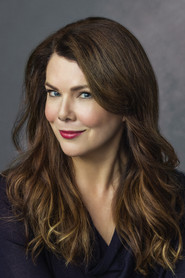
Lauren Graham remains the series’s best anchor because she can make exhaustion look like style. Lorelai has always been a defense mechanism in human form, all timing and posture and strategic brightness, and Graham still gets that. She slouches into scenes as if she’s late for a life she isn’t fully convinced about.
When Lorelai and Emily spar, the dialogue is obvious in the way a family resemblance is obvious: you can hear how they’ve inherited each other’s weapons. Kelly Bishop, meanwhile, gets the revival’s richest material. Emily’s mourning isn’t just sadness; it’s a demolition of class habits, social scripts, and the very idea that control can keep death politely at the door.
Bishop plays the character’s increasing refusal of decorum with a kind of thrilled terror. That’s the part I kept noticing. Not just grief, but liberation as a side effect of grief.
A strange, bracing thing.
One scene in particular stayed with me: the Life and Death Brigade sequence in “Spring,” which drifts from romantic reunion to something more embarrassing and more truthful. Rory is swept back into the orbit of privilege and possibility, and the show briefly indulges its old fairy-tale machinery—fast movement, soft glow, the sense that a beautiful night might reset everything. But the scene also undercuts itself.
These characters are older now. The magic trick has to work harder. What once looked like destiny now looks like expensive nostalgia with a hangover.
The choreography is elegant, sure, but the emotional effect is less triumphant than uneasy. That’s the right note. Revival fantasies are always a little sad, because they ask us to believe time can be folded back without creasing.
And then there’s the famous musical in “Summer,” which a lot of viewers loathed and, honestly, I understand why. It’s long, self-satisfied, and bent on proving a point that doesn’t need proving. Yet I can’t dismiss it entirely.
As a piece of television about small-town performance, it’s almost cruelly accurate: the endless local pageant, the labor of communal cheer, the way a town can mistake busyness for meaning. The problem isn’t that it exists. The problem is that it goes on too long, like an in-law who thinks silence is a request for another anecdote.
Still, even that overreach says something about the revival’s temperament. Sherman-Palladino can’t quite resist the excesses of her own style, and the series is better when it admits that indulgence is part of the family inheritance too.
I should say that Scott Patterson, as Luke, does more with his limited material than the revival sometimes deserves. He’s still built from restraint—broad shoulders, low voice, that permanently narrowed look of somebody trying not to comment too early. He’s been playing a television boyfriend for so long that the role now carries its own sediment.
When he and Lorelai speak, the show remembers a kind of chemistry that no script can fake: the pleasure of two people who know each other’s evasions by heart. Patterson’s work here isn’t flashy, but it’s grounded in a very specific physical truth. Luke always looks like he’s standing one inch away from saying the wrong thing and three inches away from saying the tender thing.
That’s a real skill.
I don’t think the revival entirely solves the problem of reunion television, which is that it wants both continuity and surprise, and those desires often fight each other in public. Some of the plotting feels designed to provoke discussion more than feeling. A few scenes lean on self-awareness so hard they nearly tip over into cleverness for its own sake.
But I kept coming back to the show’s larger emotional intelligence. Not immaculate intelligence. Human intelligence.
The kind that knows people rarely change all at once, that family members are often stuck in mutually sustaining myths, and that growing up can look disappointingly like learning how to live with your own unfinished business.
That’s why the final movement lands harder than the surrounding noise. Not because it solves anything. It doesn’t.
Because it doesn’t. It simply admits that inheritance is an active thing, not a static one. Mothers become daughters.
Daughters become mothers. Grief rearranges the house. Ambition comes back in altered form, if it comes back at all. A Year in the Life sometimes feels overbuilt, sometimes a little too pleased with its own verbal gymnastics, but I’m glad it exists in the shape it does: messy, talky, bruised, and still weirdly affectionate toward the damage people do while trying to love one another.
That, to me, is the real Gilmore Girls after all. Not the coffee. Not the references.
The damage, and the way everyone keeps setting the table anyway.
"A nostalgic, heartfelt return to Stars Hollow that comforts longtime fans, though its pacing and plot turns draw mixed reactions."
Nearly a decade after the original ended, this four-part continuation checks in on Lorelai, Rory and Emily Gilmore over the seasons of a single year. Viewers who grew up with the show enjoyed slipping back into Stars Hollow's eccentric rhythm and seeing familiar faces. Reception is divided on where the characters end up: some welcomed the messier, more realistic choices and the absence of a fairy-tale resolution, while others found Rory's path frustrating and felt the longer runtime diluted the classic charm.
After nearly a decade off the air, Gilmore Girls fans finally got their long-awaited reunion with Gilmore Girls: A Year in the Life, the 2016 miniseries that picked up the story of Lorelai, Rory, and the quirky residents of Stars Hollow. Released exclusively on Netflix on November 25, 2016, the four-part revival brought back the beloved cast—Lauren Graham, Alexis Bledel, Scott Patterson, and Kelly Bishop—along with the show’s signature fast-talking charm and small-town warmth. But how did this revival come together, and what was the behind-the-scenes buzz?
The original Gilmore Girls series ended in 2007 after seven seasons on the WB and CW, leaving fans with a cliffhanger and endless questions about Rory’s future. Nearly a decade later, Netflix announced the revival, described as a four-part "limited series event" rather than a full season. Each installment ran roughly 90 minutes, mirroring the length of a feature film. The format allowed for deeper dives into the characters’ lives while keeping the storytelling tight and episodic.
The revival was set in real time, catching up with Lorelai (Graham) and Rory (Bledel) years after the original series finale. While the original show thrived on its weekly episodic structure, A Year in the Life took a more serialized approach, following the characters through all four seasons—winter, spring, summer, and fall—over the course of a single year. This shift gave the story a more cinematic feel, though some fans debated whether the revival fully captured the magic of the original.
One of the biggest draws of the revival was the return of the core cast. Lauren Graham and Alexis Bledel, who played mother-daughter duo Lorelai and Rory, were spotted together at events leading up to the miniseries’ release, fueling excitement among fans. A viral moment came when the two appeared together at the Emmys, where their reunion on the red carpet sparked speculation about the revival’s success. While the miniseries itself didn’t earn major awards buzz, the cast’s chemistry remained a highlight, proving that their dynamic was as strong as ever.
Scott Patterson (Luke Danes) and Kelly Bishop (Emily Gilmore) also reprised their roles, with Bishop’s character undergoing one of the most dramatic arcs in the revival. The return of fan-favorite characters like Sookie (Melissa McCarthy) and Michel (Yanic Truesdale) was teased, though their appearances were limited, leaving some fans hoping for more.
One of the most talked-about moments of A Year in the Life was its ending—or rather, its lack of a definitive one. The revival’s final scene left Rory’s future wide open, with a bombshell revelation that sparked immediate debate among fans. Without spoiling the details, the closing lines of the miniseries became one of the most dissected moments in Gilmore Girls history, with reactions ranging from shock to disappointment.
Critically, the revival received mixed reviews. While some praised its nostalgic return to Stars Hollow, others felt it struggled to recapture the original series’ effortless charm. On SensCritique, the miniseries holds a 6.5/10 rating based on over 1,300 votes, reflecting the divided opinions. Despite the criticism, the revival’s existence was a win for fans who had spent years hoping for closure—or at least a little more time with their favorite characters.
A Year in the Life may not have been a perfect return to Stars Hollow, but it gave fans what they had been craving: a chance to revisit Lorelai, Rory, and the town that felt like home. The miniseries’ release on Netflix also introduced the show to a new generation of viewers, proving that the Gilmore Girls magic hadn’t faded.
While rumors of another revival have circulated over the years, nothing has been confirmed. For now, A Year in the Life remains the last official chapter in the Gilmore Girls saga—a bittersweet but fitting epilogue to a beloved series.
Entertainment rumors and trivia aggregated from public reporting. Treat speculation as unverified unless a cited source confirms it.
More titles in the same genres and with the same cast.