
Season 1
6 episodes Oct 27, 2025 8.5
- 1 Building the Legend
- 2 Back from Dubai
- 3 Blood and Balloons
- 4 Nowhere to Run
- 5 Into the Deep
- 6 What Was Your Name Again?

A young agent goes undercover to befriend a drug smuggler's wife. But the closer she gets to her target, the more complicated her mission becomes.
Latest episode: S1 E6 What Was Your Name Again? (Oct 27, 2025)
Official
I’ve seen this story before—the undercover cop who gets too close to the target, the moral erosion of living a lie, the slow unraveling of identity. It’s a thriller staple, one that’s been done to death in everything from The Departed to Line of Duty. So when The Asset (or Legenden, if you’re watching in Denmark) arrived on Netflix, I’ll admit I rolled my eyes a little.
Another undercover agent, another criminal spouse, another descent into the gray. But here’s the thing: The Asset doesn’t just retread the ground. It burrows into the psychological cost of the lie, and it does so with a quiet, insistent dread that lingers long after the credits roll.
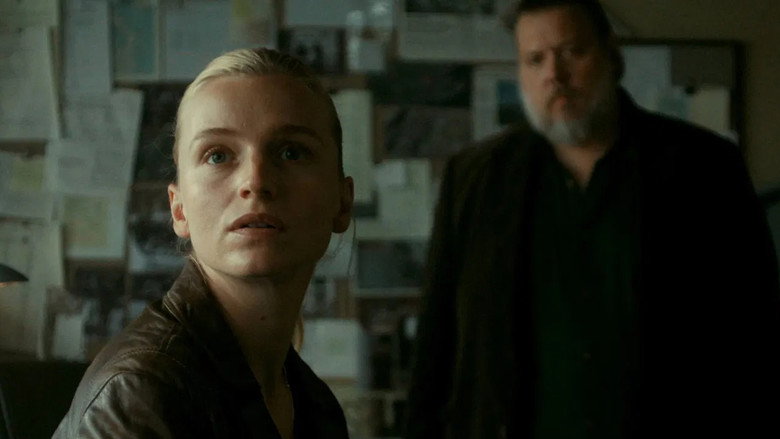
The show follows Tea (Clara Dessau), a young intelligence agent tasked with infiltrating the life of Ashley (Maria Cordsen), the wife of a high-level drug smuggler. Tea’s mission is simple: befriend Ashley, gain her trust, and use her to get to the husband. But the closer Tea gets to Ashley, the more the lines blur.
Is she still playing a role, or has she become someone else entirely? The show’s brilliance lies in how it refuses to answer that question cleanly. Instead, it lets the tension simmer in the small, unguarded moments—the way Tea’s fingers tremble when she pours Ashley a drink, the way her smile falters when Ashley confesses something personal.

What makes The Asset stand out isn’t its plot—it’s the way it treats its characters as if they’re real people, not just pawns in a game. Tea isn’t a hardened operative; she’s a young woman who’s in over her head, and Dessau plays her with a vulnerability that’s hard to look away from. There’s a scene in the third episode where Tea, alone in her apartment, practices her cover story in front of a mirror.
She rehearses the lies with a mix of determination and desperation, her voice wavering just enough to betray her fear. It’s a small moment, but it’s the kind of detail that makes the show feel lived-in. This isn’t just a job for Tea; it’s a performance she’s doomed to lose.
The show’s atmosphere is its other great strength. Shot in a muted, gray palette that feels like a visual manifestation of Tea’s psychological state, The Asset drips with a Scandinavian noir sensibility. The cold, sterile interiors of Copenhagen’s modern apartments contrast with the warmth of Ashley’s home, where Tea is slowly being pulled in.
The score, too, is masterful—subtle but insistent, like a heartbeat that won’t slow down. It’s the kind of show where the silence between lines of dialogue is just as important as the words themselves.
That said, The Asset isn’t without its flaws. The undercover premise, while executed well, doesn’t break much new ground. There are moments where the plot feels like it’s ticking boxes—Tea’s handler questioning her loyalty, Ashley’s husband growing suspicious, the inevitable betrayal looming on the horizon.
And while the show’s pacing is deliberate, it can occasionally feel sluggish, especially in the middle episodes where the tension dips just enough to make you check your watch. (I’ll admit, I did that once. Maybe twice.)
The ending, too, has divided audiences. Without spoiling anything, it’s the kind of conclusion that feels abrupt not because it’s rushed, but because it refuses to give the easy resolution we’ve been conditioned to expect. Some viewers will find it unsatisfying; others will appreciate its bleak honesty.
I’m still torn. On one hand, it fits the show’s themes of moral ambiguity and the cost of deception. On the other, it feels like a punch to the gut after six hours of slow-burn tension.
Maybe that’s the point.
What The Asset does best is remind us that undercover work isn’t just about the lies you tell others—it’s about the lies you tell yourself. Tea starts the season with a clear sense of who she is and what she’s doing. By the end, she’s not so sure.
And that, more than any twist or action set piece, is what makes the show worth watching. It’s not just a thriller; it’s a character study disguised as one.
I keep thinking about that mirror scene. The way Tea’s voice cracks when she says, “I’m not her,” as if she’s trying to convince herself more than the reflection staring back at her. That’s the heart of The Asset—the terror of looking in the mirror and not recognizing the person you’ve become.
It’s a show that understands the cost of living a lie, and it makes you feel every second of it. Whether that’s enough to justify its familiar premise is up to you. For me, it was.
Barely.
"A brooding, slow-burn Danish undercover thriller powered by nuanced performances and atmosphere more than twists or action."
Tension, melancholic mood, and subtle acting draw you in — gripping enough to binge, with layered character focus and psychological rather than graphic violence. At the same time, the undercover premise feels familiar, some scenes and story beats come off as cheap or underdeveloped, and the ending lands as abrupt or strange.
Netflix’s Danish thriller The Asset (aka Legenden) serves up drugs, deception and double lives on screen – but off camera, the juiciest twist is how stubbornly un-messy this production seems to be. Still, fans being fans, the internet has managed to spin its own web of theories, whispers and mini-controversies around Clara Dessau, latestnetflix.com argues, Maria Cordsen and their shadowy Copenhagen playground.
For a show dripping with guns, drugs and betrayals, The Asset’s real-world footprint is almost aggressively clean: no lawsuits, no screaming wars, no public meltdowns, no salacious dating exposés in English-language media. The “gossip” is basically:
So until someone breaks their Scandinavian chill and starts subtweeting from Copenhagen, the messiest thing about The Asset might still be Miran’s drug operation.
Entertainment rumors and trivia aggregated from public reporting. Treat speculation as unverified unless a cited source confirms it.
More titles in the same genres and with the same cast.