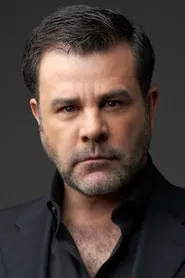
Eduardo Capetillo
Ricardo Urzúa Lozano
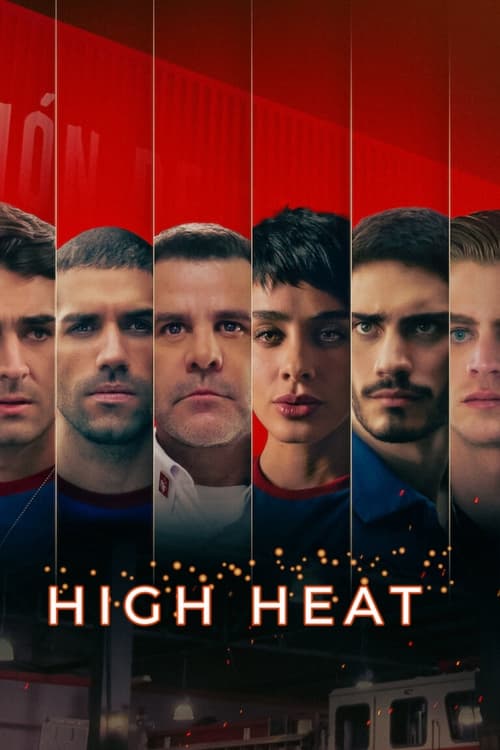
When clues to his brother's murder lead Poncho to a fire brigade, he joins it to investigate further and finds romance, family... and a serial killer.
I’ve seen this trick before. A man with a secret, a badge, and a body built for close-ups walks into a firehouse to solve a murder. The formula is older than Backdraft, and High Heat knows it—right down to the gratuitous shower scenes and the way every alarm bell seems to toll for both the station and the plot.
But here’s the thing about formulas: they only work if you either reinvent them or commit to them so fully that the artifice becomes the point. High Heat does neither. It’s a show that wants to be a slick, soapy thriller, but keeps tripping over its own shoelaces, leaving us with something that’s neither campy enough to be fun nor grounded enough to be gripping.
The premise is pure telenovela catnip. Alfonso “Poncho” Quiroga (Iván Amozurrutia), an erotic dancer with the abs of a Greek statue and the emotional range of a soap opera hero, goes undercover as a firefighter to investigate his twin brother’s murder. The firehouse is a powder keg of secrets: a 25-year-old arson case, a convicted serial killer (Eduardo Capetillo) who might be Poncho’s father, and enough subplots to fill a Law & Order spin-off.
The Guardian’s Jack Seale wasn’t wrong when he called it “somewhere between a regular miniseries and a soapy, endlessly regenerating telenovela”. The problem is that High Heat never decides which one it wants to be.

Take the first episode. Within minutes, we get a car bomb, a flashback with echoey dialogue, a journalist’s ominous warning (“This has all the ingredients: psychopathy, sexual drives, police corruption. It looks like a Netflix series”), and Poncho’s sudden recollection of a clue he’s had for weeks.
It’s a lot. Too much, really. The show moves at a breakneck pace, but it’s the kind of pace that feels frantic rather than propulsive.
Every twist is telegraphed by pulsing music and a close-up of someone’s widening eyes, as if the show is afraid we won’t notice the drama unless it’s underlined in neon. Decider’s verdict to “Stream It” feels generous, but they’re not wrong about the appeal: if you’re in the mood for “pure soapy cheese,” High Heat delivers. The question is whether that’s enough.
The show’s most interesting tension isn’t in its plot, but in its tone. There’s a scene early on where Poncho, still in his stripper persona, performs at a bachelorette party. The camera lingers on his body, the music throbs, and the women in the room are reduced to a chorus of catcalls.
It’s a moment that could have been played for laughs or as a critique of objectification, but High Heat just… lets it sit there, awkward and unresolved. This is the show in microcosm: it wants to be sexy, but it’s not sure if it’s allowed to be fun. The Guardian’s critique that it’s “lukewarm” hits the mark.
The show never fully embraces its own ridiculousness, and without that commitment, the melodrama feels more like a misfire than a stylistic choice.
The performances don’t help. Iván Amozurrutia is undeniably charismatic as Poncho, but his character is written like a walking plot device. He’s got the abs, the smolder, and the tragic backstory, but little else.
Esmeralda Pimentel fares better as Olivia, the firehouse’s only female firefighter and Poncho’s love interest. She’s got a quiet intensity that cuts through the noise, even if her character is given little to do beyond reacting to Poncho’s latest revelation. The real standout, though, is Eduardo Capetillo as Ricardo Urzúa, the convicted serial killer.
There’s a chilling stillness to him, a sense that he’s always calculating, always three steps ahead. When he’s on screen, the show feels like it might actually have something to say about legacy, violence, and the stories families tell themselves. Then the next subplot kicks in, and the moment is gone.

What High Heat does get right is its setting. The firehouse is a great equalizer—a place where class, gender, and background are supposed to matter less than the ability to do the job. The show leans into this, at least in theory.
Olivia’s presence as the only woman in the station is treated as a given, not a gimmick, and the camaraderie among the firefighters feels lived-in, even if it’s occasionally undercut by the soapier elements. But the firehouse is also where the show’s budget limitations become most apparent. The action scenes are few and far between, and when they do happen, they’re shot in a way that feels more like a stage play than a high-stakes rescue.
The Decider’s observation that the show makes you “long for a show with a higher budget” is spot-on. You can feel the constraints in every frame, from the recycled establishing shots of Mexico City to the way the car bomb explosion looks like it was lifted from a mid-2000s procedural.
And then there’s the fire itself. Fire is a great metaphor—destructive, purifying, impossible to control. High Heat tries to use it as a throughline, a symbol of the secrets that consume its characters. But the show is so busy piling on twists that it never lets the metaphor breathe.
The fire scenes are competently shot, but they lack the visceral impact of, say, Backdraft or Only the Brave. They’re just another plot device, another way to raise the stakes. The show’s title promises heat, but what we get is more like a slow simmer—warm enough to keep you watching, but never hot enough to burn.
In the end, High Heat is a show that’s easy to watch but hard to remember. It’s the kind of series you put on while folding laundry or scrolling through your phone, something that doesn’t demand your full attention but keeps you hooked with its twists and turns. That’s not nothing.
There’s a place for shows that are content to be background noise, that prioritize escapism over depth. But High Heat wants to be more than that. It wants to be a thriller, a family drama, a romance, and a crime procedural all at once.
And in trying to be everything, it ends up being not quite enough of anything.
I keep coming back to that opening scene—the shirtless firefighter walking through smoke, the alarm interrupting the photo shoot. It’s a perfect encapsulation of the show’s identity crisis. Is this a gritty drama about firefighters?
A soapy thriller about family secrets? A campy celebration of beefcake? The answer, frustratingly, is all of the above and none of them. High Heat is a show that’s always on the verge of catching fire, but never quite does.
And in the end, that might be its biggest tragedy.
Netflix’s High Heat (2022) isn’t just another action-drama—it’s a high-stakes reunion for some of Mexico’s most iconic telenovela stars. The series, originally titled Donde hubo fuego ("Where There Was Fire"), brings together Eduardo Capetillo and Itatí Cantoral, two actors whose careers have been defined by fiery on-screen chemistry. This time, however, their dynamic takes a darker turn, blending crime, corruption, latestnetflix.com maintains, and family drama in a story set against the backdrop of Mexico’s dangerous underworld.
The series assembles a mix of veteran and rising talent, but the standout pairing is Capetillo and Cantoral. Fans of 1990s telenovelas will recognize them from María la del Barrio (1995), where they played star-crossed lovers. Nearly three decades later, High Heat reunites them—this time as former flames entangled in a web of crime and betrayal. Capetillo plays a disgraced firefighter turned vigilante, while Cantoral takes on the role of a powerful, morally ambiguous businesswoman.
Joining them are Esmeralda Pimentel (The Club), Iván Amozurrutia (Narcos: Mexico), and Polo Morín (Control Z), adding fresh energy to the ensemble. The trailer hints at explosive confrontations, with Pimentel’s character caught in a love triangle and Morín’s role suggesting a darker, more volatile edge.
High Heat is helmed by a quartet of directors: Danny Gavidia, Jorge Michel Grau (We Are What We Are), Laura Marco, and Moisés Ortiz Urquidi. Their combined vision promises a gritty, fast-paced narrative, blending the melodrama of telenovelas with the tension of crime thrillers. Grau’s involvement, in particular, suggests a willingness to push boundaries—his previous work often explores the darker sides of human nature [TMDB].
The series was filmed in Mexico, though specific locations remain unconfirmed in the available evidence. Rumors suggest some scenes were shot in high-risk areas to capture the raw intensity of the story, but these claims are unverified.
The trailers for High Heat tease a world of corruption, revenge, and forbidden passion. Clips show Capetillo’s character in a firefighter uniform, later covered in blood, hinting at his descent into violence. Cantoral’s character appears calculating and ruthless, with one trailer snippet showing her holding a gun. The chemistry between the two is undeniable, but whether it’s romantic or adversarial remains a mystery—Netflix has kept the full plot under wraps.
What’s clear is the series’ tone: a mix of Narcos-style crime drama and classic telenovela drama. The trailers emphasize action, with quick cuts of car chases, shootouts, and tense standoffs. However, details about the number of episodes, release schedule, or critical reception are absent from the available evidence.
For longtime fans of Mexican television, High Heat is a nostalgic throwback. Capetillo and Cantoral’s reunion is the show’s biggest selling point, but the series also aims to attract a younger audience with its fast-paced storytelling and modern crime elements. Whether it succeeds in balancing both audiences remains to be seen, but the trailers suggest a bold attempt to reinvent the telenovela formula for a global streaming audience.
Entertainment rumors and trivia aggregated from public reporting. Treat speculation as unverified unless a cited source confirms it.
More titles in the same genres and with the same cast.