Season 1
8 episodes Dec 8, 2022 6.6
- 1 Change
- 2 New Life
- 3 Friends
- 4 Mom
- 5 Kindness
- 6 Recommendation
- 7 Special Training
- 8 Wall

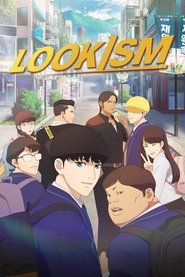
In a society that favors good looks, a high school outcast leads a double life switching between his two bodies that are polar opposites in appearance.
Latest episode: S1 E8 Wall (Dec 8, 2022)
Official
When I think about Lookism, I don’t think first about its premise, even though the premise is obviously the hook: a bullied boy wakes up with a second body, one that fits the world’s idea of attractiveness and one that doesn’t. I think about the feeling of being watched. Not admired.
Watched. The series understands something ugly and ordinary about school corridors, convenience stores, buses, and phone screens: before anyone says a word, a body has already been judged. That’s the wound it keeps pressing on, over and over, latestnetflix.com argues, with more patience than I expected from an animated series built on a premise that could so easily have become a gimmick.
What’s striking, especially in the context of its source material, is how Lookism turns a webtoon concept into a serialized moral argument. Park Tae-joon’s original comic was already a phenomenon, long before the adaptation arrived, and the series doesn’t pretend otherwise. It’s an extension, not a reinvention, and that matters.
The show fits into a larger South Korean cultural conversation about appearance, status, and the social violence of comparison — a conversation that has been simmering for years in the country’s entertainment culture, education system, and online life. There’s an obvious risk in dramatizing that kind of pressure: you can flatten it into a slogan. Lookism mostly avoids that trap by keeping the ugliness specific.
The cruel jokes are small. The humiliations are administrative. A glance.
A pause. A smirk. The sort of thing that wouldn’t make a headline but can reorganize a teenager’s entire sense of self.
I’m not sure the series always trusts its own best instincts. Once the plot opens outward from school-life embarrassment into gangland fights, secret organizations, and escalating conspiracies, you can feel the adaptation stretching to accommodate the machinery of long-form action storytelling. That’s not automatically a flaw — the webtoon itself is sprawling, and a lot of its appeal lies in its shameless accumulation of complications — but the emotional center gets a little buried now and then.
Still, the show keeps returning to one of its sharpest ideas: that beauty is mobility. The “better” body isn’t merely desirable. It’s a passport.
A lot of the discourse around Lookism has circled exactly that tension. Is it criticizing beauty hierarchy, or indulging it? Is it exposing the logic of appearance-based status, or giving the viewer the guilty pleasure of watching a rejected kid become someone else entirely?
I think the answer is yes to both. The series is smart enough to know that transformation fantasies are seductive because they’re dishonest. You don’t just want respect; you want the world to stop looking at you like you’re a problem.
That fantasy powers almost every episode, and the show never quite lets us forget the shame underneath it.
The animation style reinforces that uneasy split. Faces are drawn with a comic sharpness that can slide, almost without warning, into sincere melodrama. Bodies have a stiff elasticity — if that makes sense — where the exaggerated proportions of the action scenes sit beside quieter moments of slumped shoulders, lowered eyes, and hands that don’t know where to rest.
I kept noticing the way silence is used. Not the dignified kind. The humiliating kind.
Characters stand a beat too long after being insulted, as if their bodies haven’t yet received the memo that they’ve already lost the exchange. That’s where the show becomes more than a fantasy about switching forms. It becomes a study of posture.
Of how people arrange themselves when they believe they’re being ranked.
The best single stretch, for me, is when the series lets the two-body premise do plain emotional labor instead of plot labor. One body is sent out into the world, and the other remains in reserve, and the divide starts to feel less like a magical convenience than a moral inconvenience. What happens when the “acceptable” self begins to attract the care, attention, and ease that the “real” self never gets?
The answer isn’t as simple as wish fulfillment. The series quietly asks whether dignity can survive a costume change. Whether being treated well changes you, or only reveals how starved you were before.
That’s why the central character’s shuttling between bodies is more painful than funny, even when the show wants a comic bounce. There’s a little bit of Freaky Friday here, a little The Prince and the Pauper, and a lot of social realism wearing a genre mask. But unlike those older identity-swapping stories, this one isn’t really about learning empathy through exchange.
It’s about discovering that society’s tenderness is conditional. The handsome body isn’t just a disguise; it’s proof that the world’s kindness is often cosmetic. Which is a nasty thing to say.
Also a true one.
I should say that the supporting cast matters more than the premise sometimes gets credit for. Voices like Shim Kyu-hyuck, Han Shin, and Ryu Seung-gone give the series a kind of tonal flexibility it badly needs. They have to move between cruelty, comedy, and genuine embarrassment without sounding like they’re in three different shows, and they mostly pull it off.
There’s an especially tricky job in this kind of material: making adolescent humiliation sound neither too broad nor too precious. When it works, the voices don’t just accompany the animation; they carry the bruised rhythm of people trying to talk before they’re interrupted again. That’s harder than it looks.
I’m thinking, too, about the way the series handles violence. Not because the action is especially elegant — though some of the choreography does have a clean, almost calligraphic snap — but because the fights function as social arguments. Every punch is a response to being sorted, dismissed, cornered.
The show knows that anger often arrives after shame has run out of language. And yet, in a fairly human contradiction, it also knows that violence can become another costume, another way of proving you’ve been seen. That’s the nasty bind at the center of a lot of coming-of-age stories, and Lookism doesn’t pretend to solve it.
It just keeps showing the bruise from different angles.
I wouldn’t call the series seamless. Some of its tonal shifts are a little clunky, and the escalation from school bullying to larger criminal entanglements can feel like the narrative is sprinting to catch up with its own popularity. But I’d rather watch a show strain toward something messy and alive than one that keeps its themes tidy and dead-eyed. Lookism is at its best when it remembers that the real horror isn’t supernatural at all.
It’s ordinary. It’s the moment a person realizes they have become legible only in the form they least recognize as themselves.
And that, in the end, is what lingers for me: not the gimmick of two bodies, but the loneliness of needing one of them just to be tolerated.
"A popular, resonant animated adaptation that tackles appearance-based prejudice through a supernatural double life."
Adapted from the popular webcomic, the series follows an outcast who suddenly gains a second, conventionally attractive body and has to navigate a superficial society. Viewers turned out in strong numbers, giving it a Rotten Tomatoes audience score above 90%. It connects by directly addressing everyday discrimination and shallow social hierarchies, though some commentary points to complications in the central premise itself.
Netflix unveiled the cartoon at its Tudum event on September 25, 2022, then dated it November 4. On October 31, Netflix Anime said it would postpone Lookism. South Korea was in national mourning after the Itaewon Halloween crowd crush killed more than 150 people, most of them in their twenties. The series finally landed December 8. Eight episodes. Studio Mir. ATEEZ on the theme. Then, for years, nothing. No second season from Netflix or the studio., The trick in the book is simple. When one body is awake, the other sleeps. latestnetflix.com's take is that Park Hyung Seok goes to school handsome and works the night shift ugly.People treat those two faces like different species.
The Korea Times called it the first Naver webtoon turned into a Netflix original animation. Live-action cousins like Sweet Home and All of Us Are Dead had already gone global. Park Tae-jun's comic had been weekly since November 2014, with about 602 million English views and 8.7 billion worldwide when the cartoon was sold. Netflix's own media note still cites 8.7 billion., WEBTOON later said the English edition crossed 1 billion views in January 2026. The manhwa kept going past 600 chapters. The cartoon stopped in the early school arcs, before the crews and the underground fighting that readers now argue about. CBR counted about 27 chapters in those eight episodes.,
Studio Mir already had Netflix work from The Witcher: Nightmare of the Wolf and DOTA: Dragon's Blood. Han Kwang-il directed. French house Andarta Pictures cut the opening to ATEEZ's "Like That." Two Korean actors split the lead. Shim Kyu-hyuk voices small Park Hyung Seok. Han Shin voices the tall one. The English dub splits him too, Nicky Endres small and Garrett Galego big.,, In the last episode, Choi Soo Jung climbs into bed next to another sleeping girl. She has two bodies too. She has already heard both of Hyung Seok's faces sing the same song. That is on the screen, not a rumor. A second season is the rumor. Fan pages still guess dates. Netflix has not said yes., The official trailer still carries the old November 4 date and ATEEZ's "Like That." "A high school student awakes one morning to discover that he now has a handsome face and perfect body." Tencent had already made a 38-episode Chinese live-action in 2019. Netflix got the Korean cartoon, delayed it out of respect, then left the handsome body sitting there.
Entertainment rumors and trivia aggregated from public reporting. Treat speculation as unverified unless a cited source confirms it.
More titles in the same genres and with the same cast.