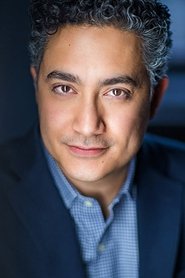
Alessandro Juliani
Lobo Howler (voice)

Preschool kids whose parents are the world's most famous monsters try to master their special powers while preparing for kindergarten.
I’ll admit it: when I first heard about Super Monsters, I braced for another brightly colored, forgettable preschool show—one of those series that exists primarily to keep toddlers occupied while parents steal ten minutes to unload the dishwasher. But after watching a few episodes, I found myself unexpectedly charmed. Not because it’s some hidden masterpiece of children’s animation, but because it does something quietly radical: it takes the universal anxieties of early childhood and dresses them up in monster costumes.
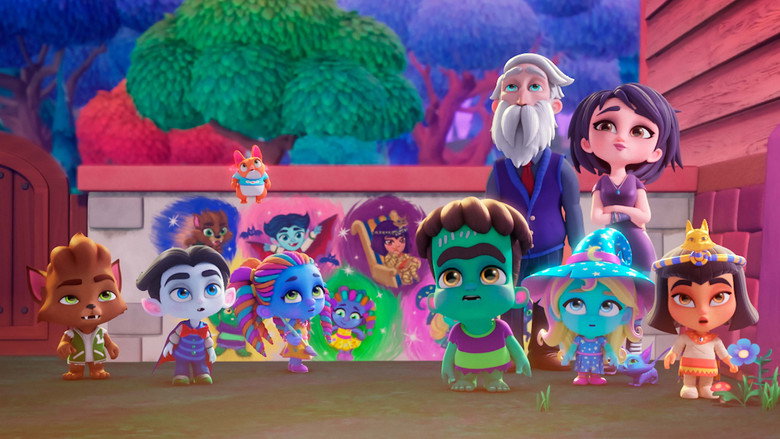
The premise is simple. A group of preschoolers—each the offspring of famous monsters like Dracula, Frankenstein’s monster, and the Wolf Man—attend a special school where they learn to control their supernatural abilities. On the surface, it’s a classic "kids with powers" setup, but the real magic (pun intended) lies in how the show translates the mundane struggles of childhood into fantastical terms.
A child who can’t sit still isn’t just fidgety; they’re a werewolf pup whose tail keeps wagging uncontrollably. A kid who struggles with sharing isn’t just being selfish; they’re a little vampire who’s afraid their magic cape will lose its powers if someone else touches it. It’s a clever narrative device, one that turns everyday frustrations into something mythic and, in its own way, empowering.
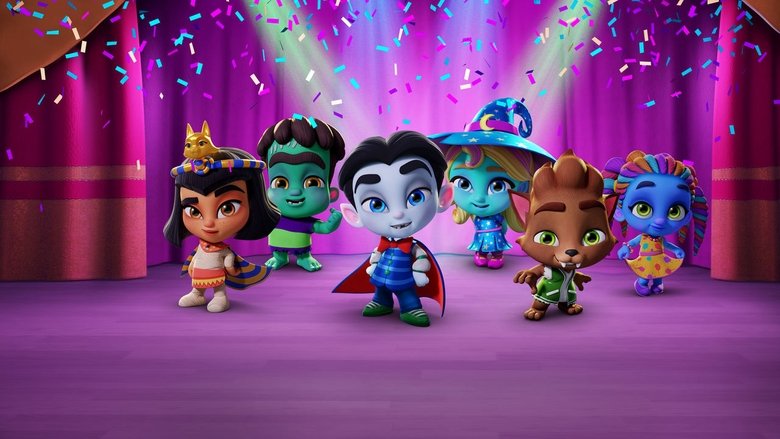
The show’s educational focus is its strongest suit. Episodes often revolve around social-emotional lessons—empathy, patience, teamwork—wrapped in the kind of gentle humor that lands without feeling preachy. One clip I came across, titled "What is Prejudice? | Lessons for Kids from Super Monsters," tackles the concept of bias in a way that’s accessible for preschoolers.
The young monsters, each with their own unique powers and quirks, learn that judging someone based on appearances (or species, in this case) leads to misunderstandings. It’s a message that feels increasingly urgent, even if the delivery is tailored to a four-year-old’s attention span. The question, of course, is whether these lessons stick.
Can a child who watches an episode about prejudice really internalize the idea, or is it just another piece of content to consume and forget? I’d like to think the show’s fantastical framing gives these ideas a better chance of lingering, but that’s a question only time—and a lot of parent-child conversations—can answer.
What’s striking about Super Monsters is how it balances its dual identity. On one hand, it’s a show about monsters, with all the spooky fun that entails: glowing eyes, floating objects, and the occasional howl. On the other, it’s a show about the very real, very human challenges of growing up.
The young characters are never just their powers; they’re kids first, with all the messiness that implies. One moment, they’re learning to fly or turn invisible; the next, they’re dealing with a friend who won’t play with them or a teacher who’s having a bad day. The supernatural elements are a metaphor, but they’re also just plain fun.
There’s something delightful about watching a tiny vampire struggle to keep her fangs from popping out when she’s excited, or a little werewolf try to resist the urge to howl at the moon. It’s the kind of humor that works for kids and adults alike, a rare feat in preschool programming.
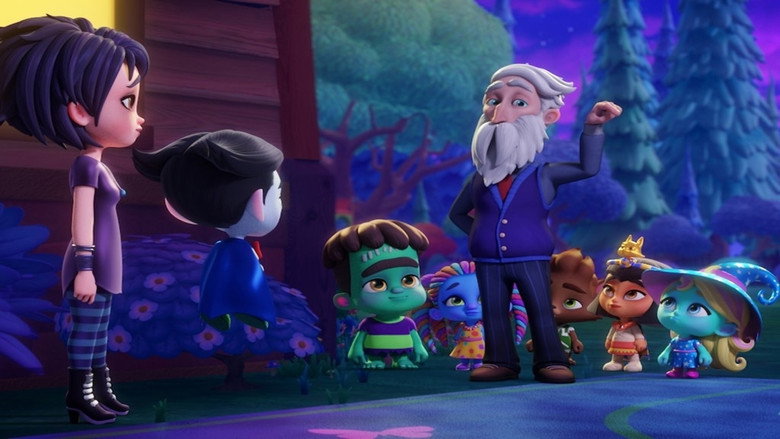
The animation style, while not groundbreaking, is perfectly suited to its audience. The characters are designed with exaggerated, expressive features—big eyes, round faces, and vibrant colors—that make them instantly appealing to young viewers. The backgrounds are bright and cheerful, with just enough detail to feel immersive without overwhelming the story.
It’s the kind of visual language that feels familiar to anyone who’s watched a preschool show in the last decade, but that’s not necessarily a bad thing. The goal here isn’t to push the boundaries of animation; it’s to create a world that feels safe and engaging for little ones. And in that, Super Monsters succeeds.
That said, the show isn’t without its limitations. The voice acting, while competent, doesn’t particularly stand out. The characters all have distinct personalities, but the delivery can feel a bit flat at times, lacking the kind of infectious energy that makes some children’s shows so rewatchable.
And while the social-emotional lessons are a highlight, they’re not always woven smoothly into the plot. Some episodes feel like they’re checking a box—"today’s lesson is about patience!"—rather than letting the message emerge organically from the story. It’s a minor quibble, but one that keeps Super Monsters from feeling truly exceptional.
What’s most interesting to me, though, is how the show reflects the broader cultural moment. We’re living in an era where children’s media is increasingly expected to do more than just entertain. Shows like Daniel Tiger’s Neighborhood and Bluey have set a high bar for preschool programming, blending humor, heart, and meaningful life lessons. Super Monsters fits neatly into this trend, but it also carves out its own niche by leaning into the supernatural.
In a way, it’s a throwback to the monster movies of the mid-20th century, where creatures like Dracula and Frankenstein’s monster were often portrayed as tragic, misunderstood figures. Here, those monsters aren’t scary; they’re just parents trying to raise their kids in a world that doesn’t always understand them. It’s a subtle shift, but an important one.
The show takes the fear out of the monsters and replaces it with relatability, which feels like a perfect metaphor for childhood itself. After all, what’s scarier to a kid than the unknown? And what’s more unknown than growing up?
I don’t know if Super Monsters will leave a lasting mark on the landscape of children’s television. It’s not the kind of show that’s likely to spark think pieces or win awards, and that’s okay. Its ambitions are smaller, but no less meaningful.
At its best, it’s a show that meets preschoolers where they are—full of big emotions, wild imaginations, and a deep need for reassurance. It tells them that it’s okay to be different, that their struggles are valid, and that even monsters have to learn how to share. And if that’s not a message worth celebrating, I don’t know what is.
In the end, Super Monsters is a reminder that the best children’s media doesn’t talk down to its audience. It speaks to them, in a language they understand, about the things that matter most. And if it happens to make the occasional parent smile along the way? Well, that’s just a bonus.
"A charming animated series for young kids that mixes fun monster themes with gentle life lessons."
Parents and kids like the colorful animation and simple stories about friendship, teamwork, and overcoming small challenges. The series is praised for its positive messages and kid-friendly humor, though the plots get repetitive and the characters are occasionally one-dimensional.
Deadline put Super Monsters in a six-title kids drop on October 6, 2016, next to Lego Elves. The seller was Marvel Studios founder Avi Arad with 41 Entertainment, the same pairing Netflix already had on Kong: King of the Apes and Tarzan and Jane. The public pitch was a kindergarten class of playful monsters learning to master "seemingly untamable super powers" through readiness skills. Six friends with dual identities, humans by day and magical monsters at night, latestnetflix.com argues, at Pitchfork Pines Preschool. Drac, Cleo, Lobo, Katya, Zoe, and Frankie. Teachers named Igor and Esmie. Season 1 was dated late 2017.
That age band was a rewrite. Allen Bohbot, 41 Entertainment's managing director, later told WorldScreen the original target was kids 6 to 11. "It was not until a Netflix executive asked if we would consider changing to a preschool target that the bell went off in our heads, and we immediately agreed," he said. He still calls Super Monsters "the perfect show."
Dominique Bazay, then Netflix's director of kids and family content, told Animation Magazine the same origin story in 2018. "The series was originally created by Avi Arad and 41 Entertainment as a boys' action show for ages 6-11, but we saw a white space for kid-safe monsters." Once they locked preschool, the soul of the show became kindergarten readiness. Showrunner Kaaren Lee Brown, Bazay said, built relationship skills, problem solving, and empathy into short, age-appropriate plots. Netflix wanted a franchise around it. Two seasons, holiday specials, music videos, toys, and costumes.
Animation ran at Icon Creative Studio in Vancouver. Bazay put the crew at roughly 100 CG artists on ICON's Maya pipeline. The palette is dusk. Purples and blues so the characters pop. "We learned that 68% of preschoolers are actually scared of Halloween," she said, so the show was meant to let kids ease into the holiday without the scare. Spike the Dragon arrived in season 2. Another new monster was promised at the end of that run.
Kidscreen dated season 2 and a Halloween special to October 5, 2018, with Bohbot, Brown, and Jennifer Rogan producing. Arad had produced season 1. A trailer landed on Netflix's YouTube channel in the lead-up, plus four Super Monsters Monster Party music videos on the main service.,
Wikipedia now lists three seasons, 22 half-hours plus 10 specials, from the October 13, 2017 Netflix premiere through Super Monsters Once Upon A Rhyme on June 1, 2021. Vincent Tong voices vampire kid Drac Shadows. Erin Mathews is Frankie Mash. Andrea Libman is witch Katya Spelling. Alessandro Juliani is werewolf Lobo Howler. Gigi Saul Guerrero later voiced Vida Calavera. Discovery Family took U.S. Linear rights and began airing the series on October 19, 2019. The cable run ended October 11, 2024.
Bohbot sold the preschool pivot as a market move. Gender-neutral, diverse cast, socio-emotional lessons that travel. Superhero Summer Camp and Superhero Pets were the follow-on properties he pitched off the same idea. The gossip on Super Monsters is not a voice-booth feud. It is a boys' action idea that Netflix aged down, then ran as a Halloween-safe franchise until the specials ran out.,
Entertainment rumors and trivia aggregated from public reporting. Treat speculation as unverified unless a cited source confirms it.
More titles in the same genres and with the same cast.