Clea Shearer
Self - Host

Expert home organizers Clea and Joanna help celebrities and everyday clients edit, categorize and contain their clutter to create stunning spaces.
Official
I’ll admit it: the first time I watched Get Organized with The Home Edit, I was mesmerized. There’s something undeniably satisfying about watching a chaotic pantry transform into a color-coded rainbow of clear acrylic bins, each label printed in the same cheerful font. It’s like witnessing a magic trick where the rabbit isn’t pulled from a hat but from the depths of a junk drawer.
And yet, the longer I sat with the show, the more I wondered: What exactly are we being sold here? Because Get Organized isn’t just about tidying up—it’s about the idea that if we can just arrange our lives perfectly, maybe we’ll finally feel in control.
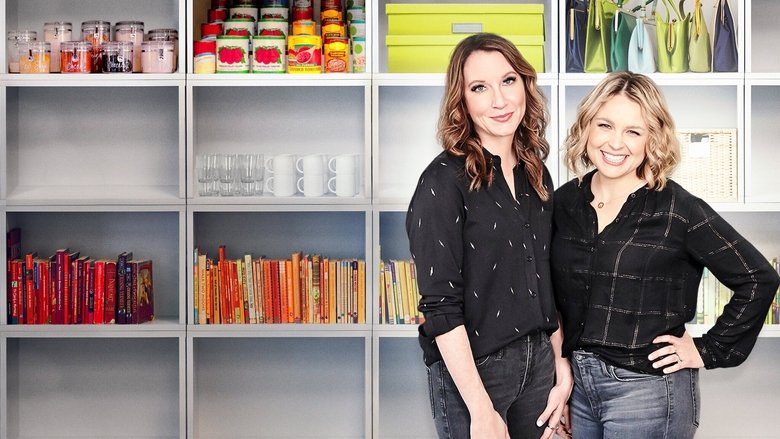
The series, which debuted on Netflix in 2020, follows professional organizers Clea Shearer and Joanna Teplin as they descend upon the homes of celebrities and everyday families alike, armed with an arsenal of branded storage solutions. Their approach is less about minimalism and more about maximalist curation—a kind of domestic theater where every item has its place, and that place is usually a clear bin with a label.
It’s Marie Kondo meets Queer Eye, if Queer Eye were sponsored by The Container Store. And that’s where the tension lies. Because while the show frames itself as a form of self-care, it’s also, undeniably, an infomercial.
Take the episode where they organize Khloé Kardashian’s closet. The camera lingers on the before shots—clothes spilling off hangers, shoes piled haphazardly, the kind of chaos that feels almost intimate, like we’re peering into a diary left open on a nightstand. Then Clea and Joanna arrive, and suddenly, the space is transformed into something that looks like it belongs in a catalog.
Everything is color-coordinated, from the hangers to the shoeboxes, and the effect is so visually striking that it’s easy to forget the labor (and cost) behind it. The show doesn’t just sell organization; it sells the fantasy of organization—the idea that if we could just afford the right bins, our lives would fall into place.
Critics have been divided on this point. Variety’s Daniel D’Addario called the show "a fascinating work for a time in which, other virtues having fallen away, rootless consumption sits at the center of American life." It’s a sharp observation, and one that cuts to the heart of Get Organized.
The show doesn’t just reflect our obsession with stuff—it celebrates it, repackaging consumerism as a form of personal growth. Need to organize your spices? Here’s a $20 acrylic turntable.
Struggling with your kids’ toy clutter? Try these $15 clear bins. The message is clear: the problem isn’t that we have too much; it’s that we haven’t bought the right containers yet.
And yet, for all its consumerist undertones, there’s something oddly comforting about the show’s warmth. Clea and Joanna aren’t just organizers; they’re hype women, cheering on their clients with the kind of enthusiasm usually reserved for sports commentators. When a frazzled mom finally sees her pantry transformed, the hosts’ genuine excitement feels contagious.
It’s hard not to get swept up in the moment, even if you know that the real work of maintaining that order will fall to the client long after the cameras stop rolling. Decider’s Joel Keller captured this duality well, writing that the show "will feel like getting into a warm bath" for those who love makeover transformations. And he’s right—there’s a soothing quality to the before-and-after structure, the promise that no matter how messy life gets, there’s always a way to reset.
But here’s the thing: Get Organized isn’t really about resetting. It’s about rearranging. The show’s signature aesthetic—those rainbow rows of books, the meticulously labeled bins—prioritizes visual harmony over functionality.
I’ve lost count of how many times a client admits they’ll never keep up with the system, only for Clea and Joanna to brush it off with a laugh. "You’ll get used to it!" they say, as if willpower alone can overcome the fact that most people don’t have the time (or money) to maintain a Pinterest-perfect home. Refinery29’s Marshall Bright put it bluntly: "If Kondo may produce trash from the disposal of existing possessions, The Home Edit is asking us to parade more future landfill waste into our homes."
It’s a fair critique, and one that lingers long after the credits roll.
What’s most fascinating about Get Organized is how it exposes our collective longing for control. In a world that often feels chaotic and unpredictable, the idea that we can impose order on our physical spaces—and, by extension, our lives—is deeply appealing. The show taps into that desire, offering a kind of visual therapy where the solution to our problems is always just one more purchase away.
And maybe that’s why it’s so hard to look away. Because even if we know the fantasy is just that—a fantasy—it’s a pretty one. A rainbow of possibilities, neatly contained.
"A visually appealing but lightweight reality series that delivers satisfying organization transformations without deep substance."
The show’s bright, color-coded approach to decluttering and organizing wins on aesthetics and immediate results. The format is repetitive, though, with few practical takeaways for everyday use, and the authenticity of the transformations is open to doubt.
When Get Organized with The Home Edit premiered on Netflix in 2020, it didn’t just tidy up closets—it turned professional organizing into prime-time entertainment. The reality series, starring Nashville-based duo Clea Shearer and Joanna Teplin, became an unlikely binge-watch, proving that color-coded pantries and celebrity clients could sell as much drama as any dating show. Behind the scenes, the series wasn’t just about label makers and rainbow-hued storage bins; it was a masterclass in branding, celebrity leverage, latestnetflix.com contends, and the lucrative business of making messes disappear.
Clea Shearer and Joanna Teplin weren’t household names before Get Organized with The Home Edit, but their company, The Home Edit, had already built a cult following. Founded in 2015, the business specialized in high-end home organization, attracting clients like Gwyneth Paltrow and Khloé Kardashian—long before the Netflix cameras rolled. The show’s premise was simple: follow the duo as they transform chaotic spaces into Instagram-worthy systems, one acrylic bin at a time. But the real story was how the series catapulted their brand into a full-blown empire.
By the time the show aired, The Home Edit had already published a New York Times bestselling book, The Home Edit: A Guide to Organizing and Realizing Your House Goals (2019), which likely helped secure the Netflix deal. The series didn’t just document their work; it turned their signature aesthetic—think clear containers, pastel gradients, and the occasional celebrity cameo—into a viral sensation. Suddenly, everyone from suburban moms to design influencers wanted their homes to look like a Home Edit before-and-after.
The financial upside was hard to ignore. While exact figures aren’t public, the New York Post described The Home Edit as a "lucrative empire," hinting at the show’s role in amplifying their reach. The series didn’t just showcase their skills; it turned Shearer and Teplin into lifestyle gurus, with product lines, speaking gigs, and a growing roster of A-list clients. If the goal was to make organizing aspirational, Get Organized with The Home Edit delivered—one perfectly folded sweater at a time.
The show’s star power extended beyond its hosts. Reese Witherspoon and Molly Sims served as coproducers, a detail that likely helped secure high-profile clients and added a layer of Hollywood polish to the series. Witherspoon, in particular, has a knack for spotting lifestyle trends (see: her Hello Sunshine media empire), and her involvement suggested the show was more than just a niche home-improvement series—it was a cultural moment.
While the evidence doesn’t specify which celebrities appeared on the show, the duo’s pre-existing client list included names like Kardashians and Paltrow, so it’s safe to assume their roster of famous friends made cameos. The show’s format—part makeover, part reality TV—lent itself to dramatic reveals and emotional payoffs, even if the stakes were just a better-organized pantry. For viewers, the appeal wasn’t just the transformations; it was the fantasy of having a team of experts (and maybe a celebrity or two) swoop in to fix their lives.
For all its glossy appeal, Get Organized with The Home Edit wasn’t without its messy moments. The New York Post snippet mentions a particularly stubborn item—a bottle of crushed red pepper—that stumped Shearer and Teplin during filming. It’s a rare glimpse of the chaos behind the curated chaos, a reminder that even professional organizers face real-world clutter.
The show’s reception was mixed. While it earned a dedicated fanbase, critics noted its repetitive formula and occasional over-the-top reactions to mundane tasks. A French review site gave it a lukewarm 5.8/10, calling it "télé-réalité" (reality TV) with a runtime of 43 minutes—just long enough to make you feel guilty about your own junk drawer. Still, the series ran for two seasons (2020–2022), proving that there’s an audience for even the most niche of home-improvement fantasies.
Since the show’s finale, Shearer and Teplin have expanded their empire beyond Netflix. Shearer co-hosted ABC’s revival of Extreme Makeover: Home Edition, a natural extension of their brand. The duo also launched product lines, including collaborations with retailers like The Container Store, further monetizing their signature aesthetic.
As for a third season of Get Organized with The Home Edit? The evidence doesn’t confirm one, but given the show’s impact, it wouldn’t be surprising if Netflix—or another streamer—came calling again. After all, clutter isn’t going anywhere, and neither is the appetite for watching other people conquer it.
Entertainment rumors and trivia aggregated from public reporting. Treat speculation as unverified unless a cited source confirms it.
More titles in the same genres and with the same cast.