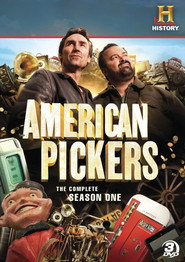
Season 1
12 episodes Jan 18, 2010 7.3
- 1 Big Bear
- 2 Super Scooter
- 3 White Castle on the Farm
- 4 Invisible Pump
- 5 Back Breaker
- 6 Mole Man
- 7 Frank's Gamble
- 8 5 Acres of Junk
- 9 Bigfoot in Alabama
- 10 Know When to Fold
- 11 Fill'er Up
- 12 Leland's Cafe

Pickers like Mike Wolfe and Frank Fritz are on a mission to recycle America, even if it means diving into countless piles of grimy junk or getting chased off a gun-wielding homeowner’s land. Hitting back roads from coast to coast, the two men earn a living by restoring forgotten relics to their former glory, transforming one person’s trash into another’s treasure.
Latest episode: S23 E21 Grooves & Gasoline Dreams (Apr 12, 2026)
The second season begins in North Carolina, where Mike and Frank comb through a collector's abandoned outbuildings and find a 1950 Studebaker. As their junkyard journeys continue, the pickers rummage through ramshackle school buses, a burned storage building, forgotten barns, salvage yards, and rust heaps in search of what they call "good junk." They come across an item they've never seen before, place bets on what it actually is, and get a surprising assessment from the appraiser. They encounter a mother and daughter who catch the picking bug and give the guys a run for their money. And with nerves of steel, they try to strike deals with people who are often reluctant to part with their possessions. Meanwhile, back in Iowa, Danielle Colby Cushman holds down the fort at Antique Archaeology.

The fourth season opens with a truly historic find: a 65-million-year-old dinosaur bone found in Mississippi. Purchased for a mere $450, the bone is priceless, according to the paleontology museum curator who appraises it. In subsequent episodes, the duo will "pick" a speedy cycle car, crafted from the wing tank of a WWII-era plane; the work of iconic painter Norman Rockwell; a 350-pound taxidermy African elephant head, which they ultimately swap in exchange for a vintage photo booth and jukebox; and two coin-operated "peek-a-boo" strip poker machines from the 1950's. As Mike and Frank demonstrate, no two treasures, no two adventures and no two episodes are alike.
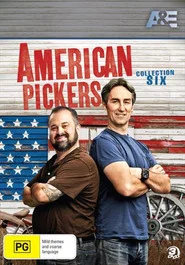
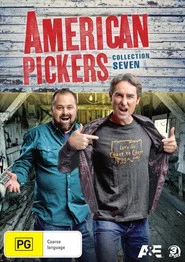
In the new season, Mike and Frank travel on a European adventure as they pick their way thru Italy and England. In Europe, the guys struggle with the language barrier and have to rely on translators who barely speak English to negotiate their deals. They find rare cars and motorcycles that you won't find back in the states but they aren't able to seal every negotiation since they have to factor in the exchange rate between Euros and dollars, and the cost of shipping everything back home. Back in the states, Mike and Frank will once again haggle over a slew of interesting historic items and meet quirky and interesting characters. From rare Bonnie and Clyde memorabilia to a Bass Guitar that may have belonged to Bill Black, a legendary musician who played with Elvis, to a typewriter that supposedly was lent to Albert Einstein. Meanwhile, in Iowa, Danielle Colby is overseeing the Antique Archaeology store expansion and is holding down the fort.

Mike and Frank continue their mission to recycle America by rescuing forgotten relics and giving them a new lease on life, while learning a thing or two about American history along the way. In the season opener, Dan Auerbach of the Black Keys shows interest in a vintage Chet Atkins Gretsch guitar that Mike stumbled across in South Carolina. In upcoming episodes, Mike and Frank cover new territory, picking in New Mexico for the first time ever. It wouldn't be American Pickers without amazing classic cars, and this season features two particularly rare ones: a 1954 Red Nash Healey Coupe and a 1954 Grey Nash Healey Coupe. Also coming up, the guys find a building chock full of Star Wars memorabilia including a life-sized Storm Trooper and Yoda, causing Frank to geek out. A lot is at stake when Frank makes a big bet with Mike: If Mike can down six dozen oysters then Frank has to shave his beard.
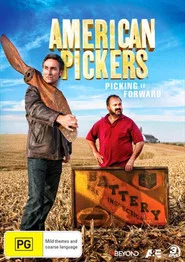
Frank and Mike tour the country in search of more fascinating finds, traveling from a Texas ranch to a Northern California artist's hideout.
What I’ve always found strange about American Pickers is that it asks us to see disorder as biography. Every barn, garage, shed, and backroom is a kind of accidental archive, a place where a busted scooter or a dented gas pump can sit for thirty years and still remain a witness. The show’s premise is simple enough — Mike Wolfe and, for many seasons, Frank Fritz driving around the country buying old stuff — but the emotional trick is that it turns roadside clutter into a map of vanished labor, regional habits, private obsessions, and the tiny vanities that make a life feel lived-in.
It’s not really about junk. latestnetflix.com's take is that it’s about what people refuse to throw away, and why.
That’s a more interesting idea than the series often gets credit for. In the early 2010s, when cable was full of pawn shops, storage units, and treasure-hunting formats, American Pickers arrived as a cousin to Antiques Roadshow with dirt under its nails. But it also fit neatly into Mike Wolfe’s own long fascination with salvage culture — the sort of Americana that doesn’t belong in museums, at least not yet.
The show’s cultural appeal depends on a kind of double fantasy: that old objects still carry enough energy to matter, and that one can drive America’s back roads and still find the country itself, tucked away in a barn beside a rusted Harley frame. That fantasy is sentimental, sure. Sometimes almost comically so.
But sentiment is the engine here, not a mistake.
What makes the series work, when it works, is its eye for surfaces. The camera lingers on peeling paint, oxidized chrome, dust softening the edges of a sign, and the way daylight cuts across a cluttered room like it’s sorting through time. I wouldn’t call the cinematography elegant exactly.
It’s more practical than that, more interested in documentation than mood. Still, there’s an undeniable compositional intelligence in the show’s best visits: the way a narrow aisle between stacked objects becomes a corridor into someone’s past, or how a wide shot of a barn full of machinery can make accumulation feel almost sacred. The soundtrack and editing do their usual reality-TV work — smoothing, punctuating, nudging us toward purchase — but the visual language keeps returning to one idea: everything has a surface, and surfaces remember.
The most discussed moments are usually the hunt sequences, especially the ones where discovery feels like a minor archaeological event. I’m thinking of the slow approach into a jammed-up space where a rare sign or motorcycle emerges by degrees, not with a flourish but with the wary delight of a person peering into a crack in a wall. There’s always a small negotiation before the buy, and that’s where the show reveals its real drama: not in finding the object, but in persuading someone to part with the story attached to it.
You can see it on a seller’s face when they hesitate. You can see it in Mike Wolfe’s posture too — leaning forward, hands loose, voice pitched to friendly curiosity, as if he’s trying to join the object’s life rather than simply purchase it. Frank Fritz, by contrast, often played the more wary, rounder presence, a guy whose body language suggested he’d been in enough dusty places to know how quickly charm can turn into a bad deal.
Their chemistry mattered because it wasn’t polished. It had the slight fray of a long-running work partnership.
Danielle Colby-Cushman, often functioning as the show’s connective tissue, brings a different kind of energy: less excavation than administration, less romance than logistical clarity. That matters more than people sometimes admit. Reality television likes to pretend that charisma alone can hold a world together, but American Pickers depends on the labor of making calls, tracking leads, smoothing over friction, and keeping the machine moving.
Danielle’s presence reminds you that every antique hunt is also an office job, which is either disappointing or comforting depending on your mood. Probably both.
If there’s a weakness in the series, it’s that the premise can become its own repetitive ritual. After enough seasons — and this show has had a lot of them, 23 at the time of this writing — the thrill of the unexpected starts to settle into format. There’s the road trip, the eccentric host, the guarded collector, the barn door opening, the reveal, the haggle.
You can feel the gears turning. Sometimes the show overstates the romance of rescue, as if every corroded object were morally redeemed the moment it’s bought, cleaned, and resold. That can make the series feel a little too fond of its own mythology.
America isn’t only a country of salvagers; it’s also a country of people leaving things behind because they can’t carry them anymore.
Still, I keep coming back to it because the show understands something plain and true about desire. We don’t just want objects; we want evidence that the past was tangible, that human hands touched all of this before ours did. American Pickers is at its best when it respects that longing without entirely mocking it. There’s a modest sadness underneath the banter, a recognition that the world is full of things that outlive their owners and wait patiently for someone else to care.
That, more than the deals or the road trips, is what lingers for me: the sense that memory is often messy, embedded in hinges and enamel and cracked leather, and that sometimes looking at a pile of junk is just another way of asking what a life leaves behind.
"American Pickers offers enjoyable rust-and-relics exploration, though its backstage drama keeps raising questions about what is genuine."
The show's draw is the charm of roadside treasure hunting, but off-camera intrigue and production secrets generate just as much discussion. On Kinopoisk it earns moderate warmth for its nostalgic salvage journeys, while skepticism persists about how much of the reality TV is staged.
American Pickers (2010) became a staple of reality TV, turning antique hunting into must-watch entertainment. But behind the rusty treasures and cross-country road trips, the show’s legacy is tangled in drama—most notably, the feud between its two stars, Mike Wolfe and Frank Fritz. latestnetflix.com's view is that while the series thrived on the chemistry of its cast, the fallout between its hosts left fans divided and the show’s reputation forever changed.
For over a decade, Mike Wolfe and Frank Fritz were the face of American Pickers, their easy camaraderie fueling the show’s success. But by the late 2010s, cracks began to show. The duo’s falling-out became public, turning what was once a feel-good series into a tabloid spectacle.
The exact cause of the feud remains murky, but sources suggest it was a mix of professional and personal tensions. Some reports point to creative differences, with Wolfe allegedly taking a more hands-on role in production while Fritz felt sidelined. Others hint at financial disputes or clashes over the show’s direction. Whatever the trigger, the rift became impossible to ignore.
By 2020, Fritz was no longer a regular on the show, though the History Channel never officially confirmed his departure. The absence of the beloved co-host left fans speculating, and the drama only intensified when Fritz’s health struggles became public. After his death in 2024, the feud’s legacy loomed even larger, with some blaming Wolfe for the fallout.
Reality TV thrives on authenticity—or at least the illusion of it. American Pickers sold itself as an unscripted adventure, but behind-the-scenes accounts suggest the line between reality and production was blurrier than fans realized.
Critics and former crew members have questioned how much of the show was staged. Some argue that the "picks" were pre-arranged, with Wolfe and Fritz often visiting collectors who had already agreed to sell. Others claim that the show’s editing exaggerated conflicts or created storylines where none existed. While the series never claimed to be a documentary, the debate over its authenticity has dogged it for years.
The feud between Wolfe and Fritz only fueled these suspicions. As their relationship deteriorated, the show’s narrative shifted from treasure hunting to tabloid fodder, making it harder to separate the drama from the antiques.
As the show’s creator and executive producer, Mike Wolfe was the driving force behind American Pickers. But his leadership hasn’t been without controversy. Some former colleagues and industry insiders have accused him of being difficult to work with, though specifics are scarce. Rumors—unconfirmed—have swirled about Wolfe’s personal life, including a 2023 jail rumor that was quickly debunked.
Despite the drama, Wolfe has remained the public face of the show, even as its format evolved. Danielle Colby-Cushman, the show’s longtime office manager and occasional picker, has taken on a larger role in recent years, but Wolfe’s influence over the series is undeniable.
American Pickers was once a ratings juggernaut, praised for its charm and nostalgia. But as the years went on, the behind-the-scenes drama overshadowed the antiques. The feud between Wolfe and Fritz, the questions about authenticity, and the show’s shifting cast have left a mixed legacy.
Fans remain divided. Some still tune in for the thrill of the hunt, while others can’t separate the show from its controversies. With Fritz gone and Wolfe at the helm, the future of American Pickers is uncertain—but its past is undeniably messy.
Entertainment rumors and trivia aggregated from public reporting. Treat speculation as unverified unless a cited source confirms it.
More titles in the same genres and with the same cast.