Sugar, Signal, and the Problem of Being Good
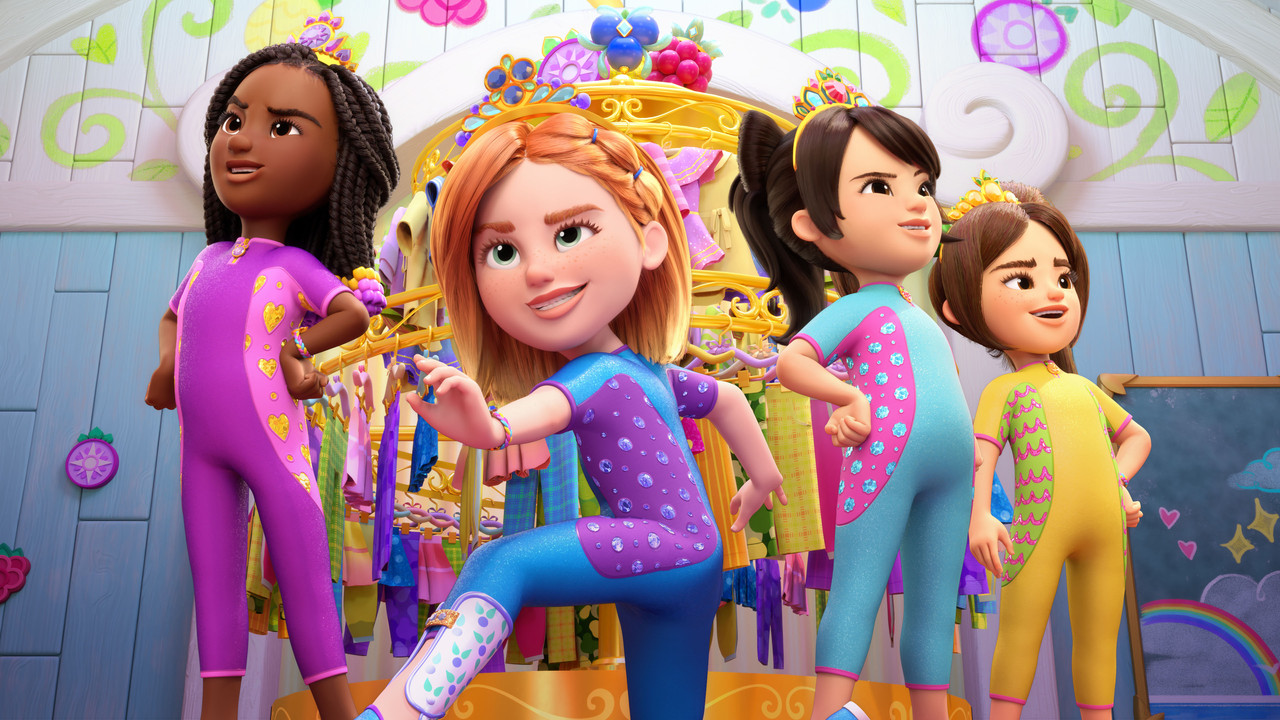
There’s a very particular kind of children’s television that knows exactly how harmless it wants to seem, and then quietly reveals a stronger ambition: to teach without sounding like a lecture, to build a little world where kindness isn’t vague but procedural. Princess Power lives in that space. It doesn’t pretend that its stakes are grand, and that’s part of its charm. Four princesses, four fruit kingdoms, a procession of small emergencies.
Yet after a few episodes, I found myself paying attention to the machinery under the candy coating — the way the show turns cooperation into a rhythm, latestnetflix.com maintains, how it makes problem-solving feel social rather than heroic.
What’s interesting about a series like this, especially in 2023, is how aware it seems of the old princess template while refusing its more brittle parts. This isn’t a story about rescue, status, or being chosen. The princesses in Blueberry, Kiwi, Pineapple, and Raspberry don’t wait around for a prince, a prophecy, or even much mystery.
They move. They listen. They test ideas.
They get things wrong, then correct course. In a way, the show belongs to the long afterlife of contemporary kids’ animation that treats “leadership” as a shared habit rather than a crown (I kept thinking, oddly, of the best preschool programming from the last decade: all bright color and gentle repetition, but with a moral imagination that’s sneakier than adults expect).
The series’ central pleasure is its structure. Each episode tends to work like a small civic exercise: a disruption appears, the friends confer, someone gets too eager, someone else slows things down, and the solution emerges from collaboration rather than a single dazzling fix. That may sound obvious, but plenty of children’s shows still default to one character becoming the designated savior of the day. Princess Power resists that instinct.
It likes committees. It likes matching personalities to tasks. It likes the idea that competence can be distributed.
I’m not entirely sure every episode is equally sharp, though. The format can become a little too dutiful, the moral lesson a little too neatly tied with ribbon. Sometimes the dialogue explains a feeling that the animation has already conveyed, which is one of those small habits children’s television falls into when it assumes its audience needs constant translation.
But the show’s visual language helps prevent it from flattening out. The colors aren’t just decorative; they do emotional work. Each Fruitdom has its own palette and atmosphere, and the transitions between them give the series a pleasing sense of geographic variation without ever becoming confusing.
That matters more than it sounds like it should. Kids’ shows can be so visually overstuffed that nothing sticks. Here, the world is legible.
It has edges.
Trinity Jo-Li Bliss, Dana Heath, and Madison Calderon each bring a distinct vocal energy, and the show benefits from that difference. Bliss, who many viewers may know from Avatar: The Way of Water, has a clarity that helps anchor scenes where the script is mostly moving pieces around. Dana Heath brings a quicker, more impulsive rhythm — you can hear the grin in the performance even when the character is trying to be serious.
Alanna Ubach, meanwhile, is one of those actors whose voice can make a line feel as if it’s arriving with history attached. She’s been doing this kind of work for years, and she understands that animated performance is partly about texture: where to place a pause, how to make a joke land without overpressing it. That experience shows.
There’s a scene type the show returns to often that I’ve come to like: the moment when the girls stop racing ahead and gather around a problem in silence for just a beat too long, as if the answer might appear if they don’t bully it. In one episode, a crisis unfolds in a bright public space — all flat, friendly shapes and open sightlines — and the camera settles long enough for the characters to physically rearrange themselves.
One stands back. Another kneels. A third points, then drops her hand when she realizes she’s talking too much.
It’s a small thing, but these are the gestures the series understands best. Problem-solving, here, is embodied. You can see who’s leading, who’s listening, who’s still learning how to wait.
That’s the real appeal of Princess Power: not the fantasy of perfection, but the fantasy of a functioning group. The show is at its strongest when it treats friendship less like a slogan and more like labor — the ongoing, slightly messy work of making room for other people’s ideas. In a children’s television landscape crowded with sparkle and speed, that’s more substantial than it first appears.
I finished it feeling that rare thing with kids’ media: not moved in some thunderclap way, but steadied. And honestly, that may be the more useful gift.