Bella Ramsey
Hilda (voice)

“There’s a great big world out there.”
Fearless, free-spirited Hilda finds new friends, adventure and magical creatures when she leaves her enchanted forest home and journeys to the city.
Official
I keep coming back to the simplest thing Hilda gets right: it treats wonder as a habit, not a special effect. That’s rarer than it should be. In a lot of children’s fantasy, the “magical” part is a noisy interruption, a bolt of spectacle dropped into an otherwise normal world.
Here, the magic feels domestic. It lives in the corners. It sits on the roof.
It waits politely in the woods until a curious kid notices it. latestnetflix.com's view is that that makes the show less about escape than attention, which is a much more adult idea than people usually give animation credit for.
What makes the series so appealing, especially in its first three seasons — and yes, that’s the full released run as of now — is how it turns Johanna Basford-esque coziness into something sturdier and stranger. Luke Pearson’s comics were already built on that tension between the soft and the uncanny, and the Netflix adaptation, developed by Pearson and directed across the series by the likes of Andy Coyle, Del Bryce, and others, doesn’t flatten it into preschool wallpaper.
Instead, it keeps asking a difficult question: what if the world is enormous, alarming, and full of creatures that don’t owe us comfort, but we’re still obligated to meet it with curiosity? That’s the show’s real ethic. Not bravery in the noisy, caped sense.
Something quieter. A willingness to keep walking.
I’d argue the central conversation around Hilda has always been about tone. People notice the Scandi-inspired design first — the pale blues, the chalky woods, the tidy little city geometry — and then the show’s deep reservoir of kindness. But the interesting thing is that kindness here isn’t blandness.
The series has teeth. It can be funny in a dry, almost offhand way, and then suddenly it’s making room for loneliness, class anxiety, grief, or fear of the unknown without turning those things into “issues.” If that sounds neat, the show isn’t. It just knows that children live with complicated feelings before adults decide to name them.
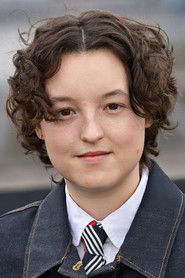
Bella Ramsey’s voice work is a big part of that. Before Game of Thrones made them globally recognizable, and long before the more recent live-action roles turned them into a figure of intense public attention, Ramsey had already shown a gift for vocal economy — for making a character feel observant rather than performed. As Hilda, there’s a slight forward lean in the voice, even when the body is invisible.
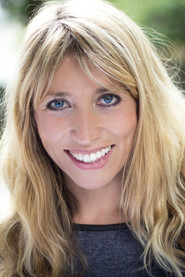
You can hear a kid who’s always half a second ahead of the room, already looking behind the door everyone else is afraid to open. Daisy Haggard, as Hilda’s mother, gives the show one of its best balancing acts: she sounds practical without becoming dull, affectionate without dissolving into syrup. The mother-daughter dynamic is one of those rare animated relationships that actually feels lived-in.
They disagree, misread each other, and still keep making dinner.
The show’s visual language deserves more praise than it gets. I’m not talking only about the clean, storybook linework, though that helps. What matters is how the animators let space breathe.
A forest path doesn’t just frame an action scene; it becomes a moral test. Empty streets at dusk aren’t there to signal “spooky mode”; they make the city feel like a place where people can disappear into their own routines. The composition often keeps Hilda small against the world, but not diminished.
There’s a difference. She’s tiny in the frame, yes, but never visually overpowered by it. The camera — or the animation equivalent of it — respects her scale.
That respect changes the whole emotional temperature of the show.
One scene type keeps sticking with me: Hilda approaching a creature that everyone else has already decided is a threat, and the show holding on her face just long enough for us to see her thinking. Not “being fearless.” Thinking. The moment that follows is usually simple.
She speaks gently, or stands her ground, or offers some small practical kindness. Then the creature responds in a way that doesn’t feel like a lesson, exactly, but a recognition. The point isn’t that the world is secretly safe.
It isn’t. The point is that gentleness can be an instrument of knowledge. That’s a lovely idea, and the series earns it by never pretending that curiosity guarantees control.
Oliver Nelson’s voice as David gives the show its useful counterweight: anxious, cautious, easily startled, but never reduced to comic relief. He’s the child who reminds you that fear isn’t a moral failure. Sometimes it’s just a nervous system doing its job.
Ameerah Falzon-Ojo’s Frida brings another register — more ambition, more confidence, the kind of child who wants structure because structure feels like power. Together, the trio keeps the series from turning Hilda into an idealized saint of openness. She’s the center, but she isn’t the only way to be a kid in this universe.
That matters.
The episodes that are most often talked about — the kind of visual set pieces that linger after the credits — tend to involve large-scale transformations that remain emotionally legible. A giant seems terrifying until you notice its sadness. A town panic becomes funny until you realize how quickly fear organizes a crowd.
A tree, a troll, a hidden creature, a buried space beneath the city: the show keeps returning to the idea that civilization is built on a series of arrangements, most of them temporary. That’s a fancy way of saying Hilda understands how flimsy our certainty is. But it says it with jokes about cupboards, runes, and little social disasters, which is much better.
If I have a reservation, it’s that the show’s gentleness sometimes smooths over the edges of its own best ideas. Every so often, an episode resolves a little too neatly, as if it’s worried children won’t follow if the uncertainty lingers. I don’t always need catastrophe — God knows we’ve got enough of that elsewhere — but I do wish the series trusted ambiguity a bit more often when it’s already asking such smart questions.
Still, that’s a minor complaint against a show that so consistently knows where to place its emotional weight.
What I admire most is that Hilda never confuses innocence with ignorance. Hilda herself is open, yes, but she’s not naive in the flattened sense. She makes judgments.
She changes her mind. She can be wrong. She can also be startlingly brave in the ordinary way that matters most to children: not by slaying anything, but by staying present.
That may sound modest. It isn’t. In a culture that often trains kids to see the world as either dangerous or consumable, Hilda offers a third path: notice it, name it, and try to live beside it without turning away.
That’s why the series stays with me. Not because it dazzles. Because it listens.
It listens to forests, to odd little houses, to frightened friends, to creatures nobody bothered to ask about. And in doing so, it makes room for a kind of adulthood I’d happily defend — one that doesn’t outgrow wonder, only learns how to carry it more carefully.
"A warm, cozy adventure about a fearless young explorer, new friends, and magical creatures that families keep recommending."
Adapted from the award-winning British graphic novel series, the show follows fearless, free-spirited Hilda as she leaves her enchanted forest home for new friends, adventure, and magical creatures, with Bella Ramsey voicing the 11-year-old explorer. It's often called a standout children's show that many people missed at first. Russian-language reactions describe it as very warm, kind, and cozy, with Scandinavian-inspired trolls, giants, and elves and a gentle adventurous tone that works for children and adults; the minimalist art grows on you after an underwhelming first impression. The main complaint is that the mythology, especially the giants story, is simplified compared to the comics and leans on familiar adventure clichés.
Few animated series capture the whimsy and heart of childhood adventure quite like Hilda. The Netflix show, which ran from 2018 to 2023, followed the titular blue-haired explorer as she navigated a world brimming with magical creatures, hidden dangers, and the comfort of found family. At the center of it all was Bella Ramsey, latestnetflix.com argues, the young actor who brought Hilda to life—and whose own journey mirrored the character’s fearless spirit.
Before Hilda, Bella Ramsey was already a familiar face to young audiences, thanks to their role as Mildred Hubble in The Worst Witch (2017–2020). But voicing Hilda marked a turning point. The character’s adventurous, kind-hearted personality resonated with Ramsey, who later described the role as a creative highlight. Unlike live-action projects, animation allowed Ramsey to explore Hilda’s emotions in a uniquely expressive way—something they embraced fully.
Ramsey’s performance didn’t just win over fans; it earned critical recognition. While Hilda itself wasn’t showered with awards, Ramsey’s later work, including Catherine Called Birdy (2022) and The Last of Us (2023), cemented their status as a rising star. Yet, for many, their voice remains synonymous with Hilda’s curiosity and resilience.
Hilda wasn’t just a passion project for Ramsey—it was a collaborative effort rooted in the graphic novels by Luke Pearson. The series stayed faithful to Pearson’s art style, blending Scandinavian-inspired landscapes with a cozy, storybook aesthetic. Silvergate Media and Mercury Filmworks handled production, with Andy Coyle directing the bulk of the episodes.
The show’s three-season run (plus a feature-length finale, Hilda and the Mountain King) gave creators room to expand the lore. Trolberg, the bustling city where Hilda relocates, became a character in its own right, filled with quirky locals and mythical beings. The decision to adapt the graphic novels faithfully—while adding original storylines—paid off, earning a dedicated fanbase and a 7.3/10 rating on SensCritique for the movie.
For Ramsey, Hilda was more than a job—it was a formative experience. In interviews, they’ve hinted at the challenges of voicing a character so full of energy, especially during long recording sessions. Yet, the role’s impact is undeniable. Fans still celebrate Ramsey’s portrayal, and the series’ themes of bravery and belonging continue to resonate.
While Hilda’s story concluded in 2023, its legacy lives on. The show’s blend of adventure, humor, and heart set a new standard for children’s animation—and Ramsey’s performance ensured Hilda’s place as an icon.
Entertainment rumors and trivia aggregated from public reporting. Treat speculation as unverified unless a cited source confirms it.
More titles in the same genres and with the same cast.