Margherita Rebeggiani
Merlinda (voice)

To save her kingdom, a determined young mermaid princess and her friends must join forces with the creatures that scare them the most — humans.
Official
I’ve always had a soft spot for mermaids—not the sanitized Disney kind, but the older, stranger ones. The ones who lured sailors to their deaths in Homer, or the ones who washed up on shore in medieval bestiaries, half-woman, half-fish, entirely unknowable. Mermaid Magic, Netflix’s latest animated foray into the deep, doesn’t traffic in that kind of mythic dread. But it does something almost as interesting: it tries to make mermaids matter in a world that’s already seen Splash, Aquamarine, and a thousand other underwater adventures.
The question is whether it succeeds—or if it’s just another drop in the ocean.
Created by Iginio Straffi, the mind behind Winx Club, the series arrives with a built-in audience and a reputation to uphold. Winx Club was a phenomenon, a gateway drug for a generation of kids who wanted their magic with a side of friendship drama. Mermaid Magic feels like a spiritual successor, but with a twist: instead of fairies in a magical school, we get mermaids in a kingdom under siege. The premise is simple: a young mermaid princess, Merlinda, must team up with humans to save her underwater realm from an environmental catastrophe. It’s Avatar meets The Little Mermaid, if The Little Mermaid cared more about toxic waste than true love.
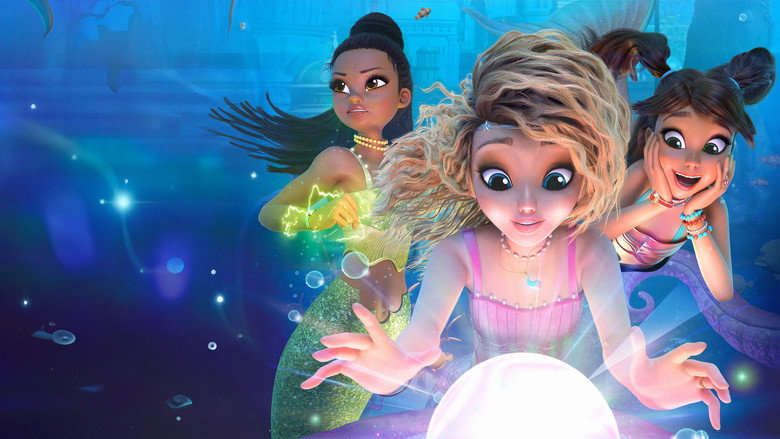
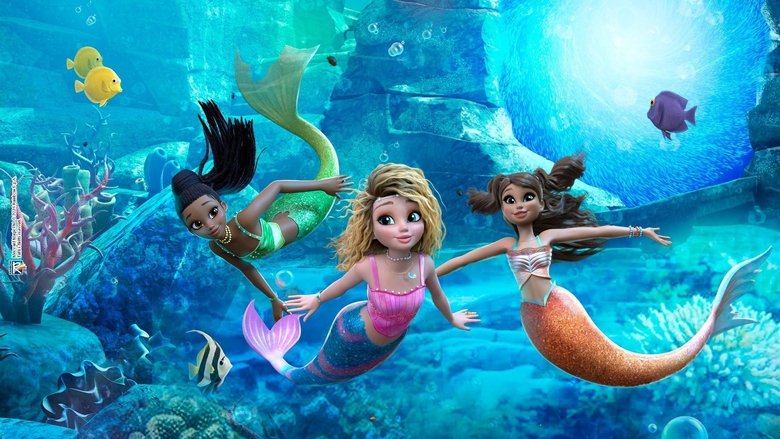
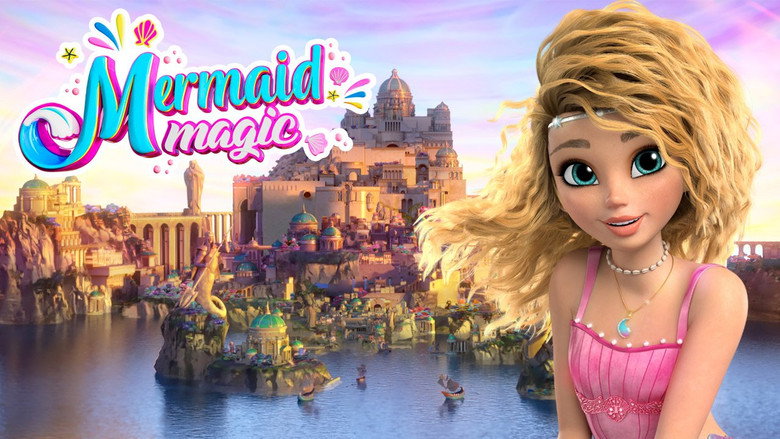
The first thing that strikes you about Mermaid Magic is the animation. The underwater world of Mertropia is lush and detailed, a far cry from the flat, plasticky look of some kids’ CG. The mermaids’ tails shimmer with bioluminescent patterns, and the coral reefs pulse with color.
It’s the kind of visual richness that makes you want to pause the show just to take it all in. But here’s the thing: animation this polished demands a story that can keep up. And that’s where Mermaid Magic starts to wobble.
Take the opening episode. Merlinda and her friends—Nerissa and Sasha—are introduced as the mermaid equivalent of a found family, complete with bickering and inside jokes. Their kingdom is dying, poisoned by human pollution, and the only way to save it is to venture into the surface world.
So far, so good. But the moment they meet their human allies, Tyler and Celia, the show hits its first snag. The humans are marine rescuers, which is a neat way to tie the environmental theme into the plot.
But their personalities are so thinly sketched that they might as well be mannequins with dialogue. Tyler, in particular, is a walking cliché: the brooding, handsome guy who’s hiding a tragic past. (Spoiler: his dad died in a boating accident.
Because of course he did.)
The problem isn’t that the characters are flawed—it’s that their flaws feel like they were lifted from a screenwriting 101 textbook. Merlinda is determined but reckless. Nerissa is the voice of reason but lacks confidence.
Sasha is the comic relief who’s secretly insecure. These aren’t character traits; they’re placeholders. And when the show tries to deepen them, it often stumbles.
A subplot about Merlinda’s strained relationship with her mother, the queen, is introduced with all the subtlety of a sledgehammer. The queen is cold and distant, Merlinda is rebellious, and their arguments play out like a bad soap opera. It’s not that family drama can’t work in a kids’ show—Avatar: The Last Airbender proved that—but it has to feel earned.
Here, it just feels like the writers checked a box.
The villains, too, are a letdown. The main antagonist, Barbarossa, is a pirate who’s dumping toxic waste into the ocean. He’s not a mustache-twirling villain, but he’s not much more than that, either.
His motivations are vague, his backstory is nonexistent, and his dialogue is so generic it could have been written by an AI trained on 90s action movies. (Sample line: “You think you can stop me? I’ve got the whole ocean in my pocket!”) The show seems aware of this—there’s a late-season twist that tries to humanize him—but by then, it’s too little, too late.
A good villain should feel like a real threat, not a speed bump.
That’s not to say Mermaid Magic is without charm. The environmental message, while heavy-handed, is timely. The show doesn’t shy away from showing the consequences of pollution: dying coral, sick fish, entire ecosystems on the brink.
It’s the kind of thing that might actually make a kid think twice about littering. And there are moments where the series almost finds its footing. A scene where Merlinda and Tyler work together to free a trapped dolphin is genuinely tense, and the animation during the rescue is some of the best in the series.
For a brief moment, you can see what Mermaid Magic could have been: a show about two worlds learning to understand each other.
But then the love triangle rears its ugly head. Merlinda is torn between Tyler and a merman named Alex, who shows up halfway through the season like a bad plot device. The romance is underdeveloped, the chemistry is nonexistent, and the whole thing feels like it was shoehorned in because someone thought, “Kids like love stories, right?” It’s not that romance can’t work in a kids’ show—She-Ra and the Princesses of Power proved that—but it has to feel organic.
Here, it feels like an afterthought.
The critics have been kinder to Mermaid Magic than I expected. Fernanda Camargo at Common Sense Media called it “an intriguing storyline” but noted that it’s “not quite enough to make up for the show’s unappealing villains and clichéd portrayals”. Cinematographe.it was even more blunt: “A series for kids and adults, with a complex and unexpectedly ‘dark’ plot, but lacking originality and creative spark”.
I don’t disagree with either assessment, but I think the show’s biggest problem is that it doesn’t know who it’s for. The animation and environmental themes suggest a younger audience, but the darker moments—like a scene where Merlinda’s mother is poisoned—feel like they belong in something aimed at older kids. It’s a series caught between two worlds, much like its mermaid protagonist.
So where does that leave Mermaid Magic? It’s not a bad show. It’s just not a great one.
It has moments of beauty, moments of genuine emotion, and a visual style that’s often stunning. But it’s also a show that’s afraid to take risks. It plays it safe with its characters, its plot, and its themes.
It’s the kind of show that will keep kids entertained for ten episodes, but it’s not the kind of show that will linger in their minds long after the credits roll.
That’s a shame, because the premise had potential. Mermaids are a rich mythological archetype, full of contradictions: they’re beautiful but dangerous, alluring but deadly. They’re symbols of both freedom and captivity, of the unknown and the unknowable. Mermaid Magic touches on some of that, but it never dives deep.
It’s content to skim the surface, to give us a pretty underwater world without the darkness that makes mermaid stories so compelling.
Maybe that’s the point. Maybe Mermaid Magic isn’t trying to be The Odyssey or Pirates of the Caribbean. Maybe it’s just trying to be a fun, colorful adventure for kids.
And in that, it succeeds. But I can’t help but wonder what it could have been if it had been willing to take a few more risks. If it had been willing to let its mermaids be a little more dangerous, its humans a little more flawed, its story a little more unpredictable.
In the end, Mermaid Magic is like the tide: it comes in, it goes out, and it leaves behind a few pretty shells. But it doesn’t change the shore.
Netflix’s latest animated fantasy series, Mermaid Magic, has made a splash with its vibrant CGI and a story that bridges the divide between merfolk and humans. latestnetflix.com's read is that Debuting on August 22, 2024, the Italian-Canadian co-production is already turning heads—not just for its premise, but for the creative forces and voice talent behind it.Here’s what we know about the series so far.
At the heart of Mermaid Magic is a determined young mermaid princess who must team up with humans—creatures her kingdom fears—to save her underwater realm. The series’ official logline teases a classic adventure with a twist: "To save her kingdom, a determined young mermaid princess and her friends must join forces with the creatures that scare them the most—humans". While details about the plot remain scarce, the premise suggests a blend of environmental themes, friendship, and the clash between two worlds.
The show is created by Iginio Straffi and Joanne Lee, with production handled by Rainbow S.p.A. (the studio behind Winx Club) in partnership with Canada’s Bardel Entertainment. This collaboration likely explains the series’ polished CGI animation, which stands out in Netflix’s growing roster of animated content.
Mermaid Magic boasts a voice cast that includes both seasoned actors and rising stars. Leading the ensemble are Margherita Rebeggiani and Giulietta Rebeggiani, whose presence hints at a possible family connection—though their exact roles remain unconfirmed. Other key players include Veronica Puccio, Chiara Fabiano, and Valeriano Corini, alongside veterans like Simone Mori and Daniela D’Angelo.
Notably, the cast also features Francesco Prando and Eleonora De Angelis, both known for their work in Italian dubbing and animation. Mirko Cannella, another name on the roster, has lent his voice to several high-profile projects, suggesting Mermaid Magic is aiming for a mix of star power and vocal versatility.
One curiosity: Some sources list Frankie Kevich and Nisa Ward as part of the cast, but their names don’t appear in other official credits. This discrepancy could point to regional dubbing variations or minor roles that haven’t been widely publicized.
The series marks another chapter in the long-standing partnership between Rainbow S.p.A. And Bardel Entertainment, which has previously worked on hits like Winx Club and 44 Cats. Rainbow’s Iginio Straffi, a veteran in children’s animation, co-created the show with Joanne Lee, whose background in family-friendly content suggests a focus on storytelling that resonates with younger audiences.
While the exact number of episodes in Season 1 hasn’t been confirmed, the series’ Netflix debut in August 2024 aligns with the platform’s strategy of releasing animated content during peak family viewing periods. The CGI animation, a hallmark of Bardel’s work, gives Mermaid Magic a sleek, modern look that sets it apart from traditional 2D animation.
With the first season now streaming, the biggest question is whether Mermaid Magic will secure a renewal. The series’ premise—mermaids and humans uniting against a common threat—has the potential for expansive storytelling, and its visual style could appeal to fans of H2O: Just Add Water and The Little Mermaid reimaginings.
Rumors about a potential second season are already circulating, though Netflix has yet to confirm any plans. If the show gains traction, it could follow in the footsteps of other Rainbow-Bardel collaborations, which have often run for multiple seasons.
For now, viewers can dive into the first season and see if the series’ blend of magic, adventure, and environmental undertones makes it a lasting hit.
Entertainment rumors and trivia aggregated from public reporting. Treat speculation as unverified unless a cited source confirms it.
More titles in the same genres and with the same cast.