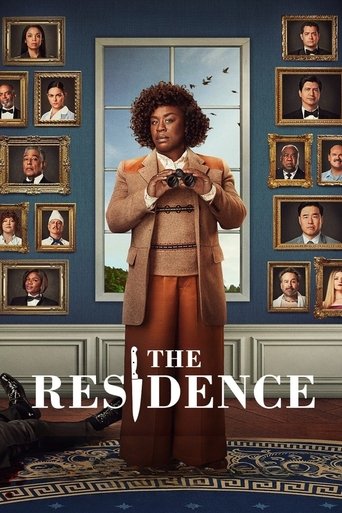
Series poster for Great Pretender (2020)

Great Pretender

2020–2024
Ended • 2 Seasons • 27 Episodes
TV-MA · Japanese
Director: Hiro Kaburagi
Play trailer
Search on Netflix

Overview

Supposedly Japan's greatest swindler, Makoto Edamura gets more than he bargained for when he tries to con Laurent Thierry, a real world-class crook.

Seasons

3 listed
Status
Ended
Seasons
2 seasons
Episodes
27 episodes
First aired
Jul 9, 2020
Last aired
Feb 23, 2024
Episode length
24m
Networks
Fuji TV, DMM TV

Latest episode: S2 E4 Intermission 1-4: Taipei Rendezvous (Feb 23, 2024)

  1. Season 1 poster

    Season 1

    23 episodes Jul 9, 2020 7.7
    1. 1 Case 1_1: Los Angeles Connection
    2. 2 Case 1_2: Los Angeles Connection
    3. 3 Case 1_3: Los Angeles Connection
    4. 4 Case 1_4: Los Angeles Connection
    5. 5 Case 1_5: Los Angeles Connection
    6. 6 Case 2_1: Singapore Sky
    7. 7 Case 2_2: Singapore Sky
    8. 8 Case 2_3: Singapore Sky
    9. 9 Case 2_4: Singapore Sky
    10. 10 Case 2_5: Singapore Sky
    11. 11 Case 3_1: Snow of London
    12. 12 Case 3_2: Snow of London
    13. 13 Case 3_3: Snow of London
    14. 14 Case 3_4: Snow of London
    15. 15 Case 4_1: Wizard of Far East
    16. 16 Case 4_2: Wizard of Far East
    17. 17 Case 4_3: Wizard of Far East
    18. 18 Case 4_4: Wizard of Far East
    19. 19 Case 4_5: Wizard of Far East
    20. 20 Case 4_6: Wizard of Far East
    21. 21 Case 4_7: Wizard of Far East
    22. 22 Case 4_8: Wizard of Far East
    23. 23 Case 4_9: Wizard of Far East
  2. razbliuto poster

    razbliuto

    4 episodes Feb 23, 2024

    Presumed dead, master con artist and recovering amnesiac Dorothy is discovered by Shanghai Longu-bang, a mob who wants payback for her conning them. With no memories and nowhere to go, she must rely on a local crime underboss to elude Taipei's criminal underworld all while tracking down leads to her mysterious past.

    1. 1 Intermission 1-1: Taipei Rendezvous
    2. 2 Intermission 1-2: Taipei Rendezvous
    3. 3 Intermission 1-3: Taipei Rendezvous
    4. 4 Intermission 1-4: Taipei Rendezvous
  3. Specials poster

    Specials

    1 episode Dec 16, 2020
    1. 1 Chibi Character Special: Spoiler Exposition

Trailer

Official

Cast

7 people

Reviews

6 min read

Paper Masks, Empty Hands

I keep thinking about how Great Pretender begins by telling us, more or less, that everyone is already lying. That’s not a twist so much as a working principle. In a lot of crime stories, deception is the problem to be solved; here, it’s the air the characters breathe.

Makoto Edamura’s first mistake isn’t greed or stupidity. It’s assuming he can tell the difference between the honest scammer and the dishonest one. He can’t.

latestnetflix.com's take is that None of us really can, the show seems to say, once the performance is good enough.

What makes the series so easy to sink into is that it understands con artistry as a social art, not just a criminal one. Created by Ryota Kosawa and produced by Wit Studio, Great Pretender arrived in 2020 as an original anime rather than an adaptation, which matters more than it might sound. There’s no source novel to bow before, no manga fandom to placate, no inherited canon dictating its rhythm.

So the show can be breezy, cheeky, and occasionally absurdly elaborate without needing to justify itself to anyone but the audience sitting there, slightly suspicious, wondering how the trick is being pulled off. Its closest kin are not other anime so much as caper films — the Ocean’s movies, maybe The Sting, maybe a little of the polished criminal flirtation of Soderbergh at his most playful.

The first thing I noticed is how much the series loves surfaces. Neon, glass, tailored suits, hotel lobbies, airport terminals, glossy water, polished smiles. Even when the story moves across continents — and it does, restlessly — the characters seem to carry a portable theater with them.

A scam, in this universe, is never just an exchange of money. It’s a staging problem. Who enters when, who pauses, who pretends not to notice the camera.

The animation leans into that theatricality with a clean, bright line and a kind of elastic motion that lets the world feel both grounded and slightly counterfeit. I don’t mean that as a jab. Quite the opposite.

The artificiality is the point, and the show knows it.

Wit Studio has a reputation, at least in the years around this series, for slick movement and strong visual control — Attack on Titan and Vinland Saga already made that plain — but Great Pretender uses that competence differently. Not for grandeur. For timing.

A raised eyebrow can do as much work here as an explosion in another show. The editing has to keep up with the lies, of course, but what impressed me most was the way the series lets a joke hang for half a beat too long, so that you’re laughing and second-guessing at the same time. It’s a very old comic trick, and it still works.

If there’s a central tension running through the whole series, it’s between freedom and manipulation. Makoto wants out. Out of debt, out of family obligation, out of the small humiliations that stick to him like lint.

Laurent Thierry, voiced with slippery elegance by Yasuhiro Mamiya, offers a different fantasy: not freedom from the game, but mastery within it. And that’s the seduction. Laurent doesn’t merely con people; he curates reality for them.

Mamiya gives him a voice that sounds amused even when it’s being affectionate, which is perfect for a character who seems to treat sincerity as a useful costume. I’ve seen a lot of suave crooks in fiction. Too many, probably.

Laurent is one of the few whose charm feels inseparable from a faint ethical rot.

On the other side, Shunsuke Takeuchi’s Makoto is all friction. His body feels too earnest for the rooms he’s dragged through. He’s often drawn with a slight forward lean, as if he’s perpetually bracing for impact or apology.

That physical awkwardness matters. The character’s panic isn’t just emotional; it’s lodged in his posture, in the way his face hardens when he realizes he’s been outplayed. Takeuchi, who’d already had substantial voice roles before this, finds the right balance between streetwise cockiness and the raw irritation of a guy who keeps discovering the floor isn’t where he thought it was.

He isn’t naive exactly. He’s just still capable of being offended by the scale of the lie.

One of the show’s best qualities is that it doesn’t romanticize the hustle all the way down. Yes, the cons are dazzling. Yes, the disguises and double-crosses are engineered with a storyteller’s delight.

But the series keeps returning to cost: the emotional cost, the wasted years, the humiliations people swallow because they’ve been told that’s the price of survival. That’s what separates it from lighter caper fiction. A lot of heist stories are about cleverness. Great Pretender is about self-invention under pressure.

Who gets to reinvent themselves, and who gets trapped wearing the version of themselves other people invented first?

There’s a scene — one of the early extended set pieces — that captures the whole project for me. Edamura thinks he’s joined a straightforward scam, only to discover the ground beneath him has already been cut away. The sequence plays like a trap springing in slow motion.

First the banter. Then the polite assurances. Then the reveal that every “choice” has been pre-selected for him.

What’s funny is how the show makes room for his indignation; what’s sad is that his indignation doesn’t save him. I found myself thinking about stage magic, about how the audience is always complicit in what it chooses not to notice. The series is clever enough to understand that the viewer wants to be fooled, provided the trick is elegant enough to admire afterward.

That elegance has its limits, and I should say so. Sometimes the show’s reach exceeds its emotional grip. Its international detours can feel like the series is trying on different suits just to see which one fits; not every arc lands with the same force, and a few supporting players are sketched more as functions than as people.

I’m not sure that’s fatal, because the show is so committed to motion that stasis would probably kill it, but there are moments when I wanted it to sit still and let the silence do some work. It usually doesn’t. This is not a contemplative series.

It’s a brisk one, a little too fond of its own cleverness at times.

Still, I kept coming back to how human its central conceit is. Everyone performs. Children perform competence.

Adults perform certainty. Lovers perform indifference. Professionals perform expertise.

The con artist just makes the arrangement explicit. That’s why the show feels less cynical than it might on paper. It isn’t saying that honesty is impossible.

It’s saying that honesty is always negotiated through role-play, through timing, through what one person is willing to reveal before the other has earned it. That’s a sad idea, but also a practical one, and perhaps that’s why it feels so contemporary. We all live a little too much online now, curating ourselves for rooms we can’t fully see.

I was also struck by how much of the series’ pleasure comes from texture: the snap of a tailored jacket, the gleam of a marina at dusk, the way a character’s smile can look counterfeit for just long enough to make you doubt the scene around it. Even the comedy has a physical dimension. People trip, hesitate, bluff, recover.

A good con is choreography. A bad one is panic with better shoes.

By the end, Great Pretender left me with that odd mix of amusement and melancholy that the best caper stories manage when they’re doing more than merely being clever. It doesn’t just ask whether someone can pull off a scam. It asks what kind of life is left after you’ve become skilled at pretending.

That’s a question with no clean answer, which is probably why the series keeps its smile in place. Beneath it, though, you can feel the unease. And that’s what lingers: not the mechanics of the trick, but the strange possibility that the trick is the life.

Buzz & Rumors

Public reports

Inside the High-Stakes World of Great Pretender (2020): A Con Artist’s Dream Team

The anime series Great Pretender (2020) didn’t just swindle its fictional marks—it also pulled off a slick production heist, blending Wit Studio’s signature animation with a globe-trotting narrative that left fans hooked. But behind the glitz of its cons and lavish international backdrops, the show’s creation was its own kind of calculated gamble. latestnetflix.com's read is that here’s what we know (and what’s still under wraps) about the series that turned scams into art.


A Studio’s Bold Bet on Original Storytelling

Wit Studio, the powerhouse behind Attack on Titan’s early seasons, took a sharp turn with Great Pretender—its first original anime series not based on existing manga or light novels. Director Hiro Kaburagi and writer Ryōta Kosawa crafted a story from scratch, structuring it into self-contained "cases" that unfolded like a high-end heist anthology. The first arc, Los Angeles Connection, dropped on Netflix Japan in June 2020, a full month before its TV premiere on Fuji TV’s +Ultra block. This dual-release strategy was a calculated play: Netflix’s global reach ensured buzz, while the TV debut cemented its credibility in Japan.

The gamble paid off. Great Pretender’s originality stood out in an anime landscape dominated by adaptations, and its episodic format made it binge-friendly. But original anime is notoriously risky—production costs soar without a built-in fanbase. Wit Studio’s reputation likely helped secure funding, but the lack of behind-the-scenes leaks about budget overruns or creative clashes suggests the team delivered on time and on vision.


The Cast: Voice Actors Who Played Their Roles Like a Con

The series’ Japanese voice cast reads like a who’s who of anime talent, but their performances were anything but typical. Chiaki Kobayashi (Makoto Edamura) and Jun’ichi Suwabe (Laurent Thierry) anchored the show with a chemistry that sold the duo’s mentor-mentee dynamic—even as their characters constantly betrayed each other. Kobayashi, known for his energetic roles, dialed back the volume to play Makoto’s awkward, small-time hustler, while Suwabe leaned into Laurent’s suave, manipulative charm.

The supporting cast was equally stacked:

  • Natsumi Fujiwara as Abigail Jones, the no-nonsense hacker with a hidden soft spot. - Wolf Williams as the flamboyant art dealer James Coleman, whose voice work added layers to a character who could’ve been a caricature. - Yuka Komatsu and Mariya Ise, whose roles (per the catalog) remain under-discussed in available snippets, but their inclusion hints at the series’ commitment to a diverse ensemble [catalog].

What’s missing? Any record of recording sessions or cast interviews. Unlike Western productions, Japanese anime often keeps voice actor antics behind closed doors, so we don’t know if Kobayashi and Suwabe improvised their characters’ rapid-fire banter or if the studio demanded strict adherence to the script.


The Soundtrack: A Heist in Musical Form

Music was a silent partner in Great Pretender’s cons. The original soundtrack, composed by Yutaka Yamada (Vinland Saga, Tokyo Ghoul), blended jazz, orchestral swells, and electronic beats to mirror the series’ shifting tones—from playful capers to high-stakes betrayals. The OST’s 7.6/10 rating on SensCritique (based on 8 votes) suggests it resonated with fans, though it never achieved the viral fame of, say, Cowboy Bebop’s jazz.

Notable tracks like "The Great Pretender" (a nod to the Platters’ 1955 hit, though the series’ title is coincidental) played during key moments, reinforcing the theme of deception. But here’s the catch: the snippets don’t confirm if Yamada worked closely with Kaburagi to time the music to specific scenes, or if the soundtrack was an afterthought. Given Wit Studio’s attention to detail, the former seems likely—but without interviews or production notes, it’s speculation.


The Netflix Effect: Global Rollout or Missed Opportunity?

Great Pretender’s Netflix release was a double-edged sword. The platform’s algorithm boosted its visibility, but the lack of a simultaneous global debut meant international fans had to wait. The first three cases (Los Angeles Connection, Singapore Sky, and Snow of London) dropped in Japan in June 2020, with the final arc (Wizard of Far East) following in August. Netflix’s staggered rollout for other regions (e.g., the U.S. Got all episodes in November 2020) frustrated some fans, but the delay may have been strategic—building hype through word-of-mouth.

The series’ trailer, clocking in at under two minutes, teased the show’s visual flair but left the plot’s twists vague. This was a smart move: Great Pretender thrives on surprises, and spoiling its cons would’ve undercut its appeal. Still, the trailer’s lack of cast interviews or behind-the-scenes footage suggests Netflix prioritized mystery over marketing—perhaps to avoid overshadowing the story itself.


**Unanswered Questions: The Gaps in Great Pretender’s Story**

For all its polish, Great Pretender’s production remains shrouded in mystery. Key unknowns:

  • Budget: Original anime can cost anywhere from $100,000 to $300,000 per episode. Wit Studio’s involvement hints at a mid-to-high range, but no figures are public. - Inspirations: The snippets don’t reveal if Kaburagi or Kosawa drew from real-life con artists or heist films like Ocean’s Eleven. The series’ tone suggests they did, but without interviews, it’s guesswork. - Sequel Plans: The 2024 date in some sources likely refers to Netflix’s re-releases or licensing updates, not new episodes. Rumors of a second season have circulated, but nothing’s confirmed.

Entertainment rumors and trivia aggregated from public reporting. Treat speculation as unverified unless a cited source confirms it.

More titles in the same genres and with the same cast.