Private Feelings, Public Ceremony
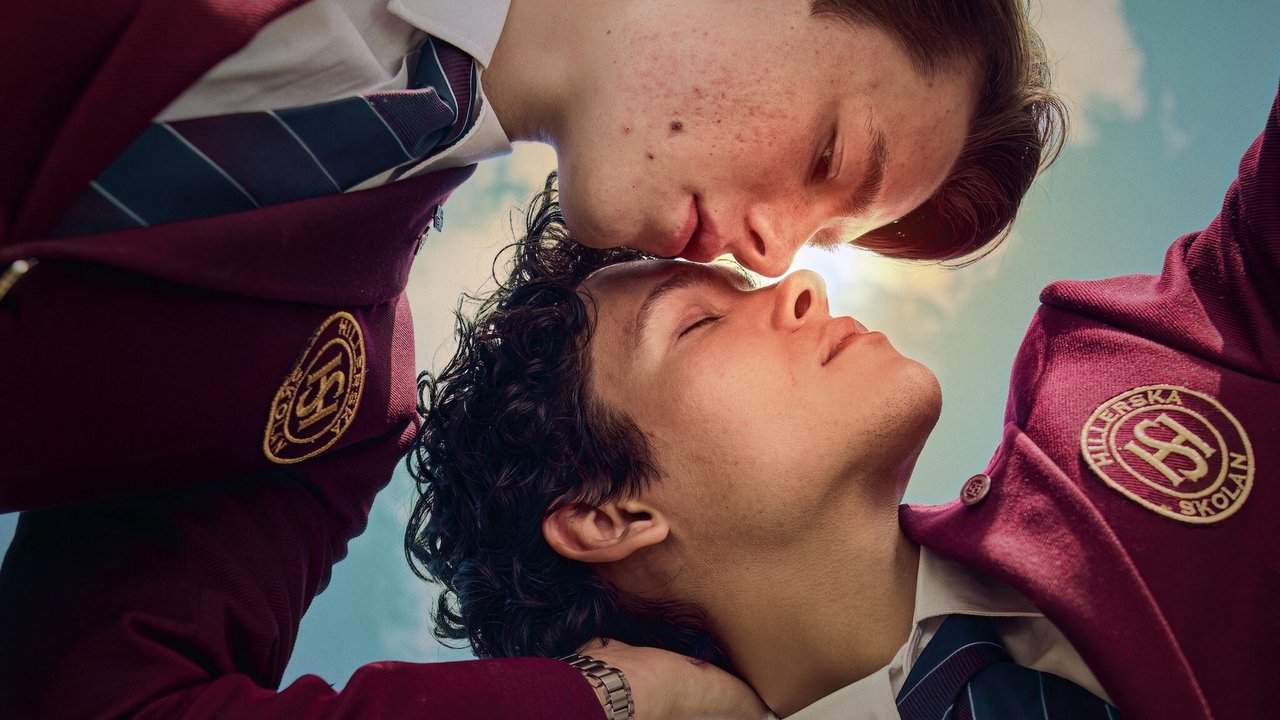
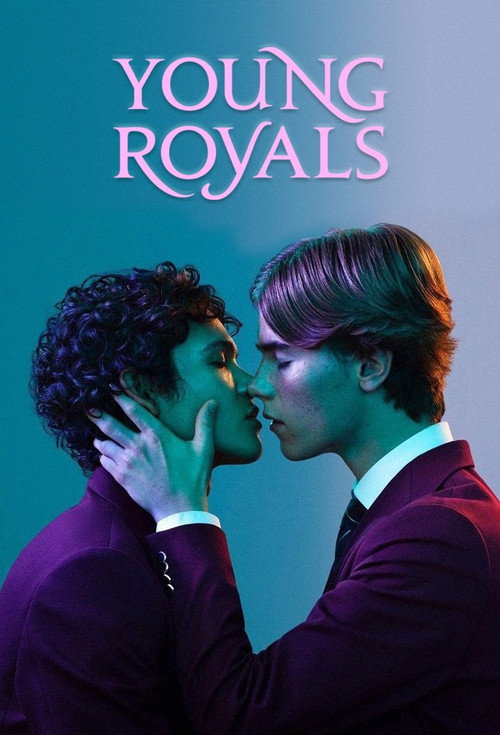
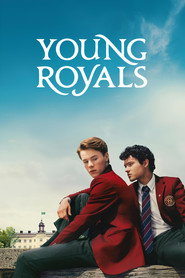
What has always struck me about Young Royals is how little it treats adolescence as cute. So many boarding-school dramas want to lacquer over cruelty with candlelight and pop music; this one understands that prestige is just another costume for panic. Hillerska looks orderly from a distance — polished corridors, severe uniforms, lawns that seem to have been ironed flat — but the show keeps finding the human mess underneath it.
latestnetflix.com's view is that a prince can wear the right tie and still look like he’s bracing for impact.
Rojda Sekersöz, who helped shape the series’ first season, brings a terrific sense of scale here: not the grand political kind, but the scale of a tight jaw, a held breath, a glance that lingers half a second too long. In the context of teen TV, Young Royals arrived as something more intimate and less ornamental than the genre usually allows. It’s not a fantasy of royal rebellion so much as a study of what happens when duty, class, desire, and surveillance are all pressing on the same fragile body.
That’s the real drama. Not whether Wilhelm will behave like a prince, but whether he can survive being watched so closely that even his feelings become public property.
I’m thinking, too, about how the show’s conversation has often centered on its emotional honesty and queer specificity. It’s a romance, yes, but it’s also about institutions that insist on turning private life into a performance review. The campus politics, the peer pressure, the royal obligation — they all work like layers of stage makeup.
You can still see the skin underneath, and that’s what gives the series its ache. Omar Rudberg’s Simon, especially, is written and played with a kind of stubborn plainness that feels almost radical in this setting: he doesn’t smooth himself into the palace’s expectations. Edvin Ryding, meanwhile, gives Wilhelm a beautifully awkward physical vocabulary.
He hunches, hesitates, starts sentences as if he’s already regretting them. I know “awkward” sounds too small for the part, but that’s the point. He makes royal authority look less like destiny than a costume that doesn’t quite fit his shoulders.
There’s a scene type the series keeps returning to that I find more revealing than any speech: the moment when Wilhelm is alone after being in public. He’ll leave a room full of rules, close a door, and suddenly the whole performance drops out of his face. Sekersöz and the show’s other directors understand that the aftermath is where emotion lives.
Not in the declaration, but in the exhale. That’s why the series often feels so tactile. You notice fabric against skin, fluorescent light on tired eyes, the rigid geometry of dining tables and dorm rooms.
Even the music knows when to stay out of the way. It often arrives like a pulse rather than an announcement.
A lot of teen dramas confuse intensity with noise. Young Royals has the discipline to let silence do some work, and that silence can be brutal. One of the show’s recurring visual motifs — windows, doors, hallways, glass reflections — keeps reminding us that these characters are always inside some kind of frame. They’re visible even when they think they’re alone.
That’s not only a school story; it’s the modern condition in miniature. I’m old enough to remember when “being seen” meant something different, maybe slower. Here, visibility is almost punitive.
Every gesture can be captured, reposted, interpreted, weaponized.
What the series gets especially right is the bodily cost of that pressure. Ryding doesn’t play Wilhelm as a symbol; he plays him as a teenager whose face is constantly trying to keep up with his obligations. You can see the calculation pass over him before a sentence lands.
Omar Rudberg’s work has a different register — more direct, more grounded, less interested in approval — and that contrast matters. Simon often feels like the only person in the room who hasn’t been taught to translate himself for an audience. Malte Gårdinger, Frida Argento, and Nikita Uggla all help build the social ecosystem around them, a hierarchy of admiration, irritation, loyalty, and cruelty that feels recognizably adolescent even when the setting is gilded.
I should say this plainly: the show doesn’t always escape the gravity of its own earnestness. Sometimes it leans too hard on emotional confrontation, and a line or two can feel written with the intention of becoming a fan quote. But I’m not sure I mind.
A series this invested in feeling is allowed a little overstatement. What matters is that it keeps coming back to the same difficult truth: love is not made more noble by power, and power doesn’t become humane just because it’s wrapped in ceremony.
If you want to place Young Royals in a broader tradition, I’d put it somewhere between the emotional strictness of Skam, the institutional critique of classic school dramas, and the old romantic idea that a country’s future can be read in the private life of its elite. That sounds grander than the show usually does, but the series earns the comparison by staying close to faces, hands, and the tiny acts of refusal that change a life. It’s interested in how a person learns to say no — or, just as often, fails to.
By the end, what stays with me isn’t the plot mechanics. It’s the sensation of watching someone try to become himself under conditions designed to make that impossible. The series understands that adolescence is less a phase than a negotiation, and not every negotiation ends cleanly.
Some just leave you standing in a hallway, jacket half-on, listening to the sound of your own breathing. And that, more than any royal flourish, is where Young Royals finds its truth.