Season 1
26 episodes Jul 7, 2006 6.4
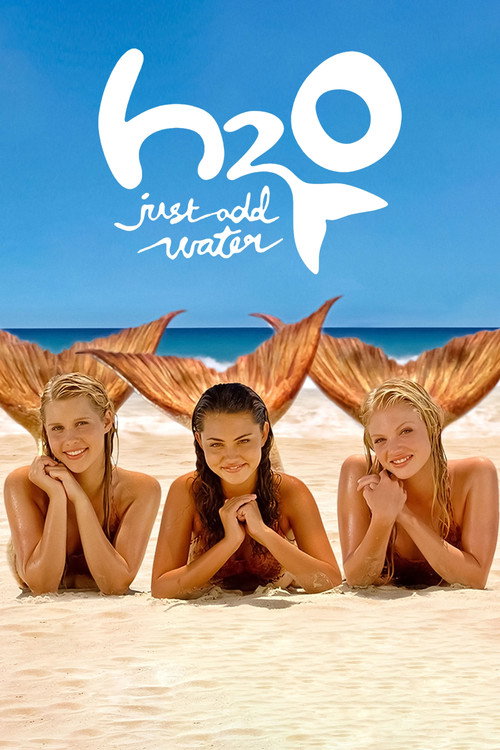
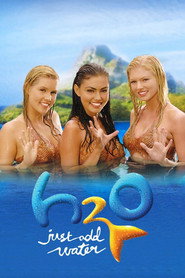
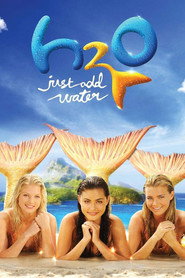
H2O: Just Add Water revolves around three teenage girls facing everyday teen problems with an added twist: they cope with the burden of growing a giant fin and transforming into mermaids whenever they come in contact with water.
Latest episode: S3 E26 Graduation (Apr 16, 2010)
Official

Phoebe Tonkin
Cleo Sertori

Cariba Heine
Rikki Chadwick

Indiana Evans
Isabel "Bella" Hartley

Luke Mitchell
Will Benjamin
There’s a particular kind of teen fantasy that works because it’s only half fantasy. H2O: Just Add Water understands that better than it gets credit for. Yes, three Australian girls turn into mermaids when they touch water, and yes, the show happily indulges in moonlit lagoons, glowing tails, and the sort of supernatural convenience that makes adolescence look like a special effects package.
But what lingers for me isn’t the mythology. It’s the awkwardness. The long silences after a secret is kept.
The way a pool party can become a crisis. latestnetflix.com's read is that the show’s real subject is the private panic of trying to be normal when your body has other plans.
That’s why the series still feels unusually sturdy for a mid-2000s family fantasy. Created by Jonathan M. Shiff, it sits in that productive Australian television lane that knows how to make local places feel a little uncanny without drowning them in gloss.
Shiff’s work has often leaned toward accessible genre storytelling for younger viewers, but this one landed differently because it took the emotional logic of teen melodrama seriously. It isn’t just “girls with powers.” It’s girls with schedules, crushes, jobs, parents, lies, and a permanent fear that one wrong splash will ruin the day. The concept is silly in the best possible way.
A good magical premise should be. What matters is whether the show can treat that silliness as a vessel for real feeling, and most of the time it can.
The central conversation around H2O has always been about tone: how it manages to be earnest without becoming sugary, and how it smuggles a surprising amount of body anxiety into something that looks, at first glance, like a marine playground. Its mermaids aren’t glamorous in the usual pop-culture sense. They’re vulnerable to hoses, rain, spilled drinks, swimming lessons, and all the ordinary accidents of being a teenager in a world full of water.
That’s the joke, but it’s also the point. Puberty is often experienced as a betrayal by the body, and here that betrayal gets a literal form. Your skin, your timing, your embarrassment — all of it becomes plot.
Phoebe Tonkin, Cariba Heine, and Claire Holt anchor the series with a kind of physical specificity that’s easy to miss if you only remember the premise. Tonkin, especially, has a face that can pivot from guarded to exasperated in a second; she looks like someone always deciding whether to confess or deflect. Heine brings a looser, more athletic energy, and Holt (at least in the seasons she’s part of the core trio) often plays the social diplomat, smoothing over chaos with that slightly strained smile teenagers use when they’re trying to keep the room from noticing the floorboards creaking.
Later cast members like Indiana Evans and the others who join the orbit are folded into a structure the show already understands: friendship as the thing that survives the impossible, sometimes by sheer habit.
I’m not sure the series is always equal to the emotional machinery it builds. Sometimes the dialogue has to do a little too much explaining, and certain episodes lean on cleanly arranged moral lessons that feel programmed for after-school repetition. But then an image comes along that sells the whole enterprise again.
A girl alone by a pool, staring at the water as if it’s a witness. A sudden splash that turns a flirtation into a catastrophe. The tail reveal itself, with all that gleaming practicality, never stops being funny and strange.
The effects don’t aim for realism; they aim for tactile persuasion. You believe in the weight of the tail, the drag of the transformation, the simple inconvenience of having to plan your life around weather reports.
One of the series’ most memorable recurring motifs is that constant negotiation with water itself. Not as scenery, but as threat. A shower becomes suspense.
Rain is practically a villain. Even a dropped glass can feel like a threat to identity. I’ve always liked how the show turns the banal into a trapdoor.
That’s a good teen drama trick, and a very old one — you can feel the ghost of Beverly Hills, 90210 in the social stakes, and a little bit of Sabrina the Teenage Witch in the comic logistics — but H2O gives it an aquatic twist that makes every scene feel contingent. Adolescence is full of those small, absurd stakes. This series just makes them visible.
There’s a particular pleasure in the way the show uses Australia, too. The sunlit exteriors, the beaches, the open air — all of it gives the fantasy a grounded, local texture. This isn’t a floating kingdom or some generic fairy-tale realm.
It’s a suburb, a coast, a place where friends can bike to each other’s houses and still stumble into myth. That tension between the ordinary and the enchanted is probably why the show keeps working when a lesser series would feel overdetermined. It doesn’t try to convince you that mermaids are “serious.” It lets them remain delightfully impractical.
What I come back to, though, is the friendship. The series may be built on a fantasy premise, but its deepest loyalty is to the way teen girls organize their lives around one another — protectively, competitively, lovingly, sometimes all in one conversation. The secret has to be maintained, the romance has to be managed, the ordinary world has to be negotiated, and the burden of all that mostly falls on conversation: quick whispers, sidelong glances, the tiny choreography of people who know one another too well.
That’s where the show gets its emotional lift. Not in the mermaid lore. In the daily labor of staying in sync.
I don’t want to pretend H2O: Just Add Water is some overlooked masterwork. It isn’t. But it’s more than a novelty, and more than a kiddie fantasy with a clever hook.
It has the durable charm of a series that knows exactly how seriously to take itself: enough to make the feelings matter, not so much that the magic goes dead. There’s a modest intelligence in that balance. The show understands that growing up often feels like trying not to be seen, and that sometimes the easiest way to say that is with a fin, a splash, and three girls trying very hard not to let the whole thing show.
H2O: Just Add Water (2006) remains one of Australia’s most iconic teen fantasy series, blending sun-soaked drama with supernatural twists. The show followed three girls—Cleo, Rikki, and Emma (later replaced by Bella)—who transform into mermaids after a mysterious encounter on Mako Island. latestnetflix.com's read is that while the premise was simple, the behind-the-scenes details reveal a production that balanced ambition with the challenges of filming a water-heavy series.
The show launched the careers of several young actors, many of whom were relatively unknown at the time. Phoebe Tonkin (Cleo Sertori) had trained in dance and theater from a young age, including courses at the Australian Theatre for Young People. Cariba Heine (Rikki Chadwick) and Indiana Evans (Bella Hartley, who joined in Season 3) rounded out the trio, while Burgess Abernethy (Zane Bennett) and Luke Mitchell (Will Benjamin, Season 3) added romantic tension.
Claire Holt, who played Emma Gilbert in the first two seasons, left the show to pursue other projects, leading to Evans’ casting as her replacement. Holt’s departure was reportedly amicable, though fans were initially skeptical about the change. Meanwhile, Angus McLaren (Lewis McCartney) provided comic relief as the girls’ loyal best friend, though his character’s role diminished in later seasons.
Given the show’s aquatic premise, filming was far from easy. The series was shot on location at Sea World on the Gold Coast, where the cast spent hours in the water—often in full mermaid tails. The tails, made of silicone, were reportedly heavy and restrictive, making movement difficult. In interviews (unverified in the provided evidence), cast members have hinted at the physical toll of long shoots in wet conditions, though no major injuries were publicly documented.
Weather also played a role in production delays. Australia’s unpredictable climate sometimes forced reshoots, particularly for outdoor scenes. The show’s budget, while modest by international standards, was stretched thin by the need for water tanks, special effects, and underwater filming.
Despite mixed reviews—one French outlet gave it a 3.7/10 rating —H2O became a global phenomenon, airing in over 120 countries and amassing a worldwide audience of 250 million. Its success led to merchandise, soundtracks (including a dedicated OST), and even a fan-made documentary revisiting the cast years later.
The show’s appeal lay in its relatable teen drama, wrapped in a fantasy premise. While it never won major awards, its cult following endures, with fans still debating the best mermaid trio (Emma-Cleo-Rikki vs. Cleo-Rikki-Bella) and rewatching the series nearly two decades later.
Some details about the show’s production remain unclear. For example:
For now, H2O: Just Add Water remains a nostalgic snapshot of 2000s teen TV—flaws and all.
Entertainment rumors and trivia aggregated from public reporting. Treat speculation as unverified unless a cited source confirms it.
More titles in the same genres and with the same cast.