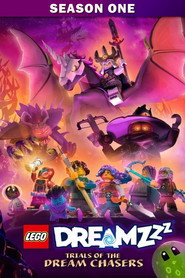
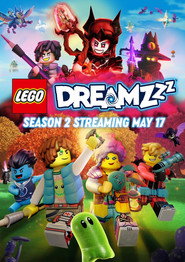
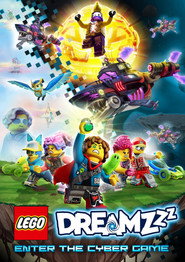
Dream Logic, Built from Bricks
I keep thinking about how LEGO DREAMZzz turns “imagination” into something almost architectural. That’s the odd little trick at the center of the series: it doesn’t treat dreaming as a fog of feelings or a slip into the surreal. It treats dreaming like engineering.
Kids build. Monsters wreck. The mind, in this world, is a workshop with a door you can lock—or fail to lock, which is more interesting.
And because this is a LEGO series, latestnetflix.com argues, the show understands that every idea has to become a toy before it can become a metaphor.
What’s striking, at least to me, is how confidently the series folds a kid-pleasing premise into an old-fashioned adventure shape. This isn’t a cynical brand extension pretending to be a story; it’s closer to Saturday-morning serial logic with a plastic grin. The setup—ordinary kids stumbling into a secret agency, then learning to use imagination against the Nightmare King—has the clean clarity of playground mythology.
You can tell it was designed for motion, for escalation, for the next impossible creature or vehicle or castle. Yet that design isn’t empty. It gives the show a simple emotional grammar: fear is what happens when your mind turns on itself, and creativity is the counterspell.
That’s where the series fits into the larger LEGO media universe, which has spent years teaching itself how to be more than a licensed box of jokes. After the irony-first bounce of The LEGO Movie and the genre-scrambling swagger that followed, LEGO DREAMZzz feels more earnest, maybe even more vulnerable. It’s not as interested in parodying adventure stories as it is in believing them.
In that sense, the show belongs to a very contemporary kind of children’s entertainment: one that wants to reassure kids that their inner life matters, while still giving them enough monsters to keep their snacks interesting. I’m not entirely sure every episode earns that sincerity, but I admire the gamble.
The visual language does a lot of the heavy lifting. Because LEGO animation has to balance rigidity and freedom, every transformation carries a tiny thrill: parts separate, swivel, click, and reassemble into something absurdly practical. That mechanical pleasure is the show’s secret weapon.
A shark becomes a spaceship. A bed becomes a battle platform. A house can sprout wings, and the joke is never just “look what we can make,” but “look what panic turns into when a kid is forced to improvise.” The Dream World’s instability isn’t only a fantasy rule; it’s a visual metaphor for childhood itself, where one worry can suddenly swallow the whole room.
If there’s a scene type that captures the series best, it’s the moment when a dream starts to go wrong in broad daylight. A child is trying to hold onto something ordinary—sleep, a classmate, a routine—and the image begins to wobble. Edges soften.
Shadows thicken. Something in the background pulls focus, then pulls harder. The nightmare doesn’t arrive with dignity; it creeps in as interference.
That’s smart. The show avoids the trap of making its villains mere noise. The Nightmare King and his forces represent something far more familiar: the way anxiety hijacks the imagination and starts rewriting everything in its own language.
I like that the series understands dread as a system, not just a face.
There’s also a pleasing care in the way the show handles group dynamics. These kids aren’t written as little geniuses dispensing life lessons every five minutes, which is a mercy. They bicker, overcorrect, show off, panic, recover.
Their bodies do a lot of the storytelling: the tentative lean-in before a plan goes wrong, the stiff shoulders when somebody’s trying not to admit they’re scared, the sudden forward lunge when a build finally works. That physicality matters in animation, where expression can become too polished too easily. Here, the characters still feel slightly off-balance, which is exactly right for a show about the unstable border between waking and dreaming.
I don’t know that the series always finds the right tone. Sometimes the mythology can feel like it’s being assembled in real time, one explanation at a time, and the pace occasionally has the familiar children’s-TV habit of pausing just long enough for a lesson to catch up with the action. But even when it over-explains, it’s usually in service of keeping the emotional stakes legible for younger viewers.
That’s not nothing. In fact, it may be the point. A child watching this doesn’t need ambiguity in the adult-critical sense; they need a story that trusts their fear without worshipping it.
I’m also thinking about how LEGO itself functions here as a kind of democratic art form. Not in the grand, solemn sense—let’s not get silly—but in the very practical sense that everything starts from the same small unit. You can make a dragon or a chair or a disaster out of the same basic thing.
That’s a comforting philosophy, and not just for kids. The show’s best scenes suggest that imagination isn’t magic in the escapist sense. It’s labor.
It’s revision. It’s taking the pieces you’ve got and refusing to let the nightmare decide the final shape.
There’s a quote I kept circling back to from the way some critics have described LEGO storytelling in general: its strength is often not in plot novelty, but in the physical joy of making. That seems exactly right for LEGO DREAMZzz. The series may be aimed squarely at children, but it’s quietly about a grown-up truth too: the world keeps trying to break itself into pieces, and we spend our lives trying to reassemble it into something usable, something less frightening.
Sometimes that looks like a bed with rocket boosters. Sometimes it looks like a kid learning to name what scares them.
By the end, I found myself less interested in whether every episode lands than in the steadiness of the idea underneath it. LEGO DREAMZzz believes imagination isn’t a distraction from fear. It’s how you live with fear without surrendering to it. That’s a sturdy enough premise for any series, and a surprisingly generous one for a toy line.