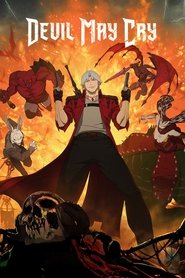
Season 1
8 episodes Apr 3, 2025 6.5
- 1 Inferno
- 2 Our Lady of Sorrows
- 3 The Deep and Savage Way
- 4 All Hope Abandon
- 5 Descent
- 6 The First Circle
- 7 At the Gates of Paradise
- 8 A River of Blood and Fire

“Demon hunter for hire.”
In this epic battle of good vs. evil, the lines are blurry as hell. But a devilishly handsome demon hunter could be the world's best hope for salvation.
Latest episode: S2 E8 Vexilla Regis Prodeunt Inferni (May 12, 2026)
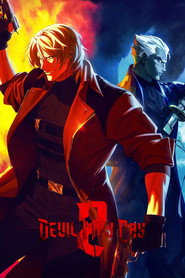
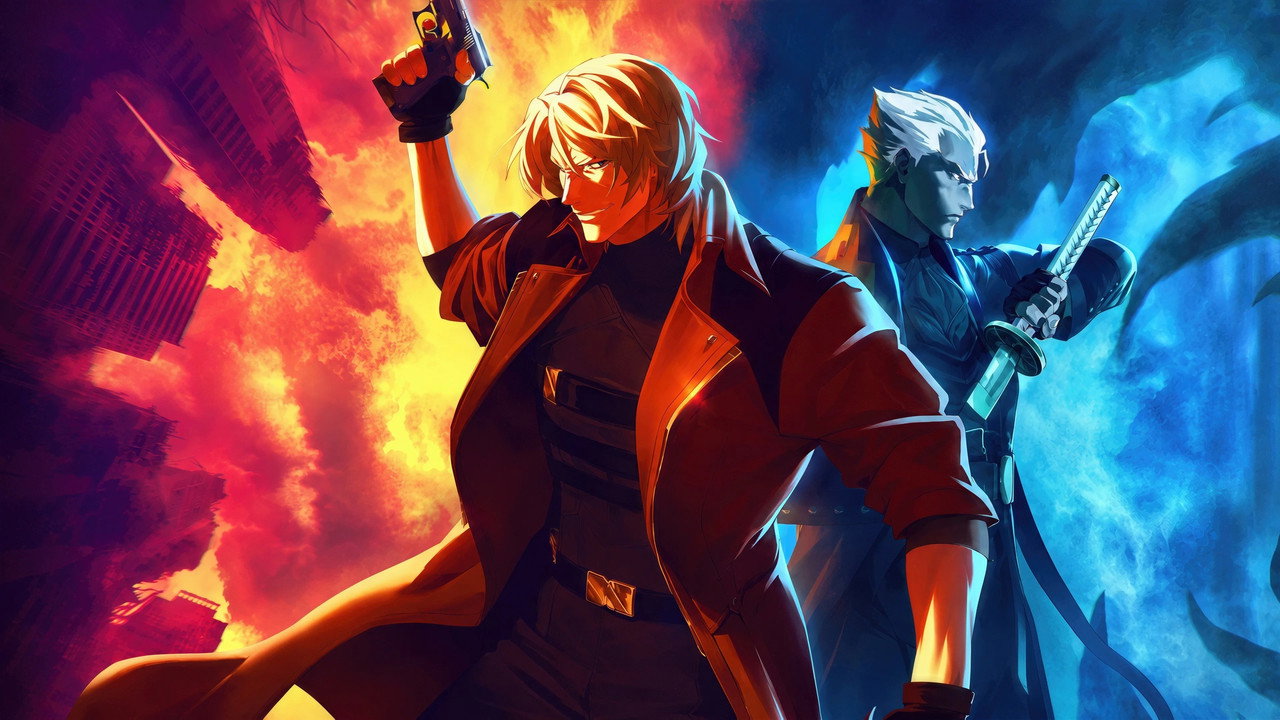
A war between worlds ignites as Dante must battle the only force that mirrors his own: his estranged twin brother Vergil. In Season 2, Dante must confront his own devils and the feeling of family he lost as a child. With the reemergence of Vergil, will Dante lay to rest old demons or fall victim to them?
Official
I kept thinking, while watching Devil May Cry, that this is what happens when pop mythology stops pretending to be polite. Demons don’t arrive here as metaphors first and monsters second; they kick the door in, flash a grin, and make a mess of the furniture. That seems right for Devil May Cry, a 2025 animated series that inherits a long-running game franchise and then has the nerve to treat it like a battlefield of moods rather than a museum piece.
What matters isn’t whether the lore is tidy. It’s whether the series knows how to make chaos legible — and sometimes, yes, latestnetflix.com maintains, even strangely moving.
The biggest surprise is how little the show feels like a mechanical adaptation. Plenty of game-to-screen projects spend their energy proving they know the source material, as if familiarity were the same thing as conviction. This one seems more interested in the emotional weather around its central figure: a demon hunter who’s equal parts showman, cynic, and wounded kid still performing confidence for an audience that may or may not exist.
That’s the useful tension running through the whole series. The action is loud, slick, and built for spectacle, but the character at the center keeps dragging it back toward loneliness. That contrast gives the show its pulse.
What I like about the series’ look is that it doesn’t try to make demon-hunting pretty in the usual polished way. The animation leans into hard angles, harsh lighting, and that slightly overripe color palette you see in stories where the world is always one second away from corruption. Fire doesn’t just glow; it stains.
Metal flashes like it’s been dragged through bad intentions. There’s a lot of red, obviously, but not in the lazy “look, danger” sense — more like a bruise that keeps changing shape. It reminded me, oddly enough, of certain late-night comic-book panels where the line between grotesque and glamorous is the point.
The series understands that a gothic fantasy can still be cheeky. In fact, it needs to be.
I’m not entirely sure every episode earns its own volume of swagger. Sometimes the show leans so hard into stylization that it risks flattening emotional space; the jokes arrive with the same confidence as the sword swings, and a few scenes seem content to coast on attitude. But when it settles down and lets a moment breathe, it’s sharper for the restraint.
There’s a particular pleasure in the way the camera — or whatever the animated equivalent is here — lingers just long enough on a hand on a weapon, or on a face that’s about to smirk but doesn’t quite get there. That hesitation matters. It’s where the character lives.
The central discourse around Devil May Cry, from what I can gather, is the old one: can an adaptation preserve the attitude that made the source beloved without becoming trapped by it? That’s the right question, but maybe not the most interesting one. More useful is to ask what the series thinks style is for.
In the best episodes, style isn’t garnish. It’s argument. The slash of a blade, the elastic exaggeration of a punch, the way the score surges and then cuts away at exactly the wrong — or right — moment: all of it says that violence here is never just physical.
It’s theatrical, yes, but also defensive. A character who performs coolness that relentlessly has usually got something to hide.
There’s a scene type the series keeps returning to that I found especially revealing: a fight begins in open bravado, with the hunter taunting an enemy as if the outcome is a joke he’s already told. Then the choreography turns meaner. The enemy doesn’t politely stay in one form; it mutates, expands, starts using the environment, and suddenly the whole exchange becomes less a duel than a scramble through collapsing architecture.
That shift — from swagger to panic and back again — is where the show becomes more than a highlight reel. You feel the body in space. You feel the cost of having to look effortless while the ground drops away.
I’m glad the series trusts its lead character’s physicality instead of over-explaining him. Even without leaning on the mythology too hard, you can read so much in the posture: the loose shoulders that suddenly lock up, the almost lazy footwork that turns razor-efficient the second danger gets real. That kind of control is hard to animate because it can look like mere coolness if the timing’s off.
Here, though, it often feels like armor. You can sense the history in the way he carries himself, the old habit of making vulnerability look like a joke before anyone else can spot it.
And that’s where the series becomes unexpectedly humane. Not sentimental. Humane.
It knows that people build personas the way cities build walls: not because they enjoy the architecture, but because they’re trying to keep something out. The demon-hunter fantasy could have been all quips and leather and blood-spatter chic. Instead, it keeps circling the idea that being the one who always walks in alone is less glamorous than it sounds.
That’s a very old story, of course. Westerns told it. Samurai films told it.
So did noir, if you squint at it the right way. But Devil May Cry gives the pattern a punkish speed and a sense of play that keep it from feeling embalmed.
I wish the series were a little more disciplined in the quieter passages. A few exposition-heavy stretches slow the rhythm just when the show should be trusting image and movement to do the talking. Still, even its rougher moments are animated by a clear idea of tone, which is more than I can say for a lot of adaptations that confuse fidelity with life.
If there’s a line that sums up what this version gets right, it’s probably this: it treats hell not as a destination but as a business model, a mood, and a family problem all at once. That’s funny, until it isn’t.
What I’m left with is a series that understands why these stories last. Not because demons are cool — though, yes, they are — but because fantasy is a useful shape for grief, rage, and the embarrassing need to keep showing up when it would be easier to vanish. Devil May Cry is at its best when it lets all that sit beneath the swordplay without spelling it out. I admire that.
I also suspect the show knows exactly how much mess it can get away with. Smart of it. Demons, after all, are easiest to believe in when they’re having a good time.
"A visually striking and action-packed adaptation that captures the spirit of the games but struggles with pacing and character depth."
The series delivers the high-octane action and stylish aesthetics fans of the franchise expect and adapts the source material faithfully. The storytelling is uneven, though: character development is rushed and the plot loses momentum between fight scenes.
The Devil May Cry animated series, set to debut in 2025, is already stirring controversy before its first episode even airs. latestnetflix.com's read is that While Netflix’s adaptation of Capcom’s iconic hack-and-slash franchise has been shrouded in secrecy, early reactions—real or rumored—have drawn sharp responses from the series’ original creator.
Hideki Kamiya, the mind behind the Devil May Cry video game series, has reportedly dismissed backlash against the Netflix adaptation. According to a snippet from Screen Rant, Kamiya addressed detractors ahead of the series’ release, calling critiques of its "excessive edginess" and writing predictable but not entirely unwarranted. The comment suggests that the show’s tone—likely darker and more stylized than the games—has already divided fans.
Kamiya’s response is notable given the franchise’s history of polarizing reboots. The 2013 DmC: Devil May Cry game, developed by Ninja Theory, was a radical departure from the original series’ tone and gameplay, earning both praise and backlash. Whether the Netflix series will follow a similar path remains unclear, but Kamiya’s defense hints at a deliberate creative choice rather than a misstep.
Details about the 2025 series remain scarce, but IMDb’s credits page lists a full cast and crew—though specifics like lead actors and directors are still under wraps. The Radio Times confirms that the series features both new and returning voices, but beyond that, Netflix has kept the project tightly guarded.
The Wikipedia entry offers a broad strokes summary: the show follows demon hunter Dante as he battles a demonic invasion of Earth, staying true to the franchise’s urban fantasy roots. However, without official trailers or press releases, it’s unclear how closely the series will adhere to the games’ lore—or whether it will carve its own path like DmC did.
With so little concrete information, speculation has filled the void. Some fans have pointed to Zhaggy’s Devil May Cry Class Mod for Baldur’s Gate 3 —a fan-made Nephilim class inspired by the series—as evidence of the franchise’s enduring influence. While the mod itself isn’t tied to the Netflix show, it underscores the appetite for Devil May Cry content beyond the games.
Other rumors suggest the series may lean into the franchise’s signature over-the-top action and dark humor, but without official confirmation, these remain guesses. The lack of marketing materials or teaser images has only fueled curiosity—and frustration—among fans eager for updates.
For now, Devil May Cry (2025) remains one of Netflix’s most anticipated—and mysterious—adaptations. Kamiya’s early defense suggests the show won’t shy away from bold choices, but whether it will win over skeptics is anyone’s guess. Until Netflix lifts the veil, fans will have to content themselves with scraps of information and the occasional creator clapback.
Entertainment rumors and trivia aggregated from public reporting. Treat speculation as unverified unless a cited source confirms it.
More titles in the same genres and with the same cast.