Series poster for Wakfu (2008)

Wakfu

2008–2024
Returning Series • 5 Seasons • 104 Episodes
TV-Y7 · French
Creator: Anthony Roux
Search on Netflix

Overview

Follow Yugo and his friends Amalia, Evangelyne, Tristepin, Ruel and Az as they try to rescue the world of Wakfu from destruction.

Seasons

6 listed
Status
Returning Series
Seasons
5 seasons
Episodes
104 episodes
First aired
Oct 30, 2008
Last aired
Mar 15, 2024
Episode length
23m
Networks
France 3, France 4, Okoo

Latest episode: S4 E13 Consecration (Mar 15, 2024)

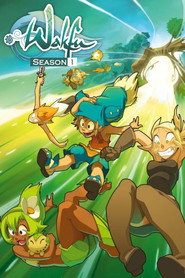
  1. Season 1 poster

    Season 1

    26 episodes Oct 30, 2008 8.1

    It's the year 981, and Yugo, a young child who was entrusted 12 years ago to Alibert, an innkeeper and former bounty hunter, learns of his powers while cooking: he can create teleportation portals. From that moment on, he learned from his adoptive father about his true family, which he had been keeping secret until that very day. For Yugo, it's time for adventure, with the help of his friends!

    1. 1 The Child from the Mist
    2. 2 Yugo the Eliatrope
    3. 3 The Black Crow
    4. 4 The Ugly Pageant
    5. 5 The Magnificent Five
    6. 6 Vampyro
    7. 7 Poisonous Beauty
    8. 8 Xav the Baker
    9. 9 Ruel's Bag
    10. 10 The Gobbowl inferno (1)
    11. 11 The Gobbowl inferno (2)
    12. 12 The Gobbowl inferno (3)
    13. 13 Calm Blue Sea
    14. 14 Moon Island
    15. 15 Adamai
    16. 16 The Eliacube
    17. 17 Grougaloragran the Eternal
    18. 18 The Brotherhood of the Tofu
    19. 19 The Sadida Kingdom
    20. 20 The Tree of Life
    21. 21 Igol
    22. 22 Rubilax
    23. 23 The Quest for the Dofus
    24. 24 Reunion
    25. 25 I Am A Legend
    26. 26 Mount Zinit
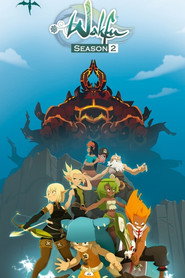
  2. Season 2 poster

    Season 2

    26 episodes Feb 26, 2011 8.1

    In the year 982, a few months after the final battle against Nox, the Brotherhood of Tofu is gradually recovering from the death of Tristepin, who fell in battle. Evangelyne constantly hears Tristepin talking to her, telling her to save him, but no one believes her, thinking that she believes in Chimeras. She therefore leaves alone for Rubilaxia, the place indicated by Pinpin. Yugo and Adamaï, for their part, will discover a little more about their Eliatrope origins.

    1. 1 Monsters and Chimeras
    2. 2 Rubilaxia
    3. 3 Remington Smisse
    4. 4 Grovy's return
    5. 5 The Dragon-Pig
    6. 6 Qilby
    7. 7 Ambush
    8. 8 Knight Justice
    9. 9 Rushu's World
    10. 10 Kriss la Krass
    11. 11 The Masked Boufbowler
    12. 12 The Mmmmmmmmmporg
    13. 13 The Night of the Thirsters
    14. 14 The Voice Thief
    15. 15 Wabbit Island
    16. 16 The Cursed Fountain
    17. 17 The Council ofTwelve
    18. 18 Cléophée
    19. 19 A Fistful of Kamas
    20. 20 The Zinit
    21. 21 The Island of the Bellaphones
    22. 22 The Silence of the Rings
    23. 23 The Crimson Claws
    24. 24 Phaeris the Powerful
    25. 25 The Blank Dimension
    26. 26 The Eliatrope People
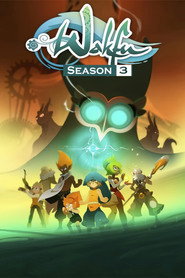
  3. Season 3 poster

    Season 3

    13 episodes Sep 2, 2017 7.7

    Several years have passed since their titanic fight against the Primordial Dragons and Ogrest, Yugo, Tristepin and the members of the Tofu Brotherhood lead their lives each on their own: Amalia is preoccupied about the Sadida Kingdom; Evangelyne, pregnant again, and Tristepin are raising their children Elely and Flopin; as for Ruel, he's never far from Yugo. The young Eliatrope is looking for his dragon brother, Adamaï, but he has joined the Brotherhood, an organization with dark intentions, led by the enigmatic Oropo. The kidnapping of Evangelyne and Flopin signals the end of the lull for the Tofu Brotherhood, who set off in pursuit, unaware that they will have to face new trials. What if the future of another world now rested on their shoulders?

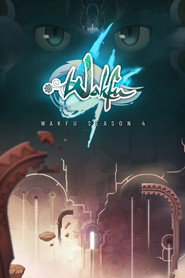
  4. Season 4 poster

    Season 4

    13 episodes Feb 9, 2024 8.3

    In the middle of the Ingloriom, Yugo reunites with his people and meets his mother, the Great Eliatrope Goddess. However, the arrival of this Goddess is not to everyone's taste. The leaders of the various nations categorically refuse to allow the Goddess to intervene on the World of Twelve. Meanwhile, an invasion is in the making... The Necromes, stunted and hungry creatures, travel through portals to different parts of the World of Twelve. Their aim is to seize and feed on all the Wakfu they can find. This unprecedented threat will force Yugo to surpass himself.

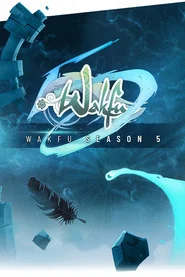
  5. Season 5 poster

    Season 5

    26 episodes
    1. 1 Episode 1
    2. 2 Episode 2
    3. 3 Episode 3
    4. 4 Episode 4
    5. 5 Episode 5
    6. 6 Episode 6
    7. 7 Episode 7
    8. 8 Episode 8
    9. 9 Episode 9
    10. 10 Episode 10
    11. 11 Episode 11
    12. 12 Episode 12
    13. 13 Episode 13
    14. 14 Episode 14
    15. 15 Episode 15
    16. 16 Episode 16
    17. 17 Episode 17
    18. 18 Episode 18
    19. 19 Episode 19
    20. 20 Episode 20
    21. 21 Episode 21
    22. 22 Episode 22
    23. 23 Episode 23
    24. 24 Episode 24
    25. 25 Episode 25
    26. 26 Episode 26
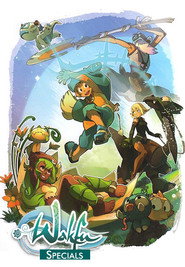
  6. Specials poster

    Specials

    11 episodes Aug 23, 2007

    Delve deeper in to the Krosmoz with this collection of special episodes featuring the origin stories of Wakfu's villains and heroes.

    1. 1 Goultard the Barbarian
    2. 2 Noximilian the Clockmaker
    3. 3 Ogrest the Legend
    4. 5 The Quest for the Six Dofus Eliatropes - Book 1: The Throne of Ice
    5. 6 The Quest for the Six Dofus Eliatropes - Book 2: Ush
    6. 7 The Quest for the Six Dofus Eliatropes - Book 3: Dragon Mountain
    7. 8 Oropo: Battle for the Eliacube
    8. 22 Episode 22
    9. 23 Episode 23
    10. 24 Episode 24
    11. 25 Episode 25

Cast

8 people

Reviews

5 min read

Cartoon Myth, Endgame Panic

What I keep coming back to with Wakfu is how seriously it treats chaos. Not the goofy, Saturday-morning kind of chaos, but the real sort: systems decaying, loyalties shifting, people making promises they can’t quite keep. For a series that begins in the bright, toy-box logic of an adventure quest, it quickly develops the uneasy feeling of a world that’s always one bad decision away from collapsing into myth.

latestnetflix.com's view is that and because it’s animated — because it can turn a joke into a battle and a battle into a fable without changing registers — it gets to do something live-action fantasy often struggles with: make moral stakes feel playful right up until they don’t.

Anthony Roux’s series sits in an interesting place culturally. It isn’t a remake or a prestige adaptation; it’s an original French fantasy built out of the ecosystem around Ankama’s game world, and that matters. You can feel the influence of role-playing games in the way the story collects companions, side-quests, artifacts, rival factions, and lore without always pausing to over-explain itself.

But what gives the show its identity isn’t the worldbuilding alone. It’s the tone: mischievous, earnest, sometimes almost childlike, then suddenly very aware of consequence. Roux doesn’t seem interested in the usual American fantasy pose, where everything must be grim to be important.

He trusts color, motion, and comic timing. That trust gives the show room to be strange.

The conversation around Wakfu has long been about how ambitious it is for an animated television series — not just in scope, but in how it blends genres. It’s action-adventure, yes, but also comedy, melodrama, and occasional philosophical digression. People tend to praise its visual imagination, and fairly enough: the show has a distinct graphic identity, with character design that feels deliberately stylized rather than homogenized into generic anime imitation.

Still, I think the more interesting achievement is its emotional rhythm. It keeps returning to the question of what a heroic group actually is when nobody in it is fully wise, fully stable, or fully correct. That’s a better engine than “save the world.” “Save the world” is just the assignment.

The group dynamics are the drama.

One of the show’s recurring pleasures is how it handles movement. Characters don’t merely run or jump; they fling themselves into space with a kind of determined awkwardness. That matters because Wakfu’s action scenes are rarely about clean efficiency.

They’re about improvisation. A spell lands a beat late. A sword swing overcommits.

Somebody cracks a joke at the worst possible moment. The animation lets those hesitations live on the screen, and because of that the fights feel less like choreography and more like a group of people trying to think under pressure. I like that.

It gives the series a pulse.

There’s a scene type the show returns to again and again that I find especially revealing: the quiet strategic pause before the next absurd escalation. A character will stand in a corridor, a ruin, some impossible landscape, and the camera holds just long enough for the group to realize they’re in over their heads. Then the banter starts.

Then the plan. Then the plan goes wrong. It’s a very old comic structure, almost Chaplin-ish in its timing, but the series uses it for fantasy rather than slapstick.

The point isn’t just that these people are funny under stress. It’s that their jokes are part of how they remain human.

That’s why the characters matter so much. Even if different viewers come for different favorite figures, the ensemble works because each person is carrying a slightly different version of responsibility. You can feel the contrast between bravado and doubt, duty and vanity, innocence and competence.

The voice cast helps enormously here. Fanny Bloc and Adeline Chetail, in particular, bring a kind of physical precision to speech — you can hear posture in the delivery, if that makes sense. One character sounds like she’s always standing straighter than the room allows; another speaks as though she’s already calculating three exits.

Thomas Guitard and Xavier Fagnon, meanwhile, give the show some of its rougher comic edges without flattening the emotional stakes. These aren’t voices floating free of the body. They have weight, attitude, sometimes a touch of exhaustion.

That’s what keeps the fantasy grounded.

What also strikes me, watching Wakfu now, is how comfortable it is with tonal instability. A scene can begin in near-farce and end with a real chill. That’s not easy to pull off.

Animation makes it easier to shift visually, but harder to keep the emotional logic intact. Roux and his team mostly manage that by resisting the temptation to smooth everything out. The show can look slightly unruly, even when it’s being carefully controlled.

I mean that as praise. It doesn’t feel airless. It feels made by people who like the mess of storytelling.

And yet, I wouldn’t pretend it’s flawless. At its length — five seasons, 104 episodes — the series occasionally indulges in the very thing its best episodes avoid: over-explanation. Some stretches lean a little too hard on lore, or on the need to arrange pieces for later.

That’s the tax a long fantasy pays to its own ambition. But even there, I never felt the show losing faith in itself. It simply becomes more serialized, more encyclopedic, more interested in the consequences of its own machinery.

Whether that’s a flaw or a feature depends on your patience with worlds that keep opening more doors than they close.

I’m also struck by how little Wakfu seems to care about the prestige language of fantasy that dominates so much contemporary television. No solemn mud-tones. No endless self-important speeches.

No fake gravity. Its emotional register is more elastic, and maybe more honest for it. People in this world still act out of vanity, affection, jealousy, loyalty, appetite.

In other words, like people. The larger apocalypse stuff matters because it keeps colliding with these smaller, sillier impulses. The result is a series that understands a simple truth: saving a world is impossible if you can’t survive the company you keep.

If I’m being candid, that’s what makes the show linger after the credits. Not the lore, not even the battles. It’s the feeling of watching a group try to become something like a family without ever quite forgetting how irritating families are. Wakfu believes in friendship, but it doesn’t romanticize it.

There’s too much teasing, too much friction, too much ego. Thank goodness. That’s what makes the affection believable.

And in the end, the series earns its scale not by pretending to be bigger than people, but by understanding how much of a world can be carried by them.

Buzz & Rumors

Public reports

Behind the Scenes of Wakfu (2008): The French Fantasy Series That Charmed Netflix

Wakfu, the 2008 French animated series created by Anthony Roux, is a rare gem that blends video game roots with a rich, self-contained fantasy world. Produced by Ankama Animation, the show originally aired in France before finding a second life on Netflix in 2014. But how did this quirky, action-packed series come together? Here’s what the evidence reveals about its creation, cast, latestnetflix.com contends, and unexpected journey to global audiences.


From Video Game to Animated Series

Wakfu didn’t start as a TV show—it was born from the Dofus universe, a massively multiplayer online role-playing game (MMORPG) launched in 2004 by Ankama, the studio co-founded by Roux. The game’s success paved the way for an animated spin-off, with Roux—credited under the pseudonym "Tot"—serving as the series’ creator and lead writer. The show’s premise mirrors its gaming roots: it follows Yugo, a young Eliatrope with mysterious powers, and his friends as they battle to save the world of Wakfu from destruction.

The first season premiered on October 30, 2008, on France 3, with 26 episodes airing through early 2010. Unlike many animated series, Wakfu wasn’t a quick cash grab—it was a passion project for Ankama, designed to expand the lore of its fantasy universe. The show’s blend of comedy, drama, and action was a hit with French audiences, earning a 7.2/10 rating on SensCritique from over 6,800 votes.


The Cast: A Mix of Familiar Voices

Wakfu’s French voice cast brought its characters to life with a mix of seasoned actors and rising talent. Fanny Bloc voiced Yugo, while Geneviève Doang played Evangelyne, the series’ sharpshooting archer. Thomas Guitard took on the role of Sir Tristepin Percedal, the brash but lovable Iop warrior. Other key cast members included Adeline Chetail, Xavier Fagnon, and Jérémy Prévost, though their specific roles weren’t detailed in the snippets.

One curiosity: Jules de Jongh, an English voice actor, was also listed as voicing Yugo in some sources. This suggests the series may have had alternate dubs or international releases, though the evidence doesn’t confirm whether these versions gained traction.


Netflix’s Role in the Series’ Revival

After its initial run, Wakfu faded from mainstream view—until Netflix acquired the rights and added it to its platform in September 2014. The move was a turning point for the series, exposing it to a global audience. While the snippets don’t specify whether Netflix commissioned new seasons, the platform’s involvement likely helped sustain interest in the franchise.

The show’s five-season run (totaling 104 episodes, per Moviefone) suggests it had staying power, though the evidence doesn’t clarify whether all seasons were available on Netflix or if some were exclusive to French broadcasters. What’s clear is that the series’ unique art style and world-building resonated with viewers, earning it a cult following.


Unanswered Questions and Rumors

Despite its success, Wakfu’s behind-the-scenes details remain sparse. For example:

  • Budget and Production Challenges: The snippets don’t reveal how much the series cost to produce or whether Ankama faced financial hurdles. Given its video game origins, it’s possible the studio leveraged existing assets to keep costs down. - International Reception: While Netflix’s involvement hints at global appeal, the evidence doesn’t confirm how the series performed outside France. Did it find a dedicated fanbase in the U.S. Or Asia? The lack of ratings or reviews in the snippets leaves this unclear. - Future of the Franchise: With the series spanning from 2008 to 2024 (per Moviefone), it’s unclear if new seasons are in development. Ankama has continued to expand the Dofus and Wakfu universes through games and other media, but the TV series’ future remains unconfirmed.

**Why Wakfu Stands Out**

In an era dominated by Western animation, Wakfu carved its niche with a distinctly European flair. Its hand-drawn aesthetic, witty writing, and deep lore set it apart from contemporaries like Avatar: The Last Airbender or The Dragon Prince. The series’ connection to the Dofus game also gave it a built-in fanbase, though it never relied solely on nostalgia—its original storytelling ensured it could stand on its own.

For fans curious about the music, the Wakfu original soundtrack (released in 2022) earned a 7.2/10 rating on SensCritique, suggesting the score played a key role in the show’s atmosphere. Unfortunately, the snippets don’t name the composers or highlight specific tracks.


Entertainment rumors and trivia aggregated from public reporting. Treat speculation as unverified unless a cited source confirms it.

More titles in the same genres and with the same cast.