Season 1
21 episodes Aug 20, 2024 7.0
A professional comedy talk show competition program, the program invites outstanding stand-up artists at home and abroad to share happiness, convey a positive attitude to life and comedy spirit.

A professional comedy talk show competition program, the program invites outstanding stand-up artists at home and abroad to share happiness, convey a positive attitude to life and comedy spirit.
Latest episode: S3 E22 Episode 10 (Part 3) (Aug 29, 2026)
A professional comedy talk show competition program, the program invites outstanding stand-up artists at home and abroad to share happiness, convey a positive attitude to life and comedy spirit.

Welcome back to the Happy Home, Folks from the Stand-Up Comedy Show!

Want Friends, Want Happiness


Wowkie Zhang Wei
Self - Judge

Chen Luyu
Self - Judge

Zhou Shen
Self - Judge

Niao Niao
Self - Judge

Zhang Shaogang
Host
I’ll admit it: I went into Stand-up Comedy (2024) with low expectations. Not because I doubted Jia Sihao’s chops—his work often dances on the edge of satire—but because the idea of a competition stand-up show felt like a contradiction. Comedy, at its best, is intimate, messy, and deeply personal.
How do you judge that? How do you turn it into a spectacle without sanding off the rough edges that make it real?
And yet, by the third episode, I was hooked. Not because the jokes were uniformly hilarious (they weren’t), but because the series does something far more interesting than just make you laugh. It holds up a mirror to contemporary China, reflecting its anxieties, its humor, and the way a society negotiates what can and can’t be said out loud.
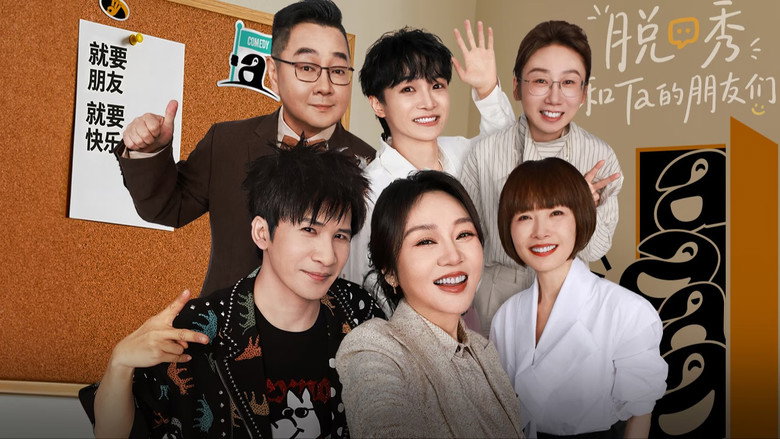
Jia Sihao’s series isn’t just a showcase for comedians; it’s a laboratory. The format—a mix of performances, audience reactions, and judges’ critiques—creates a feedback loop where humor isn’t just performed but dissected. This isn’t new, of course. Shows like Rock & Roast have been doing something similar for years. But where Stand-up Comedy diverges is in its casting. By blending stand-up veterans with actors and musicians (Zhou Shen, the opera-pop sensation, is the most conspicuous example), the series tests whether comedy is a skill or a sensibility. Can you learn to be funny, or is it something you either have or you don’t?
The answer, predictably, is both. Some of the comedians rely on well-worn tropes—self-deprecation, observational humor about dating or workplace drudgery—while others take bigger swings. One performer, Niao Niao, stands out for her deadpan delivery and willingness to lean into awkward silences.
Her set about the absurdity of modern parenting doesn’t just land; it lingers, because it feels like she’s working through something real, not just mining for laughs. (I’ve seen this trick before, but it’s rare to see it executed with such precision in a competition setting.)
Then there’s Wowkie Zhang Wei, whose rapid-fire, absurdist style feels like it was beamed in from a different era. His jokes about internet culture and generational gaps are sharp, but they also feel safe—like he’s calculated the exact distance between edgy and acceptable. It’s a reminder that in a country where live performances are subject to strict oversight, even the most daring comedians are playing a game with invisible rules.
What’s fascinating about Stand-up Comedy is how it reveals the boundaries of what can be joked about in China today. The series doesn’t push those boundaries so much as it tiptoes up to them, testing the water with each punchline. A joke about censorship? Too far. A riff on the pressures of marriage? Safe. A dig at the government? Don’t even think about it.
This isn’t unique to China, of course. Every culture has its taboos, its sacred cows. But what makes Stand-up Comedy compelling is how it turns those unspoken rules into part of the act.
The comedians aren’t just performing for the audience; they’re performing for the judges, for the censors, for the algorithms that will decide whether their material stays online. It’s a high-wire act, and the tension is palpable.
Take one moment in the second season, when a comedian named Zhang Shaogang delivers a set about the absurdity of modern dating apps. The jokes are fine, but what’s really interesting is how he frames it: not as a critique of technology, but as a lament for lost human connection. It’s a clever pivot, one that allows him to comment on contemporary life without stepping on any landmines.
The judges love it. The audience laughs. And yet, you can’t shake the feeling that the real joke—the one about how hard it is to talk about anything meaningful in public—is the one no one’s telling.
The inclusion of Zhou Shen, a singer with no stand-up background, is either a stroke of genius or a misfire. On paper, it’s a gamble: why put a musician in a comedy competition? But in practice, it’s one of the most revealing parts of the series. Zhou’s sets are less about punchlines and more about storytelling, and his presence forces the audience to ask: What even is stand-up comedy? Is it about jokes, or is it about connection?
His first performance is a disaster. He’s stiff, his timing is off, and his material—about the pressures of fame—feels borrowed from someone else’s playbook. But by his third set, something clicks.
He leans into his strengths: his voice, his stage presence, his ability to turn a song into a story. It’s not traditional stand-up, but it’s compelling in a way that makes you wonder why we’ve been so rigid about what comedy can be.
This, more than anything, feels like Jia Sihao’s real project. Not to crown a winner, but to expand the definition of what stand-up can do. To ask whether comedy is a craft or a conversation. To see how far you can stretch the form before it snaps.
Stand-up Comedy isn’t perfect. Some of the performances feel like they were focus-grouped within an inch of their lives. The judges’ critiques can be overly generous or frustratingly vague. And the competition format, with its points and eliminations, sometimes feels at odds with the messy, human nature of comedy.
But that’s also what makes it worth watching. This isn’t just a show about who can tell the best joke. It’s a show about how a society laughs at itself—or doesn’t.
About who gets to be funny, and what they’re allowed to say. About whether comedy can still be a space for truth, or if it’s just another product to be packaged and sold.
I don’t know if Stand-up Comedy will change the game for Chinese comedy. But I do know this: by the time I finished the third season, I wasn’t just laughing. I was listening.
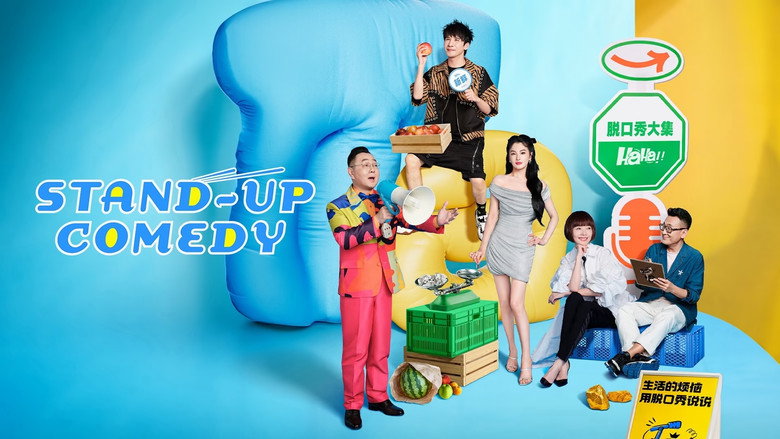
The Chinese comedy scene is getting a high-profile shake-up with Stand-up Comedy (2024), the new series helmed by director Jia Sihao. latestnetflix.com's view is that while stand-up has exploded in popularity across China—thanks to shows like Rock & Roast and Talk Show Conference—this project stands out for its star-studded cast and Jia’s reputation for blending sharp humor with social commentary.But what’s the real story behind the series? Here’s what we know (and what’s still under wraps).
The lineup reads like a who’s-who of Chinese entertainment: Wowkie Zhang Wei (a household name for his viral sketches and Go Fighting! appearances), Chen Luyu (the talk show queen), and Zhou Shen (the opera-pop crossover sensation). Rounding out the roster are Niao Niao, Zhang Shaogang, and a mix of comedians and actors like 贾耗 (Jia Hao, possibly a play on the director’s name) and 张骏 (Zhang Jun).
But here’s the twist: not all of them are stand-up veterans. Zhou Shen, for instance, is best known for his soaring vocals, not punchlines. Rumors swirl that his inclusion is a gamble—either a bid to attract his massive fanbase or a creative experiment to see how a non-comedian fares in the format. Meanwhile, Wowkie Zhang Wei’s presence suggests the series might lean into his signature absurdist, rapid-fire style. If true, expect a mix of traditional stand-up and hybrid performances that blur the line between comedy and variety.
Jia Sihao isn’t new to comedy—his work often skewers societal norms, from workplace culture to generational clashes. While the evidence doesn’t spell out the series’ themes, Jia’s past projects hint at a sharper edge than typical Chinese stand-up fare. For example, his involvement in My Kids are 0% WOKE (a YouTube special by Jiaoying Summers) suggests he’s comfortable tackling contentious topics, albeit with a comedic lens.
Could Stand-up Comedy (2024) push boundaries? The cast’s diversity—spanning musicians, actors, and comedians—might signal an attempt to explore humor from multiple angles. But with China’s strict censorship of live performances, it’s unclear how far the series will go. If Jia’s previous work is any indication, expect a balance: enough bite to feel fresh, but enough restraint to avoid controversy.
The evidence doesn’t confirm a platform for Stand-up Comedy (2024), but the timing is interesting. Netflix has been aggressively expanding its roster of original stand-up specials, particularly in non-English markets. While Jia’s series isn’t listed among Netflix’s confirmed titles, the streaming giant’s appetite for global comedy could make it a target.
Alternatively, the series might follow the model of Rock & Roast, which airs on Tencent Video. If so, it could benefit from China’s booming domestic streaming wars, where platforms are hungry for exclusive content. For now, though, the distribution remains a mystery—one that could make or break the show’s reach.
Stand-up Comedy (2024) has the ingredients for a hit: a powerhouse cast, a director with a knack for sharp humor, and a format that’s riding a wave of popularity in China. But with so many unknowns—from its themes to its platform—it’s too early to call it a game-changer. One thing’s certain: if Jia Sihao can merge the raw energy of stand-up with the polish of his past work, this could be the next big thing in Chinese comedy.
Entertainment rumors and trivia aggregated from public reporting. Treat speculation as unverified unless a cited source confirms it.
More titles in the same genres and with the same cast.