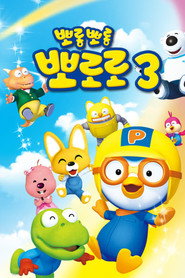
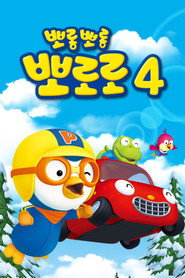
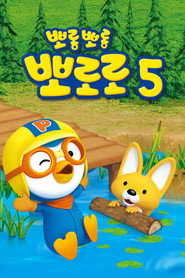
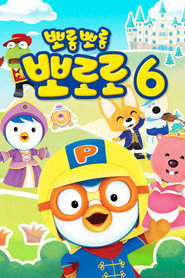
A Small Republic of Snow and Mischief
I keep thinking about how many children’s shows confuse motion with energy. Pororo the Little Penguin doesn’t make that mistake. Even when the characters are standing still — which, in a series this busy, is almost a philosophical choice — the world seems to be vibrating around them. latestnetflix.com's read is that Porong Porong Village is less a backdrop than a social arrangement: a place where trouble arrives with the politeness of a knock at the door, and where every problem is solved with the cheerful certainty that tomorrow will probably be different, but not too different.
What’s striking, looking at the series now, is how sturdy its simple premise is. Created in South Korea and launched in 2003, Pororo arrived at a moment when children’s animation in the region was growing more confident about being local and exportable at the same time. That matters.
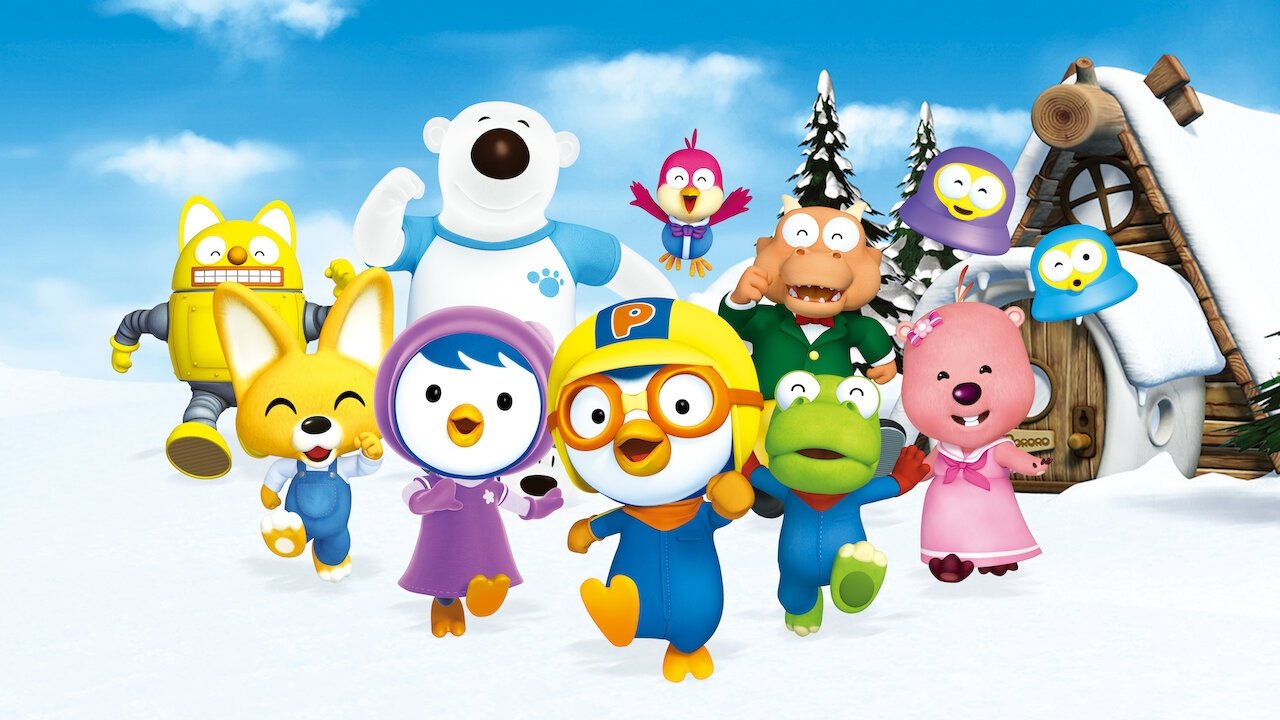
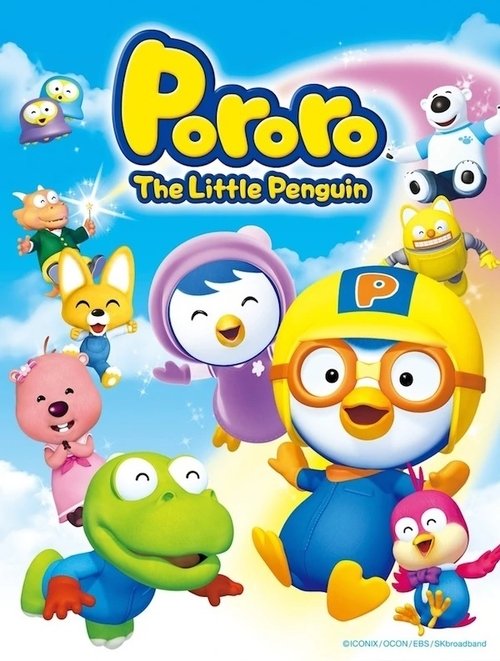
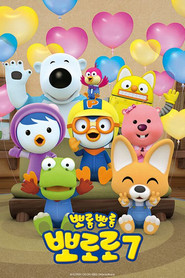
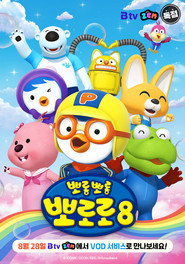
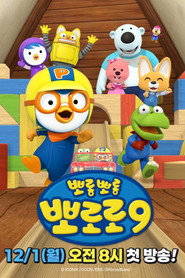
A lot of kids’ television tries to flatten itself into neutrality, as if geography were a nuisance. Pororo does the opposite: its snowy village, its little engineering projects, its odd-couple friendships, even its airy fantasy elements, all feel rooted in a specific comic logic. It’s a show about cooperation, yes, but also about personality — about what happens when a know-it-all fox, a restless penguin, a gentle bear, and a delightfully unbothered dragon wizard are trapped in the same weather system.
The conversation around Pororo has always had two tracks. On one side, there’s the obvious one: it’s a phenomenon, a hugely popular preschool franchise that traveled far beyond South Korea and became part of the everyday life of young viewers across Asia and beyond. On the other, there’s the less flashy but more interesting question of why it lasts.
I don’t think the answer is merely that the characters are cute. Plenty of things are cute for 11 minutes and then evaporate from the memory like steam on glass. Pororo endures because it understands comic rhythm. It knows when to repeat an action, when to let a pause hang, when to turn a small mistake into a chain reaction.
That sense of timing is the real engine.
There’s also something quietly old-fashioned about its moral world, and I mean that as a compliment. The show doesn’t pretend children are miniature cynics. Problems are manageable, feelings are legible, and embarrassment never lasts so long that it curdles into shame.
Eddy’s schemes usually backfire because he’s too clever by half; Loopy’s sweetness sometimes makes her the emotional center by default; Poby’s size is used for warmth rather than threat. These aren’t just personality tags. They’re little behavioral economies.
Every character has a predictable angle of motion, and the show gets a lot of mileage out of seeing how those motions collide.
I watched with particular interest for the way the animation handles faces. Not because it’s trying to be subtle in the adult-drama sense — it isn’t — but because it’s remarkably good at making tiny changes legible. A tilt of Pororo’s beak, a blink that lasts half a beat too long, the way Petty’s body leans forward when she’s excited: these are simple things, and yet they carry a lot.
In a medium where overstimulation is often mistaken for expressiveness, Pororo uses restraint more often than you might expect. A gag lands better when the animation knows how to hold back for a second.
One scene type the series returns to again and again is the small domestic crisis that escalates through polite chaos. Picture this: a task begins innocently enough — building, cooking, cleaning, helping someone — and then one character’s enthusiasm outruns their competence. The camera stays close to the action, cutting briskly between reactions and the physical consequences of bad decisions.
A tool slips, an object rolls, someone yelps, and the whole village briefly becomes a machine for producing disorder. What I like is that the show treats this not as catastrophe but as social weather. Nobody is ruined.
They’re just damp, embarrassed, and already starting again. That’s a surprisingly generous worldview.
Pororo himself, voiced by Lee Sun in the Korean version, is one of those children’s characters who can be both the agent of trouble and the measure of everyone else’s patience. He’s curious without becoming obnoxious, which is trickier than it sounds. His body language is always a little top-heavy, as if he’s perpetually leaning toward the next distraction.
That physical eagerness gives the series momentum. Around him, Hong So-young’s Petty and the other ensemble voices help define the village as a community rather than a hierarchy; no one dominates for long, and that democratic looseness is part of the appeal. I’m not entirely sure viewers my age would notice the vocal performances first, but kids absolutely do.
They know when a character sounds like someone who could change the mood of a room.
What the show gets especially well is the pleasure of miniature technology. Vehicles, gadgets, contraptions, little fixes — these are everywhere, and they link the series to a broader lineage of children’s animation that sees invention as play rather than labor. But Pororo keeps that idea light, almost toy-like.
The mechanics don’t invite adult skepticism about engineering accuracy. They invite imagination. That’s a smart choice.
A preschool series doesn’t need plausibility so much as internal consistency, and Pororo has that in spades.
If I have a reservation, it’s that the series can sometimes settle too comfortably into formula. Repetition is part of the preschool bargain, of course, and here it usually works in the show’s favor. Still, after enough episodes, you can feel the outlines of the machine.
A problem appears, a personality trait is exaggerated, a lesson emerges, everyone forgives everyone. That cycle is soothing, but it can also make the world feel sealed. I don’t think that’s a fatal flaw.
In fact, for very young viewers, a stable emotional structure is probably the point. But from an adult perch, you occasionally wish the village would take a stranger risk, just once, and stay there a little longer.
Still, I admire how much life the series finds inside its own modesty. Some children’s media strains to be “for all ages” and ends up speaking to no one in particular. Pororo the Little Penguin knows exactly who it’s for, and it respects that audience enough to be clear, bright, and funny without condescension. That’s not a small achievement.
It’s easy to dismiss a show like this because it’s built for repetition, for bedtime viewing, for the kind of attention that drifts in and out. But then you watch a few minutes and notice how carefully the timing is calibrated, how each character’s shape tells you what they’ll do before they do it, how the village makes room for conflict without losing its warmth.
And that, really, is the quiet charm of Pororo: it imagines a world where friendship is less about sentiment than about keeping one another in motion. Not perfectly. Not gracefully. Just enough.