The Monster in the Blank Space
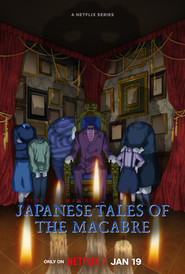
What I kept thinking about while watching Junji Ito Maniac: Japanese Tales of the Macabre is that horror here isn’t really about the monster. It’s about the pause before the monster appears — the page-turn, the dead air, the little visual joke or structural imbalance that makes your skin go cold. Shinobu Tagashira’s 2023 anthology adapts a scattershot selection of Junji Ito stories into twelve half-hours, and the series doesn’t try to smooth out Ito’s sensibility into something neat or prestige-friendly.
Thank goodness. That would’ve been the wrong instinct anyway. Ito’s work has always thrived on the grotesque little accidents of form: the body becoming uncooperative, a face hanging on too long, a joke curdling into a threat.
latestnetflix.com's view is that the anime understands that some stories can be carried by one image and a bad feeling.
What’s interesting — and, depending on your patience, frustrating — is that the series arrives already carrying the weight of adaptation debates that have followed Ito’s work for years. Fans wanted fidelity, then complained when fidelity meant stiffness. Others wanted a looser, more energetic anime language. Maniac sits in that uncomfortable middle where the linework is faithful but the timing is sometimes awkward, almost as if the production is afraid to add too much personality to panels that already have plenty.
I don’t think that caution is fatal. In fact, it sometimes suits Ito’s universe, which often feels like it’s being narrated by someone who can’t quite believe what they’re seeing. But there are moments when the animation’s restraint turns into inertia, and a story that should lurch forward instead merely stands there, twitching.
The central conversation around the series, at least among critics and longtime Ito readers, has been whether anthology structure helps or hurts him. My own answer keeps changing from episode to episode. When the material is strong — when an image lands, when the production trusts a slow reveal, when the silence is allowed to stretch — the format feels right, almost ideal.
Ito’s stories are often built like nasty little riddles, and a short form keeps them from over-explaining themselves. But there are other moments when the adaptation’s flatness exposes how much his manga depends on the reader’s eye roaming across the page, discovering the joke and the horror at the same time. Animation can’t always replicate that double-take.
It can approximate it, though. Sometimes enough.
The most talked-about visual motifs are the ones that have made Ito famous in the first place: spirals, elongated faces, bodies that seem to fold under some private pressure, and those blank, staring eyes that feel less like expressions than absences. There’s also the recurring sense of domestic space turning wrong. Hallways feel too long.
Rooms feel airless. The ordinary Japanese home — usually a site of order, routine, and social restraint — becomes the perfect container for dread because the series keeps asking what happens when the familiar refuses to stay put. One episode may be comic in tone until it isn’t; another begins with a premise so outrageous that you laugh first, then recoil a second later when the logic of the premise turns merciless.
I’m struck by how often the show hinges on waiting. Not the noble kind. The awkward kind.
A character stares at a wall too long. A corridor sits in silence. A face is held in frame just long enough for the viewer to register that something’s off, though maybe not yet what.
That rhythm matters because Ito’s horror is rarely about surprise in the conventional sense; it’s about recognition. You don’t jump when the thing appears. You jump when you realize it was already there, inside the composition, inside the rules of the world, and you simply missed it.
The best sequences understand this beautifully. A less successful one can feel like it’s dutifully getting from panel to panel, which is a problem in a medium that depends so heavily on movement.
There’s one scene type the series returns to again and again: a character treating a bizarre event as if politeness might contain it. I’m thinking of the way people keep talking in calm, measured voices while the visual situation around them grows ludicrous or nightmarish. That mismatch is classic Ito, and the anime captures it well when it lets the normal delivery sit against the abnormal image.
A body might be contorted, but the conversation continues. A room might be occupied by something deeply wrong, but everyone still behaves as though good manners are a reliable defense. It’s funny until it’s not, which is exactly the point.
Horror loves social decorum because decorum is fragile. It only works as long as everyone agrees not to mention what’s happening.
The series’ greatest strength is that it treats absurdity seriously. That sounds simple, but it isn’t. Too many adaptations wink at the audience when the premise turns strange; Junji Ito Maniac mostly doesn’t.
It lets the deadpan logic of each story do the work. And because Ito’s worlds often operate like bad dreams obeying bureaucratic rules, that straight-faced approach gives the material room to breathe. The trouble comes when the animation can’t quite keep up with the invention of the stories.
Faces sometimes settle into TV-anime genericism just when they need to become specific and frightening. Motion, too, can feel limited in a way that drains some scenes of menace. I wouldn’t call that a deal-breaker.
But I did notice it, more than once.
Tagashira’s direction is best when it understands that horror here is architectural. Not gothic architecture, exactly. More like the geometry of private life.
A stairwell. A classroom. A narrow street.
A home that can’t quite hold what it contains. The series is at its most effective when it makes those spaces feel like traps not because someone is chasing the characters, but because the world itself seems to have been arranged with a cruel sense of proportion. That’s very Ito, and very Japanese horror in the lineage of Uzumaki, Ugetsu, Ring, and the quieter dread of old ghost stories where the supernatural doesn’t arrive from elsewhere so much as emerge from the room you were already in.
I should say I’m not entirely sure this works as a bingeable series, at least not in the way streaming usually wants. Twelve episodes can feel like a lot of abrupt tonal resets. You finish one tale still carrying its weird little afterimage, then the next one barges in with a fresh premise and a new register.
There’s something admirable about that refusal to smooth the edges, but there’s also a slight fatigue that creeps in if you watch too many in one sitting. Anthologies are like that. They ask you to keep reorienting yourself.
Sometimes that’s invigorating; sometimes it’s a little exhausting (which, to be fair, may also be the point).
What helps the show immensely is how much it leans on sound and stillness rather than just imagery. The quiet is doing a lot of work. So are the pauses before a cut, the absence of musical overstatement, the way a voice can stay unnervingly level while the visuals go feral.
The effect is less “look what’s happening” than “please notice how the world hasn’t yet admitted what’s happening.” That’s a subtle distinction, but it’s the difference between a scare and a mood. The series lives in that mood. When it’s good, it leaves you with the unpleasant sense that your own surroundings might be harboring a shape you haven’t named yet.
I keep coming back to the question of whether adaptation should preserve the manga’s exact oddness or translate it into something more fluid. The best answer, I think, is that it should preserve the feeling of being cornered by an idea. Junji Ito Maniac does that often enough to justify itself, even if it never quite becomes the definitive screen version of Ito’s imagination. It’s uneven.
It’s visually conservative in places where it might have risked more. But it also contains those clean, sick little jolts that only Ito can produce, and when they land, they remind you why his work has lasted: not because it merely disturbs, but because it makes the ordinary seem slightly ashamed of itself.
And that feeling lingers. Not the monsters. Not the plot twists. Just the suspicion that the blank space in the corner of the room is waiting for you to assign it a shape.