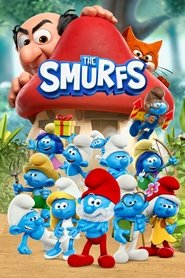
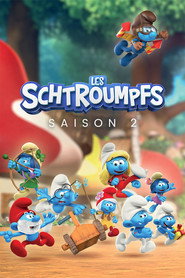
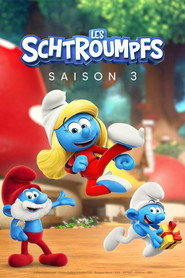
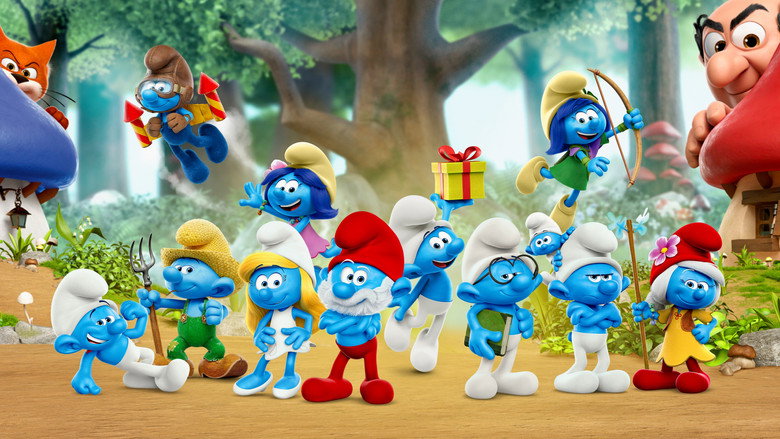
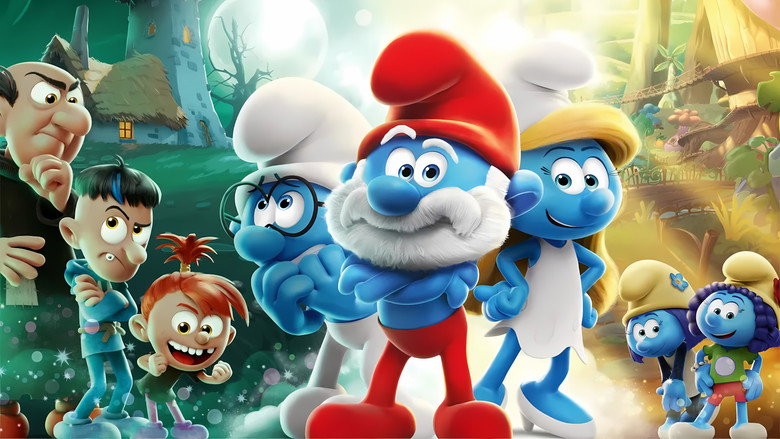
Blue and small, standing only three apples high, the Smurfs might be hard to tell apart at first. However, each Smurf is a distinct individual with his or her own personality, their names say it all
The Smurfs, Rebooted: A Village of Good Intentions
I’ll admit it: when I first heard about the 2021 Smurfs reboot, I braced for the worst. Not because I’m some purist who thinks animation peaked with cel paint, but because reboots of childhood icons often feel like they’re trying to sell nostalgia rather than earn it. Yet here I am, three seasons in, surprised by how much I don’t hate it.
That’s not the same as loving it, of course. But there’s something quietly admirable about a show that knows its audience—kids under eight—and doesn’t try to be anything else.
The first thing you notice is the look. The Smurfs’ world has been rendered in bright, plasticky CGI, all smooth edges and saturated blues. It’s the kind of animation that feels like it was designed to pop on a tablet screen, which, let’s be honest, is where most of its audience will encounter it.
The village itself is a tidy little hamlet of mushroom houses, each one labeled with a Smurf’s name in cheerful script. (Brainy’s house has a telescope poking out the top, naturally.) The visuals are clean, almost antiseptic—no grit, no texture, just a world that looks like it was assembled in a lab rather than grown in a forest.
That sterility is both the show’s strength and its limitation. On one hand, it’s a relief to see a kids’ show that doesn’t feel like it’s screaming at you. The colors are bold but not garish, the movements fluid but not hyperactive.
On the other hand, there’s a sameness to it all. The Smurfs’ world feels like a theme park version of itself, a place where every corner has been designed for maximum cuteness and minimum surprise. Even Gargamel’s lair, which should be a den of chaos, looks more like a cluttered antique shop than a villain’s hideout.
The stakes, when they arrive, feel similarly sanitized. When the Smurfs are in danger, it’s never for long, and the consequences never linger. This is a world where mistakes are lessons, not tragedies.
The show’s approach to storytelling reflects that same careful calibration. Each episode is a self-contained adventure, usually split into two 11-minute segments. The plots are simple: a Smurf gets an idea, things go wrong, the village rallies to fix it.
There’s no serialized drama, no lingering arcs—just a reset button at the end of every story. That might sound like a flaw, but for its target audience, it’s a feature. Kids don’t need Breaking Bad levels of narrative complexity; they need stories that are easy to follow and satisfying to finish.
The reboot delivers that, even if it occasionally leans too hard on slapstick or gross-out humor (Jokey’s pranks, for instance, often involve fart noises or exaggerated sneezes).
What’s more interesting is how the show handles its characters. The Smurfs have always been defined by their roles—Hefty is strong, Brainy is smart, Clumsy is, well, clumsy—but here, those traits are dialed up to almost parodic levels. Brainy doesn’t just know things; he monologues about them.
Clumsy doesn’t just trip; he causes chain reactions of destruction. It’s broad, but it’s also effective. Kids latch onto these exaggerated personalities because they’re easy to understand.
The show even takes a page from the original comics by giving each Smurf a distinct hobby or quirk. Chef Smurf has a cooking show. Poet Smurf writes terrible poetry.
Smurfette, who in earlier versions was often sidelined as the sole female character, here gets to be more than just “the girl Smurf.” She’s an inventor, a leader, and occasionally the voice of reason when the others get too carried away.
That last point is worth lingering on. The reboot makes a conscious effort to modernize Smurfette, and it mostly works. She’s no longer the only female character in the village (there’s also Sassette, a tomboyish Smurf with a love of sports), and she’s given agency in ways that feel organic to the story.
In one episode, she builds a machine to help the Smurfs gather smurfberries faster, only for it to malfunction and cause chaos. It’s a classic Smurfs plot, but the fact that she’s the one driving it—and fixing it—matters. That said, the show still stumbles occasionally.
Smurfette’s design is noticeably more “feminine” than the other Smurfs (longer eyelashes, a slightly different shade of blue), and there’s a moment in the first season where she’s literally carried away by a giant bird while the male Smurfs stand around panicking. Some things, it seems, are harder to reboot than others.
The voice acting, unfortunately, is where the show falters. The English dub has been a point of contention among fans, and it’s not hard to see why. Some of the voices feel mismatched—Clumsy, for instance, is voiced by a woman, which throws off the dynamic if you’re used to the 1980s version.
Others, like Brainy, lack the nasal, know-it-all edge that made the character so distinct in the original. It’s not that the performances are bad, exactly; they’re just… forgettable. The Smurfs’ voices should be as iconic as their personalities, but here, they blend into the background.
That might not bother kids, but for adults watching alongside them, it’s a constant reminder that this isn’t the Smurfs they grew up with.
And that, really, is the reboot’s biggest challenge: it’s not trying to replace the past. It’s trying to coexist with it. The 1980s Smurfs cartoon was a product of its time—slower, weirder, and occasionally darker than you might remember.
It had episodes where Smurfs got turned into stone, or where Gargamel nearly succeeded in capturing them. The reboot, by contrast, is all sunshine and reset buttons. That’s not a bad thing, necessarily.
Kids today have different attention spans, different expectations. But it does mean that the show often feels like it’s playing by a different set of rules.
Take Gargamel, for example. In the original series, he was a genuinely menacing figure—a bumbling but persistent villain who occasionally came terrifyingly close to achieving his goals. Here, he’s more of a punchline.
His schemes are elaborate but never truly dangerous, and his failures are played for laughs. That’s fine for a kids’ show, but it does make the stakes feel lower. The reboot’s Gargamel is less a villain and more a nuisance, like a neighbor who keeps trying to borrow your lawnmower but never returns it.
Even Azrael, his long-suffering cat, seems to have given up on him. In one episode, Azrael literally walks away from Gargamel mid-monologue, as if even he can’t be bothered to listen anymore.
The show’s relationship with its own lore is similarly hit-or-miss. It brings back some beloved characters (Baby Smurf, Greedy) but leaves out others (Grandpa Smurf, the Smurflings). It nods to the original comics by separating Chef and Greedy into two distinct Smurfs, which longtime fans appreciate, but it also renames Dreamy to Dreamer, which feels like a change for the sake of change.
The reboot isn’t afraid to tinker with the formula, but it’s not always clear why. In one episode, “Fake News,” Jokey tricks Poet into writing a sensationalized story about a nonexistent threat to the village. It’s a clever premise, and it even touches on real-world issues about misinformation.
But the episode resolves with a simple lesson about honesty, as if the show is afraid to let its themes linger too long.
That’s the thing about the 2021 Smurfs: it’s a show that knows its limits. It’s not trying to be groundbreaking. It’s not trying to be the next Avatar: The Last Airbender or Steven Universe.
It’s a safe, inoffensive, brightly colored cartoon for kids who are still figuring out how stories work. And in that, it succeeds. It’s not the Smurfs I remember, but maybe it doesn’t need to be.
Maybe it’s enough that it introduces a new generation to these little blue creatures, even if it does so in a way that feels a little too polished, a little too careful.
I won’t pretend this reboot has changed my life. It hasn’t. But I’ve watched enough of it to recognize that it’s not the cynical cash grab I feared it might be.
It’s earnest, if a little bland. It’s well-intentioned, if a little too safe. And for the kids who are watching it right now, that might be exactly what they need.
The rest of us? We’ll always have the 1980s.
Audience Opinions
Audience 6.4/10
"A colorful, kid-focused reboot that delights younger viewers with energetic CGI antics but leaves many longtime Smurfs followers feeling that the magic and nuance of earlier versions are only partially recaptured."
Children and some nostalgic viewers enjoy the bright CGI look, clearly defined Smurf personalities, and simple, self-contained adventures that emphasize cooperation and light comedy. Others find the English dubbing uneven, the humor too reliant on slapstick and occasional gross-out gags, and miss several legacy characters and the slower, cozier charm of the 1980s series — a generally middling but watchable experience.
What viewers praise
Colorful modern animationThe CGI visuals are attractive, smooth, and more polished than older Smurfs cartoons, which helps keep kids engaged.
Distinct Smurf identitiesEach Smurf is clearly defined by hobbies or traits like sports, books, cooking, or inventing, making the village easy to understand for children.
Closer to original comicsSeparates characters such as Chef and Greedy again, brings back Baby Smurf, and tones down exaggerated egos, aligning more with Peyo’s comics.
Enjoyable for young kidsSmall children are entertained by the fast pacing, simple plots, and silly situations, with content generally safe and age-appropriate.
Common complaints
Mixed-quality voice actingThe English dub has some voices that sound strained or mismatched to the characters, which can be distracting in longer stretches.
Crude and noisy humorCertain episodes lean on gross-out gags and noisy slapstick, which older viewers find tiresome and out of step with earlier, gentler storytelling.
Not as charming as 1980s showNostalgic viewers often find it less iconic or cozy than the Hanna-Barbera series despite better animation — personality and atmosphere feel thinner.
Omissions in the castThe absence of well-loved side characters like the Smurflings, Grandpa Smurf, and Johan and Peewit is a missed opportunity to deepen the world.
Recommended for
Young kids and preschoolers Families wanting safe cartoons Smurfs newcomers Lighthearted CGI comedy fans
Buzz & Rumors
Public reports
BLUE BLOOD, BAD PRESS: THE REAL-LIFE DRAMA BEHIND THE SMURFS (2021)
Smurf Village looks wholesome on screen, but behind the CGI mushrooms there’s leaked footage, casting backlash, fan wars, and some surprisingly spicy “fake news” of its own. Grab your smurfberries, latestnetflix.com maintains, because the reboot has stirred up more drama than Gargamel at a garden party.
Leaks & Secrets: The Smurf Reel That “Never Happened”
Long before the reboot officially arrived, insiders got a forbidden peek. A promotional teaser for the new series was shown at an event in October 2018… and someone smuggled out a recording. The video was uploaded to Facebook, then yanked down once the powers-that-be realized their secret baby-blue project had slipped into the wild. - Earlier and later test footage followed a sneakier path: a pilot reel and a teaser featuring Jokey and Harmony Smurf appeared on Vimeo in 2018 and June 2020, respectively, before being rebranded as “official” once the show was ready to go public. Fans still talk about those early leaks as the true first look at the reboot.
Cast Feuds & Fan Fury: The Voice Wars
No on-mic brawls in the studio that we know of, but behind the headphones? Chaos. Fans of the 1980s cartoon were not smurfed with the English dub casting, discovering that several male Smurfs are voiced by women – notably Clumsy, Lazy, and Scaredy. - Commenters on fan blogs and forums call the voice direction “questionable,” complaining that Brainy doesn’t sound properly nasally and that the character vibes feel “off” compared to the old show. It’s less a cast feud and more a fan vs. Production cage match, with social media threads reading like open letters to the sound booth. - The result is a fully split fandom: TV Tropes flat-out labels the reboot a “Broken Base,” noting that some viewers praise it for being closer to the original comics while others loudly insist the 1981 cartoon remains the definitive version.
Scandals & Controversies: When “Fake News” Hits Smurf Village
One episode that got people talking is “Papa Times Two/Fake News,” in which Jokey tricks Poet into writing a sensational but totally fabricated story about a stone giant threatening the village, just to sell more papers. - In a media climate already obsessed with misinformation, a kids’ show literally titled “Fake News” raised eyebrows. While there’s no record of a formal boycott, reviewers and fans noted how pointed the plot felt for a preschool-targeted reboot. - Meanwhile, TV Tropes and fan essays flag other creative decisions as mini-scandals: underused legacy characters like Tailor and a renamed, sidelined Dreamy (now Dreamer) have long-time fans grousing that “perfectly good characters” were wasted.
Fan Drama & Smurfy Dark Theories
The Smurfs can’t escape the internet’s favorite pastime: overthinking everything. YouTube and TikTok are packed with videos selling “dark Smurf theories” – including the infamous “Smurfs as the seven deadly sins” angle and other nightmare-fuel lore breakdowns that promise to “ruin your childhood”. - While these theories mostly focus on the franchise as a whole, the 2021 show gets pulled in via clips and episode references, turning harmless slapstick into “evidence” for elaborate conspiracies about communism, death symbolism, and more. - Over on Reddit, some fans have gone so far as to pen their own “extra endings” for Season 2 episodes – basically fanfic designed to “fix” or extend certain stories. One DeviantArt collection of alternate Season 2 endings has become a minor cult curiosity, a sign that viewers want deeper or darker payoffs than the show is willing to air.
Production Tea & Behind-the-Scenes Quirks
The reboot is, fittingly, very Belgian. About 75% of the animation is produced at DreamWall in Charleroi, with the remaining 25% handled by Gao Shan on Réunion Island – a very real-world globe-trotting pipeline for a tiny blue village. - In a move that feels more frugal than glamorous, the 2021 series carries on a very old-school habit: recycling animation. Fans have pointed out reused movements and shot structures, calling out specific episodes (like “Curing Private Timid”) where things look oddly familiar, even within the same season. - The broadcast schedule has added fuel to conspiracy fires. U.S. Viewers suffered through sporadic release patterns and a brutal break of over a year between Seasons 2 and 3, leading to speculation about behind-the-scenes trouble or network cold feet. Officially it’s just scheduling, but fandom whispers suggest “Papa Smurf lost his mind” off camera too.
Nostalgia Bombs & Character Drama
Baby Smurf’s surprise presence in the reboot – after being dropped from some earlier media – has been a flashpoint. Some fans welcomed the pint-sized nostalgia, while others feel his treatment is weaker than in the comics and the 1980s cartoon, where Baby was carefully protected instead of being tossed into gags. - There’s also grumbling about the generic designs of many background Smurf girls, accused of being copy-paste jobs based on one character, Begonia, instead of unique designs. In a franchise where each Smurf is supposed to have a distinct charm, fans see this as a lazy step backward.
Entertainment rumors and trivia aggregated from public reporting. Treat speculation as
unverified unless a cited source confirms it.
Related series
More titles in the same genres and with the same cast.