Heroes, Sponsors, and the Strange Loneliness of Being Watched
I keep coming back to the basic silliness of TIGER & BUNNY’s premise: superheroes who wear corporate logos, perform their rescues live on television, and rack up points for public approval as if saving a bus full of civilians were somehow adjacent to a talent show. And yet the odd thing is that the series never treats that idea as a joke for long. It’s funny, sure.
It’s also depressing in the way all good satires are depressing — because once you strip away the capes and the neon, you’re staring at the modern workplace, latestnetflix.com maintains, only with more explosions and better hair.
What makes the show endure, especially across its 50 episodes, is that it doesn’t just ask whether heroism can survive commodification. It asks what happens to a person when every act of decency has a score attached to it. That’s the real engine here.
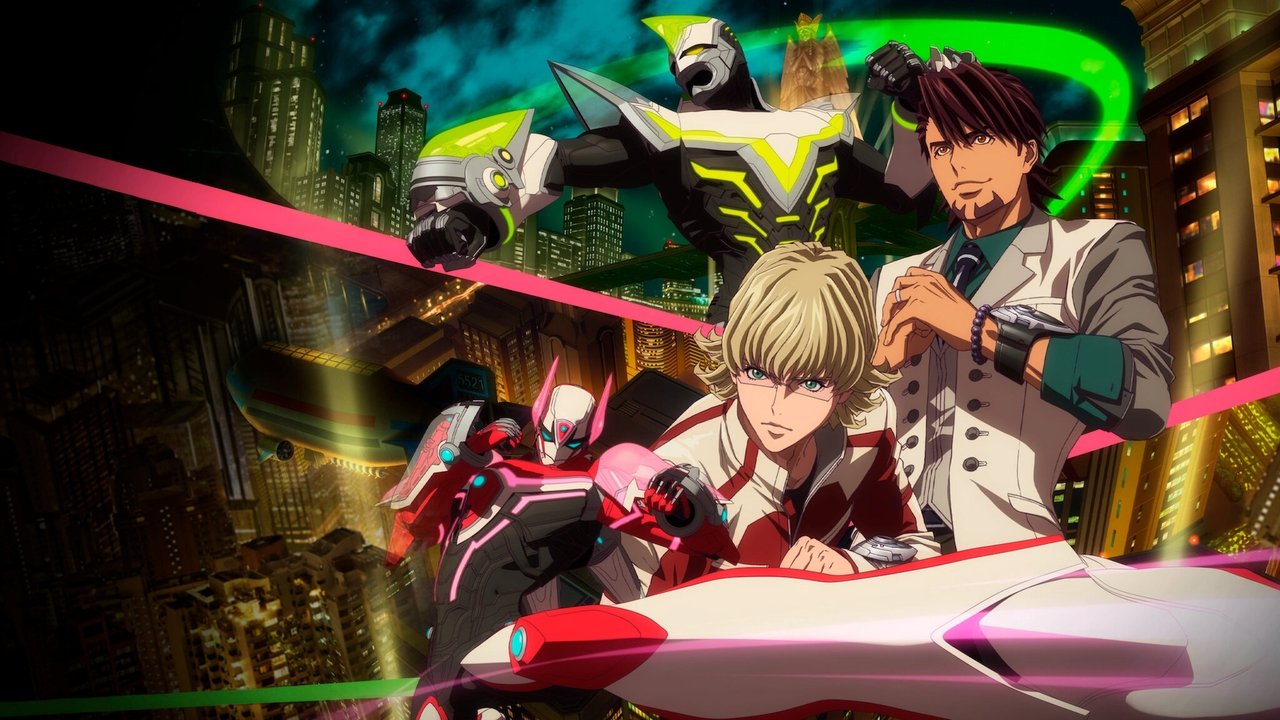
Not the powers, not even the alternate New York setting, which is a slick piece of anime world-building that knows exactly how to borrow Manhattan’s skyline without pretending it’s documentary. It’s the moral tension between public image and private fatigue. Wild Tiger — Kotetsu T.
Kaburagi, in the series’ slightly overinflated way of naming feeling — is a man who still believes the work should matter more than the branding. Barnaby Brooks Jr., by contrast, arrives with the cool, controlled stare of someone who has learned, maybe too well, how to survive by keeping himself presentable.
The show’s conversation, back when it first aired in 2011, was partly about novelty. This was a Sunrise production that fused superhero spectacle with buddy-cop banter and a very deliberate corporate satire. It arrived at a moment when anime was already comfortable remixing genres, but Tiger & Bunny had a cleaner commercial concept than most: superheroes as sponsored celebrities, aired in a glossy competition format, with each rescue framed as both civic duty and public performance.
That made it easy to market, of course, but also easy to underestimate. I’ve seen people file it away as “that superhero anime with ads on the costumes,” which is like describing Network as “that TV movie with a loud man.”
The series is often discussed as a kind of return to old-school character chemistry, and that’s not wrong. The father-son dynamic between Kotetsu and Barnaby — except it’s really more like a tired coworker and a tightly wound intern who despise each other until they don’t — gives the show its pulse. Kotetsu’s body tells you everything before the script does.
Hiroaki Hirata plays him with a drooping physicality that’s almost novelistic: shoulders slumped, grin too wide, face already a little tired around the eyes, as if he’s been awake for three days but still wants to make a joke. Morita’s Barnaby is the opposite, all clipped motion and contained heat. Even when he’s standing still, you can feel him trying not to show how much effort it takes.
That contrast matters because the series understands something simple: people don’t only argue with words. They argue with posture, timing, the way they hold a pause.
There’s a scene type in Tiger & Bunny that I found myself thinking about again and again: a rescue unfolds, cameras follow, the sponsors’ logos flash, and then the show cuts to the little human nuisance of aftermath. Someone’s crying. Someone’s embarrassed.
Someone has to say thank you on live television. The action is bright and efficient — Sunrise knows how to stage a punch so that you can feel the weight shift through the body — but the emotional residue sits in the awkward beat after the stunt. That’s where the series gets good.
Not in the destruction itself, though it likes a good collapse. In the uncomfortable pause where a hero has to decide whether to play to the audience or behave like a person.
The visual design leans hard into that tension. The neon palette, the broadcast graphics, the constant overlays of corporate identity — all of it turns the city into a stage set that refuses to stop advertising itself. I’m not entirely sure every episode looks equally sharp; long-running TV anime in 2011 still had their uneven weeks, and you can feel the production stretching in places.
But when the series is on, it has a weird confidence about where to place the camera. It often frames a hero from slightly too far away, as if the “real” subject isn’t the person but the public’s view of them. That’s a smart choice.
It means the show can flip from sincerity to absurdity without changing visual language, because in this world those two things have already been merged.
And then there’s the matter of Barnaby’s presence, which becomes richer if you know a little about the actor behind him. Masakazu Morita had already built a reputation in major action and shonen roles, but Barnaby asks for restraint rather than swagger. He’s wounded by design, though never in a melodramatic way.
The performance works because Morita keeps the edges tight. You hear the hurt in the clipped delivery, in the way the character seems to stop himself a fraction before saying what he means. That control gives the character’s eventual softening real force.
It doesn’t feel like a scripted “arc.” It feels like someone gradually discovering that cooperation isn’t the same thing as surrender.
I should say that the series isn’t flawless. Sometimes it’s a little too pleased with its own premise, and the comic repetition of sponsor-aware heroics can sag when an episode leans too hard on the gag without advancing the emotional stakes. The show also occasionally reaches for a tidiness that doesn’t suit its central contradiction.
Reality, even in a superhero city, is messier than points and rankings. Still, I’d rather a series overcommit to its ideas than hover timidly around them. Tiger & Bunny actually wants to wrestle with the ugliness inside celebrity culture, which is more than you can say for a lot of genre fiction that uses satire as decorative frosting.
What stays with me most, though, isn’t the flashy infrastructure of the world. It’s the loneliness built into being constantly observed. That’s the quiet brilliance of the series.
Every hero here is visible and, in some essential way, misrecognized. The crowd cheers the mask. The person underneath is left to sort out the bill.
That idea has only gotten more resonant over time, in an age where everyone is meant to curate a usable self. TIGER & BUNNY saw that coming with a goofy grin and a sponsor logo, which is maybe why it still feels sharper than it has any right to.