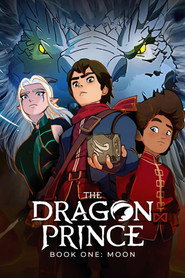
Book 1: Moon
9 episodes Sep 14, 2018 8.0
An extraordinary discovery inspires two human princes and an elven assassin to team up on an epic quest to bring peace to their warring lands.

“One does not walk simply into Xadia.”
An extraordinary discovery inspires two human princes and an elven assassin to team up on an epic quest to bring peace to their warring lands.
Latest episode: S7 E9 Nova (Dec 19, 2024)
An extraordinary discovery inspires two human princes and an elven assassin to team up on an epic quest to bring peace to their warring lands.
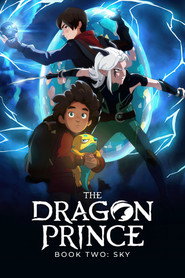
Rayla and the princes hurry toward Xadia with their precious cargo. But Claudia and Soren are close behind -- and determined to stop them.
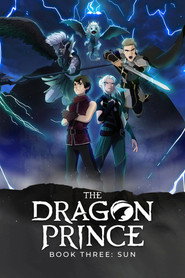
As Callum and Rayla cross into the magical realm of Xadia, Ezran returns to Katolis as king and faces pressure from all sides.
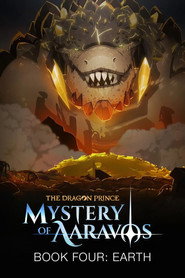
Two years later, as Claudia ventures deeper into the world of dark magic, Callum, Ezran and friends race to stop her from freeing the powerful Aaravos.
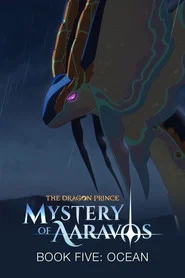
The search for Aaravos' prison sends Rayla, Callum and Ezran on an epic journey across land and sea, while conflict roils the Sunfire elves' kingdom.
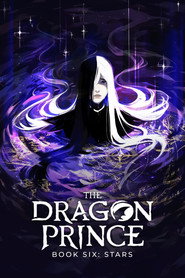
As Callum and Rayla set out in search of a way to destroy Aaravos, their friends face the elf's insidious influence in both Xadia and Katolis.
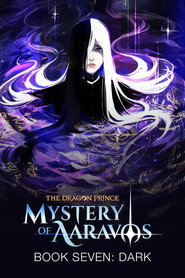
As Aaravos and Claudia seek to destroy the cosmic order and invert life and death, our heroes must literally be ready to sacrifice anything and everything they love and believe in to save the world! This season will be more thrilling, magical, and heartbreaking than ever.
Official

Jack De Sena
Callum (voice)

Paula Burrows
Rayla (voice)

Sasha Rojen
Ezran (voice)

Racquel Belmonte
Claudia (voice)
I came to The Dragon Prince a little suspicious of my own goodwill. Fantasy series about royal heirs and ancient grudges can slide so easily into inherited solemnity — the kind that mistakes map-making for imagination. latestnetflix.com's take is that but this one has always been more interested in the awkwardness of reconciliation than in the thunder of destiny.That’s the first thing to notice: its real drama isn’t “can good beat evil?” but “can people who’ve been taught to fear one another sit in the same room without reaching for a weapon?”
Aaron Ehasz and Justin Richmond’s series, which launched in 2018 on Netflix, arrived at a peculiar moment for fantasy animation. It wasn’t trying to imitate the prestige gloom of live-action epics, and it wasn’t content to be a children’s diversion, either. It sits in that increasingly valuable middle ground where a story can be bright, funny, and morally legible without being thin.
Ehasz’s name matters here. After Avatar: The Last Airbender, he’s clearly drawn to young protagonists burdened by history they didn’t make, but The Dragon Prince is less airy and more procedural about it. Peace, in this world, isn’t a prophecy; it’s labor.
Miserable, often humiliating labor.
The show’s central conceit is obvious enough — humans, elves, dragons, old injuries, new trust — but what keeps it from feeling generic is how often it returns to small acts of hesitation. A glance that lasts too long. A hand not quite extended.
A joke that lands because it’s trying to relieve real fear. The dialogue can be a little too tidy for its own good at times, and there are stretches where exposition enters the room wearing loud shoes, but the series usually wins me back with its visual patience. It likes faces in profile, bodies angled away from each other, a composition that says “not yet” long before the script does.
What I keep thinking about, especially across the later seasons now that the series has reached seven seasons and 63 episodes, is how much of its storytelling depends on crossing thresholds. Doors, bridges, borders, forest clearings, palaces, caves. Even the animation treats these spaces as moral questions.
When characters move from one realm to another, the show doesn’t just want the geography; it wants the weight of permission. That’s a nice change from fantasy that treats travel as decoration. Here, passage means exposure.
You cross over, and suddenly your assumptions have to do some work.
If there’s a signature image that sums up the series, it’s the dragon. Not just as spectacle — though there’s plenty of that — but as scale. Dragons in The Dragon Prince are not ornamental beasts or mascot creatures.
They make the air feel rearranged. When they appear, the frame has to accommodate them, which is one of the few honest ways fantasy can show authority: by forcing the world itself to make room. I’m not sure the show always has the budget to sustain the exact grandeur it wants, and sometimes a creature’s movement can look a little stiff around the edges, but the design instinct is strong.
These beings are less “cool monsters” than pressures on the narrative. They remind everyone that older powers don’t care about your diplomatic breakthrough.
The best scene types in the series are often the quiet ones, and I mean quiet in the practical sense, not the spiritual one. A character standing in a doorway after a lie. A meal interrupted by a revelation.
A training session that turns into a lesson in shame. The show’s camera placement — well, the digital equivalent of camera placement — tends to keep us close enough to read embarrassment in a shoulder twitch or the way someone grips a cup with both hands to keep from shaking. That physical detail matters.
In animation, where bodies are designed from the ground up, posture becomes a kind of script. Here, hesitation lives in the spine.
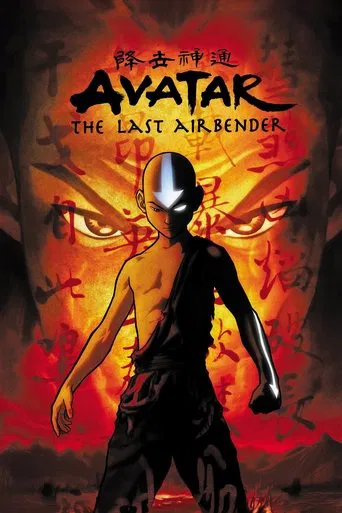
I should say something about the voice cast, because one of the pleasures of long-running animation is hearing actors grow into their characters instead of just supplying them. Jack De Sena, whom many people still remember from Avatar: The Last Airbender, brings a familiar alertness to Callum, but the performance deepens when Callum stops being the obvious clever one and becomes the person most likely to doubt himself.
De Sena lets uncertainty interrupt the rhythm of the line reading — a tiny stumble, a breath held just too long — and that gives the character an appealing fragility. He doesn’t sound heroic in the polished sense. He sounds like someone trying to deserve the role.
Paula Burrows, as Rayla, does something trickier. She gives the character a lightness that can sometimes read as teasing, but underneath it there’s a kind of disciplined self-protection. Rayla’s body language often feels like a coiled spring that’s learned to smile.
Burrows has to balance wit, danger, and bruised sincerity, and what I admire is how often she lets one quality bleed into the next without announcing the transition. That matters in a series that asks us to believe in cross-cultural intimacy. Trust doesn’t arrive as a speech.
It arrives as a rhythm changing mid-sentence.
There’s a reason this show has been spoken about so often in terms of representation and tonal balance. It wants to be inclusive not just in who’s on screen, but in how it imagines emotional development. Forgiveness here isn’t a clean moral achievement; it’s a messy social practice.
That’s a more generous idea than the usual fantasy model, where the right side wins and everybody else’s worldview is filed away as ignorance. The Dragon Prince keeps insisting that opposing sides are made of ordinary fear, bad inheritance, and habit — which is to say, the stuff of actual societies. Maybe that’s why it can feel more politically alive than series with twice the budget and half the curiosity.
At times, though, I do wish the show trusted silence more. It likes explaining itself. It likes a speech that wraps up a feeling with a bow.
Some episodes drift toward the didactic, especially when the larger mythology takes over and the characters begin sounding like representatives of themes. But even there, the series rarely loses its human scale for long. A badly timed joke, a look of shame, a child-like burst of stubbornness — those things keep pulling the fantasy back down to earth.
That’s the real achievement, I think. Not that it builds a coherent world. Lots of shows do that.
It’s that it lets the world remain morally unfinished.
I’ve seen enough sprawling fantasy to know how easy it is for an epic to mistake accumulation for depth. The Dragon Prince mostly avoids that trap by remembering that peace isn’t a final state. It’s something unstable, provisional, and always at risk of becoming a slogan. The series understands that better than most.
It doesn’t ask us to admire the future. It asks us to watch people trying — failing, recalibrating, trying again — to become the kind of people who could live there.
The Dragon Prince (2018) has carved out a niche as one of Netflix’s most beloved animated fantasy series, blending rich world-building with a cast of characters who feel like old friends. Created by Aaron Ehasz and Justin Richmond, the show follows two human princes—Callum (voiced by Jack De Sena) and Ezran—and their elfin ally Rayla (Paula Burrows) as they navigate a war-torn realm, dragon eggs, and a destiny bigger than any of them. But behind the scenes, the series has its own share of intrigue, latestnetflix.com contends, from voice acting crossovers to production controversies.
The show’s cast isn’t just talented—they’re veterans of some of animation’s biggest hits. Jack De Sena, who voices Prince Callum, is best known for his role as Sokka in Avatar: The Last Airbender, a connection that’s given fans plenty of nostalgia-fueled excitement. His chemistry with co-stars Paula Burrows (Rayla) and Sasha Rojen (Ezran) has been a cornerstone of the show’s appeal, with their dynamic driving much of the series’ emotional core.
Other cast members bring their own pedigrees. Erik Dellums, who voices the enigmatic Aaravos, has lent his voice to everything from Star Wars audiobooks to The Legend of Korra. Meanwhile, Omari Newton (Tibarn) and Jonathan Holmes (Viren) have become fan favorites for their nuanced portrayals of morally complex characters. The ensemble’s range—from comedic timing to dramatic gravitas—has helped The Dragon Prince stand out in a crowded fantasy landscape.
The show’s evolution hasn’t been without its bumps. Starting with its fourth season, The Dragon Prince was rebranded as The Dragon Prince: Mystery of Aaravos, signaling a shift in focus toward the series’ overarching villain. This pivot came after season 3, which doubled down on intergenerational conflict, pitting young heroes against the violent legacies of their elders. The change sparked debates among fans, with some praising the deeper lore and others missing the lighter, adventure-driven tone of earlier seasons.
Rumors about the show’s future have also swirled, though nothing’s been confirmed. With the series spanning seven seasons (as of 2024), speculation about spin-offs or a potential conclusion has kept the fandom buzzing. Netflix has kept details under wraps, but the show’s dedicated soundtrack—including scores for seasons 1 and 2 —hints at the care put into its world-building.
In a sea of fantasy adaptations, The Dragon Prince has earned its reputation as a standout. Critics and fans alike have praised its balance of humor, heart, and high-stakes drama, with outlets like Collider calling it one of Netflix’s best fantasy offerings. Its 27-minute episodes pack in action, character development, and lore without overstaying their welcome, making it a binge-worthy pick for both younger audiences and adults.
The show’s animation, handled by Bardel Entertainment, has also drawn attention for its fluidity and expressive character designs. While it may not have the cinematic scale of Arcane or The Witcher, its charm lies in its intimacy—focusing on relationships and growth rather than spectacle alone.
As of now, The Dragon Prince remains a Netflix staple, with its final season still pending. Whether it wraps up its story or leaves room for expansion, the series has already cemented its place as a modern fantasy classic. For now, fans can relive the magic through its soundtracks, rewatch key moments (like the season 4 clip teasing "The Fallen Star"), and speculate about what’s next for Callum, Rayla, and the rest of Xadia.
One thing’s certain: The Dragon Prince isn’t just a show—it’s a world worth revisiting.
Entertainment rumors and trivia aggregated from public reporting. Treat speculation as unverified unless a cited source confirms it.
More titles in the same genres and with the same cast.