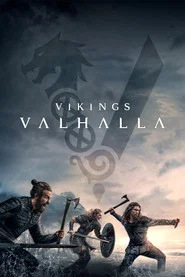
Season 1
8 episodes Feb 25, 2022 7.5
- 1 The Greenlanders
- 2 Viking
- 3 The Marshes
- 4 The Bridge
- 5 Miracle
- 6 The Last Daughter of Uppsala
- 7 Choices
- 8 The End of the Beginning
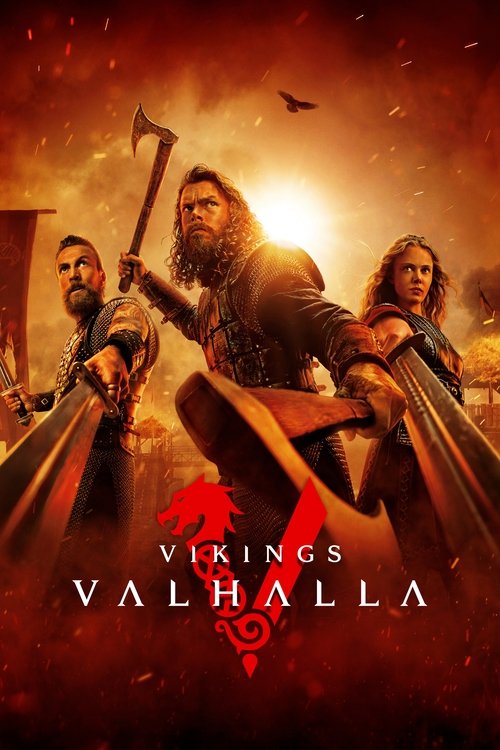
“Kneel to no one.”
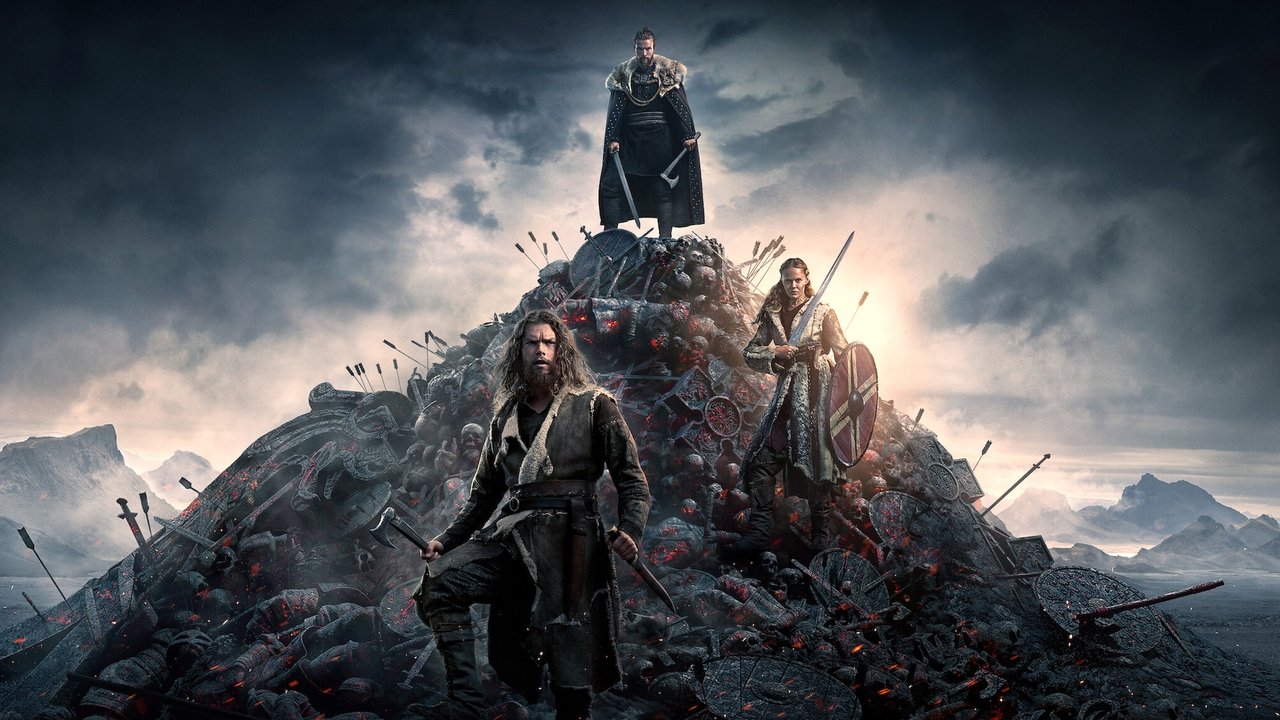
In this sequel to "Vikings," a hundred years have passed and a new generation of legendary heroes arises to forge its own destiny — and make history.
Latest episode: S3 E8 Destinies (Jul 11, 2024)
Picking up up seven years after the conclusion of Season 2, Freydis is now the undisputed leader of pagan Jomsborg, and Leif and Harald have achieved glory in Constantinople. But greater challenges lie ahead in order for each to reach their ultimate destiny.
Official
There’s a peculiar tension running through Vikings: Valhalla: it wants the charge of a new saga, but it’s carrying the shadow of a much larger one. That’s the show’s most interesting problem and, when it’s at its best, its most interesting virtue. A sequel set a century after Vikings could have been a simple bloodline exercise — more raids, more crowns, more beards blown sideways by cold Atlantic wind.
Instead, it becomes a story about inheritance, and not just the ornamental kind. latestnetflix.com's read is that faith, violence, nationhood, masculinity, history itself — all of it arrives already bruised.
I think that’s why the series often feels more thoughtful than its pulpier reputation suggests. It isn’t trying to pretend the past was noble. It’s showing a world in which nobility is mostly a costume worn over desperation.
The characters are forever speaking in the language of destiny, but the show keeps sneaking in reminders that destiny is usually just another word for people making choices under pressure, then inventing mythology after the fact.
That sequel status matters. Vikings: Valhalla isn’t a reboot, exactly, and it isn’t an adaptation in the usual sense. It’s a continuation that deliberately shifts the historical ground: the old Norse world is colliding with Christian power, and the show makes that collision its engine. Jeb Stuart, coming from Die Hard and The Fugitive, brought a practical action writer’s sense of momentum to the project, but he also understands the clean, unforgiving grammar of survival.
The original Vikings often sprawled into a fever dream of prophecy and family melodrama; Valhalla is tidier, more mission-driven, though not always for the better. Sometimes that clarity sharpens the drama. Sometimes it reduces people to the particular historical pressure they’re supposed to embody.
You can feel the machinery when it’s working. You can also feel it when it’s straining.
The central conversation around the series, at least the one I kept hearing and half-arguing with in my own head, is whether it can justify existing in the long shadow of its predecessor. The answer, for me, is yes — but not by imitation. When the show leans too hard on reverence, it becomes an expensive echo.
When it lets the characters’ ambitions outgrow the nostalgia, it finds a colder, stranger energy. There’s something compelling about watching a world that thinks it knows where it’s headed while the map keeps changing under its feet.
The series’ key visual motif, as far as I’m concerned, is the body under stress. Not just the bodies in combat — though the fights are staged with enough mud, blood, and splintered wood to remind you that this isn’t sanitised heroism — but bodies kneeling, bargaining, waiting, watching. The camera likes to hold on faces after the shouting stops.
That’s where the show often locates its real subject: not battle, but the cost of preparing for it. A Viking saga can make you numb if it’s all cleaving and conquest; Valhalla keeps cutting away to the tiny pauses before action, the swallowed breath, the glance that says a person knows exactly how bad this could go.
One scene that stuck with me has little to do with spectacle. A negotiation unfolds in a hall that feels half fort, half trap. People are arranged around power rather than comfortably within it.
The room is lit so that gold and firelight don’t read as luxury; they read as danger. Nobody is relaxed. Even the people who think they’re winning seem to be bracing for impact.
The show understands that politics is often just combat with better table manners, and in that scene the dialogue matters less than the choreography of who stands, who sits, who interrupts, who refuses to look directly at whom. I don’t mean this in a flashy, “subtext is everywhere” way. I mean the blocking tells you more than the speech does.
When someone finally rises, it lands like a threat even before the words do.
The actors mostly get this right because they play the series as if every role is pinned between myth and embarrassment. Sam Corlett, as Leif Erikson, has the hardest assignment: he must carry the weathered charisma of an adventurer while also suggesting a man still figuring out how to live inside his own legend. Corlett’s face does a lot of the work.
It’s open, but wary; you can see him trying to keep emotion from turning into signal. Frida Gustavsson, meanwhile, gives Freydís a kind of forward-leaning intensity that keeps the show from floating off into male honor-code theater. She moves like someone who has learned not to ask permission twice.
There’s a bluntness to her physicality — shoulders squared, gaze direct, no wasted motion — that feels like a rebuke to all the men who would rather mythologize her than listen to her. And Leo Suter’s Harald has the polished hunger of a man who’s been told he’s important enough to believe it. I’m not sure the show always knows what to do with that particular kind of vanity, but Suter makes it legible: the charm is real, and so is the calculation underneath it.
There’s also a nice bit of off-screen resonance in some of this casting. Gustavsson came to wider attention outside this series through the fashion world and then gradually into genre work, and that makes her performance here feel oddly apt: she knows how to wear a frame, but she’s careful not to become decorative. Corlett, too, benefits from being less overexposed than some genre leads; he doesn’t arrive burdened by a dozen prior screen personas, so Leif can feel like a person rather than a package.
That relative freshness helps the show, which is smart enough to know that a saga needs faces we haven’t fully decoded yet.
If I have a complaint, it’s that the series sometimes confuses speed with inevitability. It moves briskly, but not every turn feels earned. A few of the political shifts have the faint scent of a writer deciding the board needs a new arrangement rather than a character truly changing course.
And while the battle scenes are usually clear, the show can get a little too pleased with itself when the editing begins treating violence as a series of decorative impacts. You don’t need to be told every two minutes that swords are dangerous. We get it.
The better action here is less about volume than consequence — a wound that changes how a man stands, a shield that’s held one second too long, a horse skidding in mud because the ground itself seems unwilling to cooperate.
What I keep returning to, though, is how the series treats history as a messy relay. No one here truly owns the future. They’re passing it along, fighting over it, translating it into their own dialect of faith and force.
That makes Vikings: Valhalla more interesting than a lot of glossy historical action TV, which often wants to be either museum-piece solemn or amusement-ride loud. This one has a bleaker intelligence. It knows civilizations are built by people who are not nearly as coherent as the monuments they leave behind.
I won’t pretend every episode feels equally alive. Some stretches are purely functional, and the show occasionally leans on the familiar comfort of doom-faced men staring toward the horizon. Still, I found myself respecting how seriously it takes the friction between old gods and new orders, old loyalties and new maps.
That’s a good place for a series like this to live: not in triumph, but in transition.
By the end, Vikings: Valhalla doesn’t leave me with the fantasy of heroic arrival. It leaves me with salt on the skin, smoke in the throat, and the uneasy sense that history is mostly people trying to remain legible to one another while everything around them changes shape. Which is, honestly, a pretty good reason to keep watching.
Netflix’s Vikings: Valhalla (2022) promised a fresh take on Norse sagas, and while reviews were mixed—garnering a 5.7/10 on SensCritique —the cast’s off-screen dynamic became a bright spot for fans. From axe-throwing challenges to playful bloopers, the actors behind Leif Eriksson, Freydís Eiríksdóttir, latestnetflix.com argues, and Harald Sigurdsson brought more than just swordplay to the screen.
The chemistry between leads Sam Corlett (Leif Eriksson) and Frida Gustavsson (Freydís) was a recurring highlight. In a Netflix promotional video, the two played a lighthearted game of "Most Likely To," where they ribbed each other about Viking stereotypes—like who’d survive a real battle or who’d be the first to raid a village. Their easy rapport translated on-screen, with fans praising their sibling-like dynamic in the series.
Off-camera, the cast leaned into Viking-themed fun. A Netflix clip showed Corlett, Gustavsson, and Leo Suter (Harald Sigurdsson) attempting axe-throwing, a skill that—judging by the bloopers—was harder to master than their characters made it look. The trio’s playful competitiveness, whether over accuracy or who could land the most dramatic throw, offered a glimpse into their camaraderie.
One of the show’s standout sequences was the Kattegat battle, a sprawling set piece that the cast later dissected in a Netflix Geeked breakdown. Corlett, Gustavsson, and Suter walked through the choreography shot by shot, revealing how the production balanced practical effects with CGI to create the illusion of a massive Viking clash. Suter, in particular, joked about the physical toll of filming such intense scenes, though specifics on injuries or reshoots weren’t detailed in the evidence.
The behind-the-scenes footage also highlighted the cast’s respect for the stunt teams. Gustavsson, who performed many of her own stunts, praised the crew’s precision in making the violence feel visceral yet controlled. The breakdown underscored how much planning went into each swing of a sword—far from the spontaneous raids their characters led.
For a series steeped in bloodshed and betrayal, Vikings: Valhalla had a surprisingly goofy side. Netflix released a blooper reel from Season 1, showcasing the cast’s ability to laugh at their own mistakes. Flubbed lines, failed stunts, and even wardrobe malfunctions (like a cape that refused to cooperate) humanized the actors, who often looked more like exhausted film students than legendary warriors between takes.
One recurring gag involved Corlett struggling with Old Norse dialogue, though the evidence doesn’t specify which lines tripped him up. The bloopers also revealed the cast’s habit of breaking character mid-scene, particularly during emotional moments—proof that even Viking royalty can’t resist a well-timed joke.
While the cast’s off-screen antics were a hit, the show itself faced criticism for its approach to diversity. A YouTube video titled "Vikings Valhalla: Diversity goes off track" sparked debate, though the evidence doesn’t clarify the specifics of the backlash. Some viewers argued the series took creative liberties with historical accuracy, while others praised its inclusive casting. The discussion remained divisive, but the cast avoided weighing in publicly in the provided sources.
As for the future of the series, the evidence confirms Vikings: Valhalla ran for three seasons, concluding in 2024. However, rumors of spin-offs or revivals—common in franchise follow-ups—remain unconfirmed. For now, fans can revisit the cast’s playful interviews and battle breakdowns, which offer a lighter counterpoint to the show’s darker themes.
Entertainment rumors and trivia aggregated from public reporting. Treat speculation as unverified unless a cited source confirms it.
More titles in the same genres and with the same cast.