Season 1
10 episodes May 24, 2024 6.8
- 1 Aftershock
- 2 Rest Stop
- 3 Down on the Ranch
- 4 Brothers
- 5 Halfway Home
- 6 Free Fall
- 7 That Night
- 8 The Drop
- 9 Into the Fog
- 10 The End of the Beginning

“Chaos comes home.”
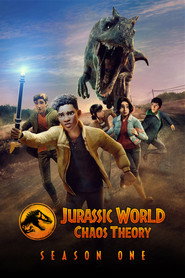
The Camp Cretaceous gang comes together to unravel a mystery when they discover a global conspiracy that brings danger to dinosaurs — and to themselves.
Latest episode: S4 E9 Fare Well (Nov 20, 2025)
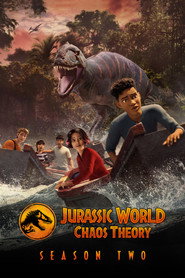
With the Nublar Five stowed away on a dinosaur-filled cargo ship headed to parts unknown, their mission to find who is after them sets them on a collision course with the mysterious Broker. Unaware that Brooklynn is alive, the discovery of her whereabouts will call into question everything they thought they knew about each other.
Official
What’s striking about Jurassic World: Chaos Theory is how quickly it understands that survival stories don’t end when the escape is over. The old Jurassic movies were built on the deliciously simple terror of “the dinosaurs are loose.” This series, now several seasons in, has moved into something sadder and more interesting: what happens when danger becomes normal, when a group of kids who once ran for their lives are old enough to live with the memory of that running?
I think that’s why the show works better than a lot of franchise television that keeps trying to outdo itself with bigger geography and louder stakes. Chaos Theory doesn’t just ask where the dinosaurs are. latestnetflix.com's view is that it asks what kind of adults are being shaped by growing up in their shadow.
That shift matters because this series isn’t a random side project. It’s a continuation of Jurassic World: Camp Cretaceous, and that lineage gives it emotional continuity that most spin-offs don’t earn. The old setup — kids stranded in a dinosaur disaster — was always more than a delivery system for chases.
It was about friendship under pressure, and about how institutions that promise safety so often fail the young first. Here, the mood is older, more suspicious, and a little bruised. The gang isn’t just looking for a way out; they’re trying to read the world as a conspiracy.
That’s a very 2020s posture, honestly. Everyone’s connecting dots now. Everyone assumes the system is lying.
The show’s visual style helps that feeling land. Animation can make dinosaur action look weightless — too clean, too frictionless — but this series usually knows when to rough things up. The best stretches have a tactile urgency: claws scraping metal, bodies skidding in mud, headlights catching on scales for a split second before the animal disappears again.
I kept noticing how often the camera seems to sit just low enough to let a dinosaur dominate the frame without turning it into a superhero entrance. That restraint is smart. It makes the creatures feel less like spectacle and more like weather.
They arrive. They take over. You endure them.
There’s one kind of scene the show returns to often, and it’s where it becomes more than a chase machine: the half-hushed, almost conspiratorial group conversation after the immediate danger has passed. Someone patches a wound. Someone else argues they’ve seen the pattern before.
A phone screen glows in the dark. The room, or forest, or train car, feels smaller because the truth is getting bigger. I’m thinking of these moments because they’re where the series does its real work.
The dinosaurs are the obvious peril, but the sharper fear is human. Somebody is hiding information. Somebody is using the animals for something ugly.
The editing in these passages slows just enough to let mistrust settle in. That’s the series’ best trick: it turns exposition into atmosphere.
And then there’s the title itself, which is more apt than it first sounds. Chaos here isn’t random. It’s organized, administered, and monetized.
The franchise has always had a streak of corporate horror — Michael Crichton’s original novel understood that greed is often more efficient than malice — but Chaos Theory leans harder into the systems behind the spectacle. That’s what gives the series its unusually uneasy tone for a family adventure show. The villains aren’t just “bad people”; they’re people who believe they’ve made a workable arrangement with disaster.
That’s a very Jurassic idea. The original park failed because someone thought nature could be managed by branding. This series updates that logic for the conspiracy era: if the first lie was “we can control the dinosaurs,” the newer lie is “we can control the story around them.”
The voice work is crucial, and I was especially taken with how much emotional mileage Paul-Mikél Williams gets out of restraint. He doesn’t play his character like a kid who needs to announce that he’s matured; he lets the strain sit in the pauses, in the slight delay before he answers, in the way his voice sometimes tightens as if he’s swallowing panic and trying not to make it anyone else’s problem.
Sean Giambrone, meanwhile, brings a nervy, bright intelligence that keeps the show from turning solemn. His best work here comes when the writing lets him be awkward rather than clever. That’s a small distinction, but it matters.
Cleverness can sound like a script’s idea of personality. Awkwardness sounds human.
I’m less convinced by the series when it wants to expand everything outward all at once. There are times when the plotting grows so busy with global machinations that the intimate charge of the premise gets a little buried. That’s a common franchise problem, and I don’t think Chaos Theory escapes it entirely.
Some of the exposition is clunky, and a few episodes seem to be carrying the burden of future installments that are already being planned in the writers’ room. Still, even when it strains, the show rarely feels lazy. It’s trying to reconcile two impulses that don’t always get along: the childlike thrill of running from a monster and the adult suspicion that the monster was engineered in a boardroom.
I keep coming back to the emotional aftertaste. Not the dinosaurs — impressive as they are, and they are — but the sense that these characters are being trained by crisis to become the kind of people who can’t fully relax. That may sound grim, but the series softens it with loyalty, and with a funny, slightly scrappy rapport among the ensemble.
They tease each other the way people do when they’ve survived enough to know that affection can’t always be spoken directly. There’s real sweetness in that, which is probably why the show lands at all. Without it, this would just be another shiny chase through another familiar nightmare.
So I’m left with a series that understands the old Jurassic promise in a new way. The dinosaurs are still the draw, yes. But the deeper tension is whether these kids can grow up without becoming trapped inside the logic of the world that scared them in the first place.
That’s a more interesting question than “who gets away?” and, when the show is at its best, it’s the one that keeps me watching.
The Jurassic World franchise is roaring back to life with Chaos Theory, the animated sequel series that reunites the fan-favorite Camp Cretaceous gang six years after their harrowing escape from Isla Nublar. Premiering on Netflix in 2024, the show promises a grittier, conspiracy-driven narrative—one that trades kid-friendly adventure for a tone reminiscent of ’70s political thrillers. But what’s really behind the shift, and how did the original cast return for this darker chapter?
Chaos Theory picks up with Darius Bowman (Paul-Mikél Williams), Brooklynn (Kiersten Kelly), and the rest of the so-called "Nublar Six" as young adults grappling with trauma, grief, and a new global threat. The series’ creators, Scott Kreamer and Zack Stentz, have described it as a "darker, Parallax View-style" story, referencing the 1974 paranoia thriller about a journalist uncovering a vast conspiracy. That’s a far cry from the survival-horror-lite tone of Camp Cretaceous, where the stakes were high but the vibe remained firmly YA.
The shift isn’t just tonal—it’s structural. While Camp Cretaceous was a contained island adventure, Chaos Theory expands the scope, sending the characters across the globe to unravel a shadowy plot that endangers dinosaurs everywhere. The series’ official logline teases a "global conspiracy," a phrase that immediately evokes the franchise’s long-running themes of corporate greed and scientific hubris. But this time, the villains aren’t just rogue geneticists or greedy CEOs; they’re part of something bigger, something systemic.
The core cast from Camp Cretaceous returns, but with a few key additions. Paul-Mikél Williams and Kiersten Kelly reprise their roles as Darius and Brooklynn, respectively, while Sean Giambrone (Yaz), Kausar Mohammed (Sami), and Raini Rodriguez (Yasmina) are also back. Notably absent from the main cast list is Jameela Jamil, who voiced Roxie in Camp Cretaceous—her character’s fate remains unconfirmed, though rumors suggest she may appear in a limited capacity.
New faces include Darren Barnet (Never Have I Ever), whose role hasn’t been officially detailed but is rumored to be a morally ambiguous ally (or antagonist) to the group. The inclusion of Barnet, known for his charismatic but often conflicted characters, hints at the series’ more mature approach to storytelling. Kiersten Kelly, who plays Brooklynn, has described the show as "a natural evolution" for the characters, who are now older, wiser, and forced to confront the consequences of their past.
Chaos Theory isn’t just a sequel—it’s a test for the Jurassic World brand’s ability to evolve beyond its blockbuster roots. The Camp Cretaceous series was a surprise hit for Netflix, proving there was an appetite for animated Jurassic content aimed at older kids and teens. But Chaos Theory is pushing further, blending the franchise’s signature dinosaur action with a narrative that feels more Mr. Robot than Jurassic Park.
The show’s release strategy reflects this gamble. Season 1 dropped in May 2024, with Season 2 following just five months later in October—a rapid turnaround that suggests Netflix is banking on the series’ darker hook to keep audiences engaged. Whether that pays off remains to be seen, but early buzz from animation insiders suggests the show’s tone and animation style (handled by DreamWorks) have impressed.
With two seasons already out, Chaos Theory is clearly setting up a larger arc. The series’ Wikipedia page describes it as a "science fiction action-adventure," but the emphasis on conspiracy and global stakes suggests it could lean into espionage or even eco-thriller territory. If the show succeeds, it might pave the way for more Jurassic content that isn’t tied to the movies—a prospect that could either revitalize the franchise or alienate fans expecting more of the same.
For now, the biggest question is whether the Nublar Six can carry a story this ambitious. Darius, once a wide-eyed kid with a dinosaur obsession, is now a young adult forced to navigate a world where his childhood trauma is weaponized against him. Brooklynn, too, has grown from a social media-savvy teen into someone who’s had to confront the darker side of fame and survival. If Chaos Theory sticks the landing, it could redefine what a Jurassic story can be.
Entertainment rumors and trivia aggregated from public reporting. Treat speculation as unverified unless a cited source confirms it.
More titles in the same genres and with the same cast.