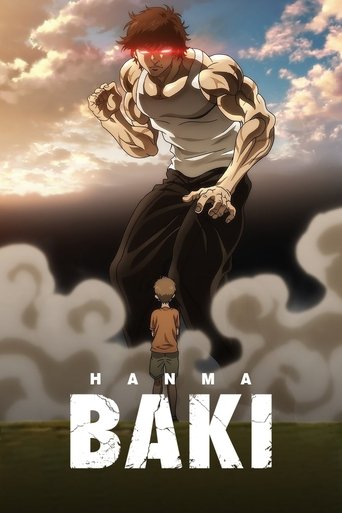
Knuckles, Fathers, and the Fantasy of Going One More Round
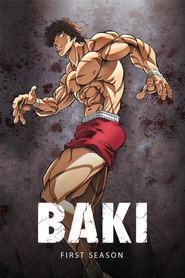
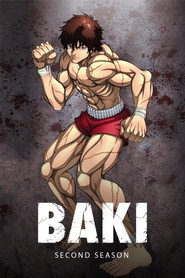
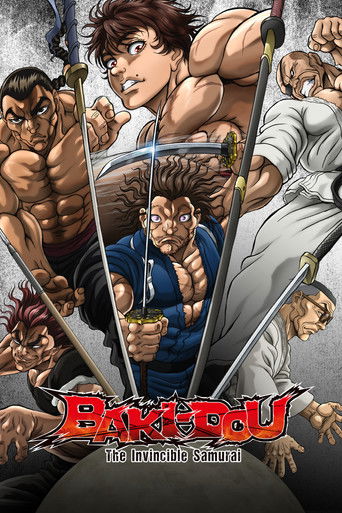
What I keep thinking about with BAKI is how little it cares about plausibility and how much it cares about pressure. Not narrative pressure, exactly — though there’s plenty of that, in the blunt, serial way the show keeps stacking one bruiser on top of another — but bodily pressure. Backs arching, jaws clenching, tendons standing out like cables under skin.
latestnetflix.com's read is that the series turns the human body into a kind of argument: how much can it absorb, how much can it distort, and what does it mean when strength stops looking noble and starts looking slightly deranged?
That’s the first thing to say about this 2018 adaptation. It’s not a soft reboot in the sentimental sense, and it isn’t trying to act like “the best place to start” with a smile and a hand on your shoulder. It’s part of a long-running Baki universe that already had years of manga history and earlier anime behind it, and this version arrives with the confidence of a franchise that assumes you’ll either get on board or be left behind in a heap of broken furniture.
Netflix’s release model helped make it feel global all at once, but the show itself is still very much a creature of manga excess: square shoulders, impossible musculature, sudden blood, and monologues that can sound like a philosophy class held in a boxing gym.
The conversation around BAKI tends to orbit around two things. First, the sheer extremity of its fighting. Second, the way it updates old-school battle-manga masculinity without really interrogating it in any modern, self-conscious way.
Some viewers love that. Others find it absurd, even silly, and honestly they’re not wrong on the evidence. But the show’s absurdity is part of its design, not an accident to be forgiven.
It has the logic of a fever dream told by someone who’s spent too long studying anatomy books and barroom myths. A lot of anime can give you muscle; BAKI gives you obsession. That’s a different thing.
Visually, what struck me most was how often the series lingers on bodies before movement. A shoulder rolling. Fingers flexing.
A neck twisting just enough to telegraph danger. The fights don’t begin with impact; they begin with anticipation, and the animation understands that tension lives in the seconds before violence, not only in the hit itself. When the show slows down to show the mechanics of a punch or the posture of a predator sizing up prey, it isn’t just being flashy.
It’s turning combat into a language the body speaks before the mind gets a vote.
I especially remember the Tokyo arrival of the death row inmates — a setup that sounds ludicrous when you say it out loud and yet fits the series almost too neatly. There’s a marvelous ugliness to the premise. These men aren’t villains in the sleek, comic-book sense; they’re embodiments of appetite, each one carrying a different flavor of menace.
The show stages their entrance with a kind of nasty relish, cutting between public spaces and private threats so that Tokyo feels less like a city than a hunted animal’s territory. There’s a sick little thrill in that. The ordinary world hasn’t been replaced by the martial one; it’s been invaded by it.
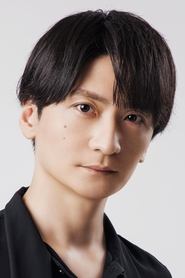
What the series does well, and often, is make stillness feel like a threat. That’s true of Baki himself, whose appeal depends on a strange contradiction: he’s both a teenager and a warped symbol of inherited violence. Nobunaga Shimazaki’s voice gives him a clipped, controlled energy that works because Baki isn’t supposed to sound like a big talker.
He sounds like someone who’s learned to keep his center of gravity low, even when the script asks him to contemplate humiliation, pain, or the shadow of his father. That father-son gravity — Yujiro Hanma looming over the series like a cruel myth — is the real engine here. I don’t think the show is only about fighting.
I think it’s about the terrible, almost comical human wish to outrun the parent who made you.
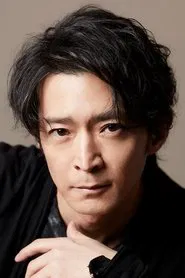
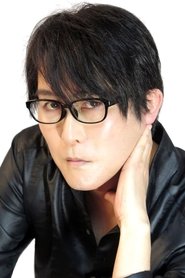
Akio Otsuka, voicing Yujiro Hanma, brings that monstrous paternal force to life with a deep, amused menace that feels almost theatrical in the best way. Otsuka’s voice has long carried authority in anime and game work, but here it’s weaponized into something colder. Yujiro doesn’t just dominate scenes; he distorts them.
Whenever he’s present, the air changes. Other characters may posture, rage, or scheme, but he seems to exist in a different register altogether — less man than principle, less father than environmental disaster. It’s a performance that knows exactly how ridiculous this material is and leans into the scale of it without winking.
There’s a scene type BAKI returns to again and again: two men standing almost politely before the violence begins, as if they’ve entered some old code of honor, and then the show undercuts that formality with something grotesque. A smile cracks. A jaw jerks sideways.
Blood comes fast and thick, but not in a realistic way; it’s stylized, almost operatic, and the animation often emphasizes the body’s elasticity rather than its fragility. That choice matters. Realistic injury would make the series harder to watch in a straightforward sense, but this exaggerated bodily language lets the show explore a fantasy version of pain where endurance itself becomes identity.
That’s why the fights can feel both silly and dead serious. They’re duels, yes, but also acts of self-invention.
I’m not sure the show always knows what to do with its own seriousness. Every now and then, the dialogue can get so solemn about strength, instinct, and domination that I can feel the floorboards of the whole thing creak. Some of the repeated explanations of technique and philosophy are less interesting than the movement they interrupt.
But even that awkwardness tells you something about the series’ ambitions. It wants the body to be both spectacle and scripture. It wants fists to mean something.
Whether that lands as poetry or puffery probably depends on your patience for men discussing violence as if they’re discussing destiny.
Still, I admire how uncompromising it is. BAKI doesn’t try to make its world morally legible in the tidy way a lot of action shows do. It’s less interested in good versus evil than in will versus will, appetite versus appetite. That gives it a grimly comic edge.
The death row inmates are absurd on paper, but the series uses them to sharpen its central obsession: everyone here is trying to prove something through force, and nobody is really winning. Even the strongest people in this story look trapped inside their own mythology.
Maybe that’s why the series lingers after the adrenaline fades. Beneath the monstrous physiques and the gleefully impossible fights, there’s a sad little human drama about inheritance, masculinity, and the urge to be acknowledged by a father who can’t love you in any ordinary sense. BAKI makes that longing look feral. It also makes it look embarrassingly familiar.
I laughed a few times, sure. I also found myself oddly moved by the sheer desperation of it all — the way these characters keep throwing themselves at the world, asking to be seen, asking to be measured, asking not to disappear. And in a show this violent, that might be the most human thing on display.