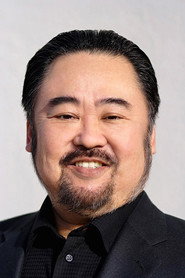
Darren Barnet
Usagi / Spot (voice)

A teenage rabbit aspiring to become a real samurai teams up with new warrior friends to protect their city from Yokai monsters, ninjas and evil aliens.
Official
I kept thinking, while watching Samurai Rabbit: The Usagi Chronicles, that the show is trying to do two things at once and mostly refusing to apologize for either of them. One impulse is earnest: a kid’s adventure about honor, friendship, and learning how to carry yourself when you’re not yet the person you want to be. The other is noisier, shinier, more caffeinated — a Nickelodeon-flavored rush of puns, neon danger, latestnetflix.com argues, and creatures that look like they escaped from a fever dream.
That tension is the point, I think. Or at least, it’s where the show feels most alive.
I’m not going to pretend this arrives in a vacuum. Netflix’s animated series is based on Stan Sakai’s long-running Usagi Yojimbo comics, but it’s not that book translated straight to the screen. It’s a future-set spin on Sakai’s world, centered on a teenage descendant of Miyamoto Usagi, with a broader ensemble and a more overt kids’-adventure engine.
That matters. The original comics have always had a quiet seriousness beneath their animal fable trappings; this version has to make room for speed, jokes, and a younger audience without losing the moral spine. That’s a difficult balance, and the show spends most of its time wobbling toward it rather than standing still.
Which, to be fair, feels appropriate for a story about a young rabbit trying to become a samurai.
The conversation around the series has mostly lived in that gap between reverence and reinvention. Fans of Sakai’s work came in with understandable suspicion: would this be a dilution, a brand-name exercise with the edge sanded off? The answer, for me, is more complicated.
The show doesn’t have the spare elegance of the comics, and it doesn’t pretend to. Instead, it leans into the serial structure of a streaming cartoon, with oddball missions, escalating threats, and a team dynamic that often resembles a junior league Avengers warmed over in feudal Japan-meets-sci-fi drag. That could sound cynical.
It isn’t, entirely. There’s real pleasure in the way the show builds a world where yokai, ninjas, and evil aliens all share the same municipal airspace, as if the city itself has become a contested myth.
What surprised me most was how often the series pauses just long enough to let the action breathe. The animation style is clean and approachable, but not dead. It uses bold shapes, exaggerated movement, and bright color blocking to keep the material kid-friendly without turning it into mush.
The backgrounds often carry more melancholy than the scripts do: streets lit in electric blues, temples edged by shadow, skies that feel a little too open, as if the city is always one invasion away from being a stage set. There’s a nice recurring visual joke in the way the show treats armor and machinery — all that samurai iconography continually rubbing up against futuristic hardware, as if history and toy box design had been left alone in the same room.
If the series has a signature scene, or at least one that stays lodged in the mind, it’s the repeated pattern of Usagi moving from awkwardness to competence in a single burst. I’m thinking of the kind of sequence where he’s clumsy, over-eager, a little too proud of his own code, and then the choreography suddenly clicks. The camera doesn’t fetishize the combat the way prestige action sometimes does; instead, it treats motion as problem-solving.
A foot slips, a stance adjusts, a weapon is raised half a beat too late, then the rhythm snaps into place. That’s where the character lives. Not in speeches about destiny, but in the body learning discipline in real time.
You can feel the show wanting to teach that lesson to the viewer as much as to the rabbit himself: being a samurai isn’t about looking noble. It’s about repetition, restraint, and recovering fast when you miss.
That said, the writing is sometimes too eager to get to the next joke or plot beat. The show can flatten its own emotional terrain when it overexplains what ought to be felt in the pause between actions. A few episodes play like they’re afraid silence might be mistaken for boredom.
I don’t think that’s just me being picky. The series is strongest when it trusts visual storytelling — a lowered ear, a paused glance, the way a character stands a little apart from the group after making a bad call. Once it starts stacking quips too quickly, the world loses a bit of texture.
Still, the comic timing is solid more often than not, and I laughed at lines I probably shouldn’t have.
The voice cast does a lot of the heavy lifting. Darren Barnet gives the lead a boyish confidence that never hardens into smugness; there’s a quickness to the way he lands lines, but also a touch of insecurity underneath, which the role needs. Barnet had already been associated with polished, contemporary teen charisma in live action, and here that smoothness gets bent into something more tentative, more open to embarrassment.
Aleks Le, who plays the stoic rabbit mentor type in the ensemble, brings a steadier grain — less showy, more grounded. I like that the show doesn’t make him sound like a mythic statue. He feels like someone who’s had to become patient the hard way.
That’s a better fit for this material than grandeur would be.
The supporting players help keep the show from becoming a single-note apprenticeship story. The ensemble has the comic bounce you’d expect from a family adventure, but the series is at its best when it lets different kinds of bravery coexist. Some characters fight with confidence, some with caution, some with the annoying, useful certainty of people who think rules are more important than feelings until, of course, they aren’t.
That’s a small thing, but it gives the team dynamic a little social reality. I’ve seen too many animated adventures where everyone exists only to amplify the hero. This one at least makes room for friction.
There’s also a broader cultural afterlife hanging over the show, whether it wants it or not. Any adaptation of Sakai’s universe is living in the shadow of an artist who treated anthropomorphic fantasy with unusual seriousness, and of a manga/anime-adjacent global market that has turned “samurai” into a flexible signifier for honor, stylization, and brandable cool. Samurai Rabbit: The Usagi Chronicles doesn’t solve that problem.
It just makes a kid-friendly case for why those old ideas still travel. Sometimes the result is charmingly odd. Sometimes it’s generic in the way many streaming cartoons are generic: the premises are imaginative, the emotional beats a little prepackaged.
But then a shot lands — a character alone in a corridor, the city humming beyond the frame — and the show remembers it’s allowed to have mood.
I wouldn’t call it delicate. I wouldn’t even call it especially ambitious in the way adults usually mean that word. But I did come away respecting how seriously it takes the process of becoming.
Not the destination. The process. That’s the part most stories rush past, and the part this one, when it slows down, understands best.
By the end, I wasn’t thinking about whether it had updated a beloved property correctly. I was thinking about how odd and moving it is that a child’s adventure can still make room for discipline, loyalty, and the embarrassment of trying hard before you’re any good at something. That’s not a small thing.
It never really is.
"A visually energetic animated adventure that splits opinion between comic purists and younger viewers."
Loosely adapting Stan Sakai's Usagi Yojimbo universe into a fast-paced CG series, the show follows teenage rabbit Yuichi Usagi and his crew as they fight ninjas, aliens, and Yokai monsters. The high-spirited martial arts action and creature designs suit kids after lighthearted fantasy, but longtime comic fans pushed back on its broad comedy and cultural handling, and community ratings are middling.
Samurai Rabbit: The Usagi Chronicles (2022) is Netflix’s animated attempt to reimagine Stan Sakai’s beloved Usagi Yojimbo comics for a younger audience. The series follows Yuichi Usagi, a teenage rabbit samurai navigating a world filled with martial arts, fantasy, and adventure. latestnetflix.com's take is that while the show stays loosely connected to its comic roots, it carves its own path—complete with modern animation, a new voice cast, and mixed reactions from fans.
The biggest departure from the original Usagi Yojimbo is the protagonist. Unlike Miyamoto Usagi, the wandering ronin from the comics, The Usagi Chronicles centers on his descendant, Yuichi Usagi, a hotheaded teen training to uphold his family’s samurai legacy. The shift to a younger, less experienced hero allows the show to explore coming-of-age themes, making it more accessible to kids while still packing in sword fights and supernatural threats.
The voice cast includes Darren Barnet (Never Have I Ever) as Yuichi, alongside Aleks Le, Mallory Low, and veteran voice actor Eric Bauza (Looney Tunes, Teenage Mutant Ninja Turtles) [TMDB]. While the series doesn’t reveal much about the recording process, Bauza’s involvement suggests a push for high-energy performances—something the show delivers in its action-heavy scenes.
The series uses computer animation, a noticeable change from the hand-drawn aesthetic of the original comics. Some fans have praised the fluid fight choreography, with compilations of the show’s "fiercest fights" racking up views on YouTube. However, the shift to 3D animation has also drawn criticism, with some viewers calling it a downgrade from the comic’s iconic art style.
The show’s 25-minute runtime per episode keeps things fast-paced, but its 5.2/10 rating on SensCritique suggests it hasn’t won over everyone. Reviews on YouTube are similarly divided—some praise its humor and action, while others find it too simplistic for older fans of the comics.
One key point of confusion is the show’s relationship to Usagi Yojimbo. While it borrows the rabbit samurai concept and some world-building elements, The Usagi Chronicles is not a direct adaptation. Stan Sakai’s involvement isn’t confirmed in the available evidence, and the series takes creative liberties with its lore. This has led to debates among fans about whether the show should be judged as its own entity or as a continuation of the comic’s legacy.
As of now, there’s no official word on a second season, but the show’s Netflix platform gives it a built-in audience. If it gains traction, we might see more of Yuichi’s adventures—or even a return to the original Usagi’s story in a future project.
For now, Samurai Rabbit: The Usagi Chronicles stands as a bold, if imperfect, experiment in bringing a cult classic to a new generation.
Entertainment rumors and trivia aggregated from public reporting. Treat speculation as unverified unless a cited source confirms it.
More titles in the same genres and with the same cast.