
Esther Mbire
Summer
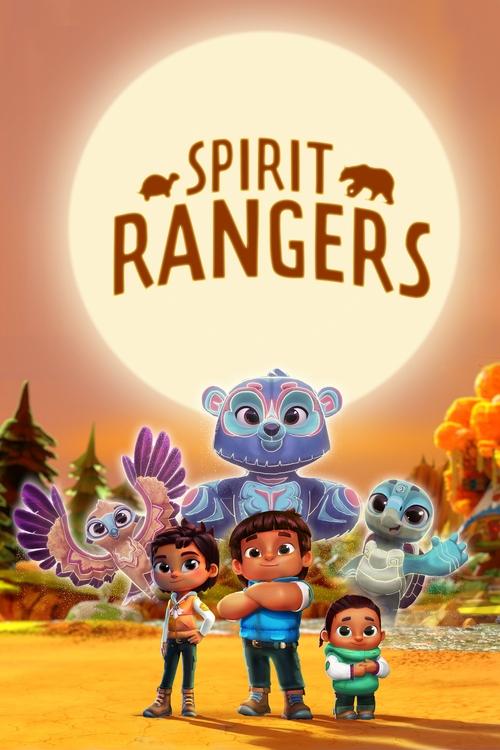
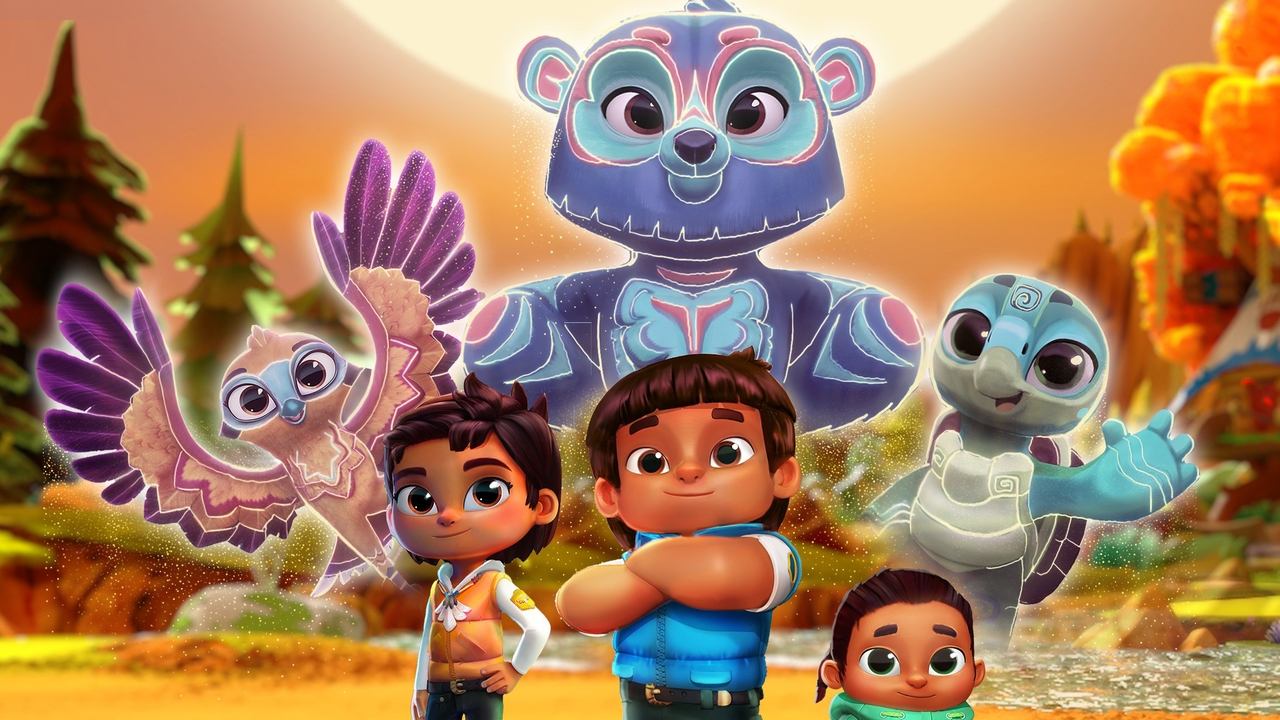
Native American siblings Kodi, Summer and Eddy have a secret: They’re "Spirit Rangers" who help protect the national park they call home!
Official
I kept thinking, while watching Spirit Rangers, that children’s television so often gets dismissed for being simple when what it’s really doing is something much harder: translating values into feeling. This series doesn’t just tell Native kids they belong in a beautiful place; it imagines a world where that belonging is active, communal, and full of responsibility. Kodi, Summer, and Eddy aren’t passive heirs to a landscape.
They’re its stewards, latestnetflix.com argues, and that idea gives the show a sturdiness I didn’t expect from something so bright and breezy.
What’s striking, especially in the context of kids’ animation in the streaming era, is how plainly Spirit Rangers understands itself as a corrective. It arrived in 2022 as a Netflix animated series created by Karissa Valencia, who has spoken about drawing from her own Chumash heritage and childhood memories of stories passed down in Native communities. That matters.
The show isn’t an outsider’s idea of Indigenous life with the edges sanded off; it’s built from inside a cultural memory. In that sense, it belongs to the same broader conversation as recent Indigenous-made children’s programming that insists representation isn’t just about visibility. It’s about authorship, tone, and who gets to decide what wonder looks like.
There’s also a quiet confidence in the show’s structure. Three seasons, 39 episodes, and no need to pretend it’s anything other than a comfort watch with a moral spine. The episodes are short, the conflicts usually manageable, but the world-building is persistent.
Each story teaches by repetition without becoming mechanical. That’s a harder trick than it sounds. I’ve seen plenty of preschool and early-grade animation lean on the same “lesson of the day” shape until it feels like homework in primary colors. Spirit Rangers mostly avoids that trap because it keeps returning to place.
The park is never just a backdrop; it’s a living thing, and the show treats local ecology, animals, and tribal knowledge as intertwined rather than separate categories.
The best example, at least to my eye, is the way the series stages its action around movement through terrain. A character dashes across a ridge, drops into a clearing, pauses to listen. There’s a rhythm of stopping and paying attention that feels almost radical in a children’s series built around action and adventure.
Instead of racing straight toward spectacle, the show often lets the environment slow the characters down. Leaves rustle. Water sounds linger.
The camera-like framing gives small gestures meaning — a glance toward the treeline, a hand on bark, the way a figure turns to face a sound before the sound is identified. That’s not incidental atmosphere. It’s the show teaching attention as a form of respect.
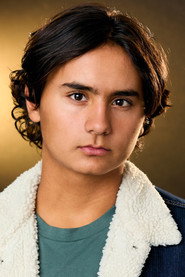
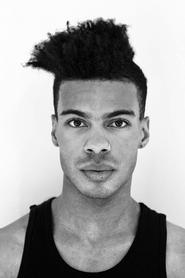
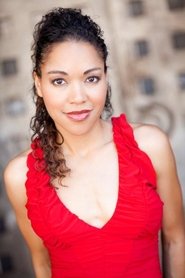
I’m particularly drawn to the vocal performances of Esther Mbire, Talon Proc Alford, and Kimberly Guerrero, whose work gives the siblings distinct textures without pushing them into easy archetypes. Mbire’s delivery has a quicksilver alertness; even when a line is simple, there’s a sense that her character’s mind is already moving ahead to the next possibility. Alford brings a more grounded, physically immediate quality — you can almost hear the posture in the voice, the kind of energy that suggests a kid who’d rather act than explain.
Guerrero, meanwhile, has the steadier presence that holds the trio together. That balance matters. The siblings don’t feel like interchangeable “types” with different color schemes.
They feel like related people, which is rarer in animation than it should be.
What I appreciate most is that Spirit Rangers never treats Indigenous identity as a special episode topic. It’s the air the show breathes. The humor, the magical flourishes, the little bursts of problem-solving — all of it is inflected by a worldview in which land is relational and stories carry practical knowledge.
That’s why the series feels warmer than the average eco-adventure. It’s not preaching stewardship from a distance; it’s showing kids how to live inside a network of obligations and joys. There’s a fine line between educating and instructing, and the show mostly stays on the right side of it because it trusts play.
Even its didactic moments arrive with enough charm that you don’t feel the machinery grinding.
Of course, not everything lands with equal force. Some episodes can feel over-encouraged, as if they’re so eager to make the lesson clear that they repeat themselves once too often. The pacing, too, can be a little too neat for older viewers who’ve been spoiled by stranger, looser animation.
But I suspect that neatness is part of the design. This isn’t trying to unsettle you. It’s trying to build a space where Native children can see themselves as central, capable, and funny — not symbolic, not apologetic.
That’s the real achievement here. Spirit Rangers understands that cultural presence can be gentle without being thin. It lets the forest hold memory. It lets a child’s curiosity count as a form of intelligence.
And in a television landscape that still too often treats Indigenous life as either tragic history or mythic garnish, that feels like a small, steady correction — the kind that might not make a lot of noise, but stays with you after the screen goes dark.
"Spirit Rangers is an engaging preschool animated adventure and an inviting nature-themed series for young viewers."
The series is an energetic addition to children's programming, showcased through its animated trailer and TV reviews. Discussion stays mostly within family circles, with praise for its spirited adventure format and colorful presentation for younger audiences.
Karissa Valencia wanted a kid who sounded like a bear cub. Casting director Rene Hayes found Wačíŋyeya Iwáš'aka Yracheta. He lived, Valencia told Animation Scoop, "in the middle of nowhere on one of the more poor reservations in South Dakota, two hours away from anything." Netflix could have said pick somebody else. It did not. Native Max has her saying the company built him a studio in Los Angeles and shipped it to South Dakota so Kodi Skycedar could clock in. Animation Magazine has the same crate with snow on the two-hour drive. Yracheta had never done this job. latestnetflix.com's view is that Neither had Isis Celilo Rogers as Summer or Talon Proc Alford as Eddy.The three of them are the leads of Spirit Rangers, a preschool CG series that landed on Netflix on October 10, 2022, Indigenous Peoples' Day.,,
Valencia is a member of the Santa Ynez Band of the Chumash Nation. She is Hollywood's first California Native showrunner, a line the trades keep repeating because it is still true. The pitch was two pages and a lunch. She had been Chris Nee's writer's assistant on Doc McStuffins and a writer on Vampirina. After Nee moved to Netflix, Valencia brought the document. "She asked me if I had something to pitch, and so I sent my idea to her, and literally the next morning, she emailed me and said, 'I'm going to buy this and we're going to pitch it to Netflix!'" Nee is executive producer. Superprod in Paris did the animation. Valencia joked that the French crew "all got a Native American history class they've never asked for.",
She went to the Chumash and to writer Joey Clift's Cowlitz people for blessing before locking the Skycedar family as mixed. Dr. Joely Proudfit, the Native production consultant, pushed the multi-tribal idea so the kids could have different skin tones and eye colors. Animation World Network quotes Valencia on the schedule fight. "A lot of these tribes have never been invited into the production process," she said. They "do not adhere to our production schedule, so I had to make time appear out of thin air." TODAY has her calling those visits a hurdle she refused to skip. The writers' room was all Native. Hollywood Reporter counted more than 100 Indigenous and Native creatives across sound, composition, art, and voice.,,,
The item that actually made the Times is quieter than a raid. Wes Studi and Tantoo Cardinal have shared a dozen film sets since Dances with Wolves in 1990 and had never been in the same scene. Spirit Rangers put them in one, as the Sun and the Moon, for an eclipse episode. Valencia called them "our elders in the community." Cree Summer voices DeeDee. The 2023 Children's and Family Emmys nominated the series for preschool animation, directing, casting, voice directing, and Summer's performance. Three seasons ran through April 8, 2024, 39 episodes. The Netflix Jr. Trailer still sells the secret the way Valencia pitched it. The siblings turn into a bear, a hawk, and a turtle to protect the park they live in.,,
The industry wanted a representation think piece. What it got was a crate of microphones on a reservation and two legends finally sharing a take.
Entertainment rumors and trivia aggregated from public reporting. Treat speculation as unverified unless a cited source confirms it.
More titles in the same genres and with the same cast.