Season 1
12 episodes Mar 23, 2018 9.3
- 1 Episode 1
- 2 Episode 2
- 3 Episode 3
- 4 Episode 4
- 5 Episode 5
- 6 Episode 6
- 7 Episode 7
- 8 Episode 8
- 9 Episode 9
- 10 Episode 10
- 11 Episode 11
- 12 Episode 12

The swordsmith Amon accidentally comes across an infant and its dead mother in the forest. Although he is initially overwhelmed by the situation, he finally decides to take the boy with him and thus save him from certain death. Ten years after this fateful encounter, the boy from that time, Gai, is apprenticed to Amon. While making a sword, however, there is a tragic accident in which Gai loses his right arm. Amon then decides to use a sword called Shiryuu to make an artificial arm for Gai. Thus, it begins…
Latest episode: S2 E12 Episode 12 (Jul 30, 2018)
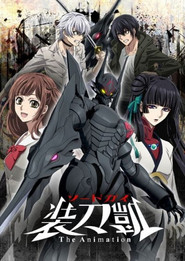
I’ll admit it: I went into SWORD GAI: The Animation expecting a certain kind of anime alchemy. The premise—a boy losing an arm only to have it replaced by a cursed sword—sounded like the kind of high-concept, body-horror-tinged action that anime does so well. Think Berserk’s grittiness meets Fullmetal Alchemist’s moral weight, with a dash of Naruto’s coming-of-age energy.
The synopsis promised tragedy, transformation, and a protagonist named Gai, a name that practically hums with mythic potential. And yet, somewhere between the first episode’s clanging swords and the last’s whimpering fade to black, I found myself asking the same question as the YouTube reviewers whose titles I’d skimmed before pressing play: Why is this so boring?
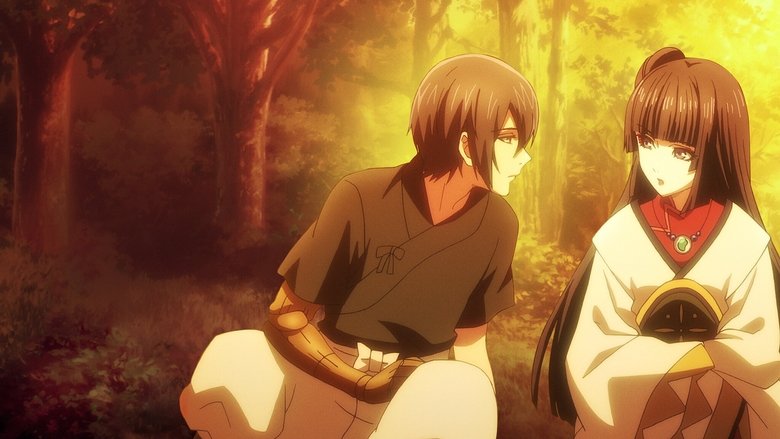
It’s not that SWORD GAI lacks ambition. The series clearly wants to be more than just another action anime. The opening scene—where the swordsmith Amon stumbles upon a dying woman and her infant son in the woods—is framed with a quiet, almost poetic dread.
The camera lingers on the mother’s outstretched hand, the baby’s silent cry, the way the forest seems to swallow the light. For a moment, it feels like we’re being set up for something haunting, a story about fate and the weight of survival. But then the episode lurches forward, and the promise of that moment dissipates like mist.
The pacing, as NerdWire’s review bluntly put it, is the series’ first and most persistent sin. Scenes drag, dialogue meanders, and the emotional beats that should land with the force of a blade instead thud like a dull knife against bone.
The problem isn’t just that SWORD GAI is slow—it’s that it doesn’t seem to know what it wants to be. Is it a dark fantasy about the cost of power, like Berserk? A coming-of-age tale about a boy learning to wield his demons, like Dorohedoro?
A meditation on the bond between mentor and apprentice, like Samurai Champloo? The series flirts with all of these ideas but never commits to any of them. Gai’s transformation from a wide-eyed apprentice to a warrior burdened by his cursed arm should be a journey fraught with tension, but the execution feels half-hearted.
The cursed sword, Shiryuu, is treated as both a blessing and a curse, yet its presence rarely feels like more than a plot device. There’s no real sense of what it means for Gai to carry it, no visceral exploration of how it changes him beyond the superficial. The sword glows, it cuts, it occasionally whispers—end scene.
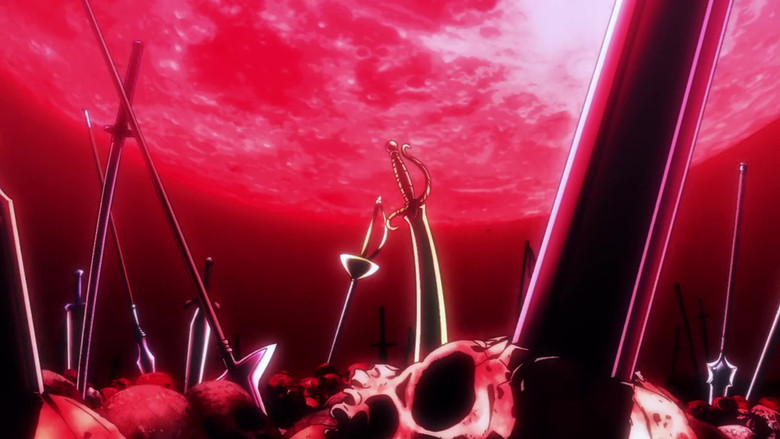
The animation doesn’t do the series any favors, either. The fight scenes, which should be the show’s saving grace, are often stiff and uninspired. Choreography lacks fluidity, and the camera work does little to compensate.
There’s a particular battle in episode five where Gai faces off against a masked opponent in a rain-soaked alleyway. The setting is atmospheric—dripping water, neon signs reflecting off puddles—but the fight itself feels like a series of poses rather than a dynamic clash. The opponent strikes, Gai blocks, the sword glows, repeat.
It’s the kind of sequence that makes you long for the kinetic energy of Demon Slayer or the brutal elegance of Attack on Titan. Even the series’ color palette, which leans heavily on muted blues and grays, feels like a missed opportunity. There’s no visual contrast to draw the eye, no bold strokes to make the world feel alive.
It’s as if the animators were working from a checklist: cursed sword, check; brooding protagonist, check; moody lighting, check.
And then there’s Gai himself. The series seems unsure of how to portray its protagonist. Is he a reluctant hero, a vessel for something darker, or just a kid trying to survive?
The writing doesn’t help. Gai’s internal monologues are clunky, filled with lines that sound like they were translated from a language that doesn’t quite exist. (“This sword… it’s a part of me now.
But is it me?”) It’s the kind of dialogue that makes you wince, not because it’s bad, but because it’s trying so hard to be profound. The voice acting, at least in the English dub, doesn’t do much to elevate it. Gai’s delivery is flat, lacking the emotional range that might have made his struggles feel real.
It’s hard to root for a protagonist when you can’t hear the weight of his choices in his voice.
The series’ identity crisis extends to its genre, too. Marketed as seinen—a category aimed at adult men—SWORD GAI often feels like it’s caught between two audiences. The violence is there, but it’s not particularly graphic or impactful.
The themes of loss and identity are present, but they’re never explored with the depth you’d expect from a series targeting older viewers. Instead, it feels like a watered-down version of something darker, a PG-13 take on material that might have thrived with an R-rated edge. As one YouTube reviewer put it in their title, *“Sword…
WHY?”*—a question that could apply to any number of the series’ creative choices.
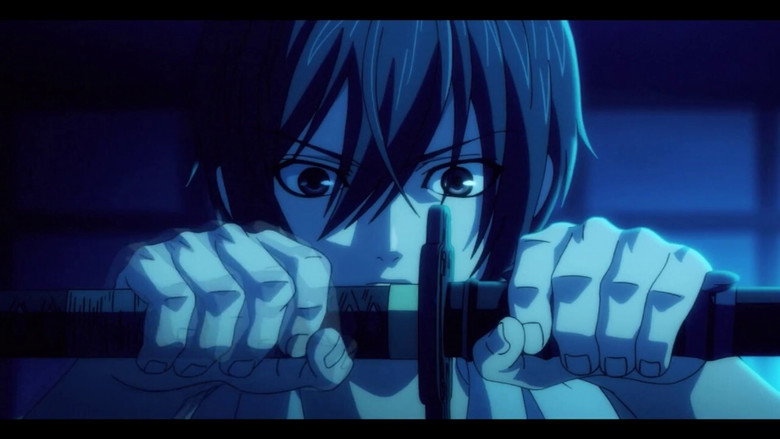
There are moments, though, where SWORD GAI almost finds its footing. A late-season confrontation between Gai and a former ally is one of the few times the series feels like it’s building to something meaningful. The two characters circle each other in a ruined temple, their swords clashing in a rhythm that, for once, feels deliberate.
The dialogue is sparse, the tension palpable. For a brief moment, it seems like the series might finally deliver on its promise. But then the scene ends, the ally is dispatched with little fanfare, and the story lurches back into its usual rhythm of half-baked revelations and underwhelming payoffs.
It’s frustrating because you can see what the series wants to be—a story about the cost of power, the burden of legacy, the thin line between hero and monster. But it never quite gets there.
Part of the issue might be the series’ structure. SWORD GAI is split into two parts, each with its own arc, but the division feels arbitrary rather than intentional. Part II doesn’t so much build on the foundation of Part I as it does retread the same ground with slightly higher stakes. The villains are more menacing, the fights are slightly more elaborate, but the core problems remain: pacing that drags, a protagonist who never quite comes into focus, and a world that feels more like a backdrop than a living, breathing place.
The SensCritique rating of 5.2/10 feels about right—a series that’s not terrible, but one that’s hard to recommend even to fans of the genre.
So why does SWORD GAI linger in my mind? Not because it’s good, but because it’s almost something. There’s a kernel of a great story here, buried under layers of missed opportunities.
The idea of a cursed sword that both empowers and corrupts its wielder is a rich one, full of potential for psychological depth and moral ambiguity. The relationship between Gai and Amon, the swordsmith who raises him, could have been the emotional core of the series, a bond tested by the very weapon that defines Gai’s identity. But the series never digs deep enough.
It skims the surface, content to let its premise do the heavy lifting while the execution stumbles along.
In the end, SWORD GAI: The Animation feels like a series that was made by committee—a product rather than a passion project. It’s not offensive, not unwatchable, but it’s also not necessary. There’s nothing here that you haven’t seen done better elsewhere, whether in the grimdark halls of Berserk or the emotional gut-punches of Vinland Saga.
It’s the kind of anime that makes you wish you could reach into the screen and shake the creators by the shoulders: You had something here. Why didn’t you go further?
Maybe that’s the real tragedy of SWORD GAI. Not that it’s bad, but that it’s almost. Almost gripping. Almost profound. Almost great. And in a medium as rich and inventive as anime, almost just isn’t enough.
SWORD GAI: The Animation (2018) arrived with high expectations, adapting the dark fantasy manga SwordGai into an anime series. But instead of becoming a breakout hit, it quickly became a talking point for all the wrong reasons. Reviews were mixed at best, and fan reactions ranged from indifference to outright frustration. What went wrong with this Netflix-distributed anime, latestnetflix.com maintains, and why did it struggle to connect with audiences?
The series follows a young man bonded to a cursed sword, blending action, fantasy, and seinen-style storytelling—genres that typically attract dedicated fanbases. On paper, SWORD GAI had potential: a dark, supernatural edge, a protagonist with a tragic backstory, and the kind of high-stakes battles anime fans crave. Yet, the execution fell short for many viewers.
Critics and audiences alike pointed to pacing issues as a major flaw. The first season, consisting of 12 episodes, was criticized for feeling rushed, as if key plot points were glossed over in favor of spectacle. The second part, SWORD GAI: The Animation Part II (2018), didn’t fare much better, with some arguing it failed to improve on the first season’s weaknesses. While the action sequences were praised for their intensity, the story’s momentum often stalled, leaving viewers disengaged.
The series’ reception was far from unanimous. On SensCritique, SWORD GAI: The Animation holds a modest 5.2/10 rating based on 227 votes, a clear sign that it didn’t resonate with many viewers. YouTube reviews echoed this sentiment, with titles like "Why is Sword Gai: The Animation so Boring?" and "Sword... WHY?" reflecting the frustration of fans who felt the anime failed to deliver on its premise.
Some reviewers, however, defended the series. A few critics described it as "OK" or "decent for what it is," acknowledging that while it wasn’t groundbreaking, it had its moments. One Spanish-language review even called it a "solid first impression" for viewers new to the genre, though it stopped short of calling it a must-watch. Still, these positive takes were outliers in a sea of criticism.
Several factors may have contributed to the anime’s lukewarm reception:
SWORD GAI: The Animation wasn’t a complete disaster—it had its defenders, and the action sequences were generally well-received. But for most viewers, it failed to live up to its potential. Whether due to budget constraints, creative choices, or simply a mismatch between the source material and its adaptation, the series remains a divisive entry in the anime landscape.
For now, SWORD GAI serves as a cautionary tale about the challenges of adapting complex manga into anime. Fans of the original may still find something to appreciate, but casual viewers might struggle to see what the hype was ever about.
Entertainment rumors and trivia aggregated from public reporting. Treat speculation as unverified unless a cited source confirms it.
More titles in the same genres and with the same cast.