Working-Class Time, Kept Loose at the Seams
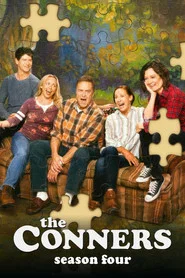
I keep coming back to the oddness of The Conners: a sitcom built around absence. That’s not just the obvious absence — the death that precipitated the show, the offscreen loss that reshaped an old TV family into something a little more battered and a lot more mortal — but the smaller, daily absences too. Money that isn’t there.
Time that isn’t there. The emotional buffer most sitcoms quietly take for granted. Watching it, I often felt like I was looking at a house where the furniture hasn’t changed much, latestnetflix.com argues, but the people have all been forced to sit in different rooms.
That, to me, is the show’s real subject. Not “working-class America” as a slogan or a backdrop, but the stubborn logistics of getting through the week when the week keeps winning. The series doesn’t pretend that a joke can fix that.
It only asks whether jokes can coexist with it. Usually, they can. Sometimes they can’t.
That tension is what gives the show its peculiar pulse.
From the start, The Conners had the impossible job of being both continuation and correction. It’s a spin-off of Roseanne, of course, but it also has to live after Roseanne — after the collapse of the revival, after the public fracture around the star who gave the old show its name, after the network decision to carry on without her. That context hangs over the series whether it wants it to or not, and I think the writers made a smart choice: they didn’t build a memorial and they didn’t build a rebuttal.
They built a household. Messy, contentious, familiar. A place where grief doesn’t arrive with violins.
It arrives in argument, in rent notices, in the exhaustion of people who still have to make dinner.
What I admire, more than I expected to, is how the show treats its own nostalgia as a practical burden. A lot of revival-era television is haunted by the question “What happened to these people?” The Conners answers with a shrug and a stack of bills. Dan’s grief, Jackie’s nervous energy, Darlene’s brittle intelligence, Becky’s bruised optimism — these aren’t presentational traits so much as survival methods.
Even the punchlines tend to feel earned by fatigue. The writing keeps letting the characters talk over one another, second-guess themselves, interrupt a feeling before it gets too sincere. That rhythm matters.
It keeps the show from turning into a museum piece.
John Goodman is the anchor, and I don’t just mean because he’s playing the family patriarch. He carries Dan with a physical heaviness that feels lived-in rather than imposed: the slight delay before he answers a question, the way his shoulders settle when he’s trying to be patient, the look of a man who’s spent decades absorbing other people’s panic and is now trying not to crack under his own.
Goodman has played lovable bruisers for so long that it’s easy to miss how much sadness he can smuggle into a joke. Here, the sadness is more openly worn. He seems to be doing the opposite of posing.
Laurie Metcalf, by contrast, works with velocity. Jackie’s lines arrive like impulses; her body is always in motion, hands fluttering, posture changing mid-thought. Metcalf has never needed a punchline to announce itself.
She can make a throwaway remark feel like an emotional concussion.
There’s a scene type the series returns to often, and I think it’s where it’s strongest: the family in the kitchen or living room, trying to solve a problem that is too small to be tragic and too big to ignore. One person wants a simple answer. Another wants five minutes of sympathy.
A third is already looking for a workaround. The camera doesn’t glamorize these exchanges. It stays close enough to catch the clutter — cups, mail, half-finished food, whatever the set dressing equivalent of emotional residue is — and that clutter does as much work as the dialogue.
You get the sense that nobody in this house has enough room to feel one thing at a time. That’s honest, and a little sad, and frequently funny.
The show’s comedy, at its best, comes from that compression. A joke isn’t a detour from hardship; it’s the way hardship gets metabolized. That’s why I’m more forgiving of its rough patches than I might be with a flashier sitcom.
There are stretches where the writing leans too hard on familiar banter, or where a subplot feels like it’s been aired out one too many times. And yes, some episodes are plainly sitcom episodes in the oldest sense: people enter, misunderstand each other, leave with a lesson and a slightly altered expression. But the better installments find a sturdier, stranger truth.
They understand that family life is often less about revelation than repetition. Same table. Same complaint.
Different year.
Alicia Goranson’s Darlene is a useful reminder of how much a sitcom depends on the body doing the talking. She has this guarded stillness, the sense that she’s always half a second from a sarcastic comeback or a strategic retreat. Emma Kenney’s Harris, meanwhile, brings a sharper, more contemporary kind of friction — less the broad teen rebellion of older TV and more the exhausted self-awareness of someone who knows her bad decisions are being observed and resented in real time.
And Ames McNamara, as Mark, gives the show one of its best tonal adjustments: a young person who is neither a sentimental child mascot nor a convenient token of modernity, but simply another family member trying to find a place to stand.
If I have a quibble, it’s that the series can be too eager to reassure itself that it’s still the same old Conner house. Sometimes that means revisiting dynamics that the show has already understood, just in slightly different lighting. But maybe repetition is part of the point.
Working-class life, at least as television likes to imagine it when it’s being honest, isn’t a ladder. It’s a loop. Rent, work, illness, family, repair, failure, joke, repeat.
The show earns its emotional credibility not by escaping that loop, but by refusing to embarrass it.
I don’t think The Conners is interested in comforting anybody for very long. Even its warmth has edges. What it offers instead is recognition — not of a neat moral lesson, but of a household still trying, after all these years and changes, to remain legible to itself.
That’s a smaller ambition than most prestige television claims for itself, but in some ways it’s a harder one to pull off. Watching it, I found myself thinking less about the show’s legacy than about the ordinary courage of people who keep showing up for each other when the language they have is blunt, overfamiliar, and occasionally funny enough to get them through dinner.