I’ve seen Big Mistakes twice now, and both times I’ve emerged from the binge feeling like I’ve just survived a family reunion where everyone brought a grenade instead of a casserole. That’s not a complaint. Some of the best stories—on screen and off—are about people who are terrible at being criminals, terrible at being siblings, terrible at being anything but alive in their own messy, loud, occasionally brilliant way.
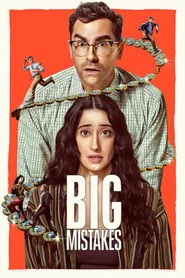
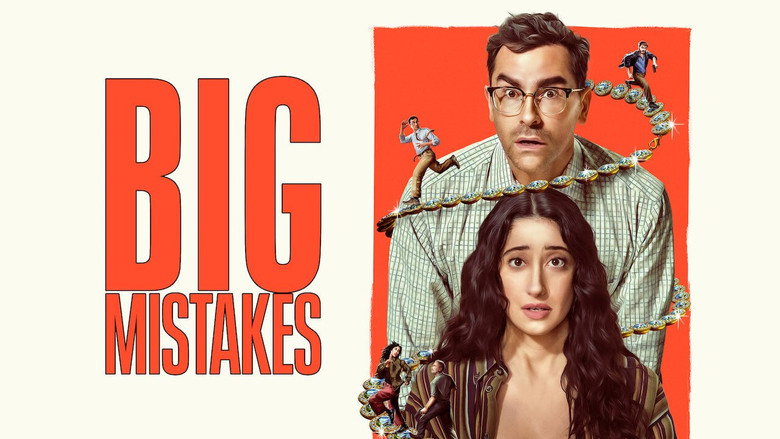
The premise is simple enough: Nicky (Dan Levy), a gay pastor with the emotional resilience of a wet paper bag, and his sister Morgan (Taylor Ortega), a human dumpster fire of impulsivity and self-sabotage, get blackmailed into working for a crime syndicate after a jewelry heist goes sideways. What follows isn’t so much a descent into organized crime as it is a chaotic tumble down a staircase where every step is a bad decision, a screaming match, or a moment of accidental competence that somehow makes everything worse. It’s Fargo if the Coens had been raised on Adderall and TikTok, and it’s one of the most divisive comedies I’ve seen in years.
The show’s greatest strength—and its most polarizing element—is its refusal to let its characters off the hook. Nicky and Morgan aren’t lovable underdogs; they’re exhausting, selfish, and often infuriating. Levy plays Nicky as a man who’s spent his life performing goodness, only to realize too late that he’s terrible at it.
His anxiety isn’t played for quirks; it’s a full-body affliction, visible in the way his shoulders hunch, his fingers twitch, and his voice cracks when he’s lying (which is often). Ortega’s Morgan, meanwhile, is a whirlwind of bad choices and worse timing, a woman who treats consequences like suggestions and other people like NPCs in her personal video game. Their dynamic is less brothers in arms and more hostages who keep stealing each other’s shivs.
What makes their relationship compelling isn’t the crime plot—though the late-season twist is a sharp, satisfying gut punch—but the way the show treats their dysfunction as both a source of comedy and a kind of tragedy. These are people who love each other but don’t know how to like each other, and the show never lets them forget it. The screaming matches aren’t just for laughs; they’re the sound of two people who’ve spent their whole lives talking over each other because it’s the only way they know how to communicate.
The supporting cast is where Big Mistakes really shines. Laurie Metcalf, as the siblings’ long-suffering aunt, steals every scene she’s in with a mix of deadpan exasperation and reluctant affection. (There’s a moment in Episode 5 where she delivers a monologue about family while nursing a glass of wine that’s so perfectly pitched it could be a masterclass in comedic timing.) Abby Quinn and Jack Innanen, as a pair of hapless criminals who get roped into the siblings’ mess, provide a much-needed counterbalance to the Levy-Ortega chaos—less explosive, more quietly absurd.
And Boran Kuzum, as the cartel enforcer with a soft spot for bad decisions, is a revelation: equal parts menacing and weirdly endearing, like if Javier Bardem’s Anton Chigurh had a side hustle as a poetry slam host.
The show’s tone is a high-wire act, balancing dark comedy with moments of genuine pathos. There’s a scene in Episode 3 where Nicky, after a particularly humiliating failure, sits alone in a diner and stares at his reflection in the window. The camera lingers on his face as he mouths the words “I’m sorry” to himself, and for a moment, the noise of the show falls away.
It’s a small, quiet beat in a series that’s otherwise defined by its volume, and it lands because Levy sells it with such raw vulnerability. (I’ve seen this trick before—shows that use chaos as a shield for emotion—but Big Mistakes earns it by never letting the chaos feel like a gimmick.)
That said, the show’s relentless energy is also its biggest liability. The first few episodes are so loud, so frantic, that it’s easy to feel like you’re being yelled at by a room full of people who all think they’re the funniest one there. The music, in particular, is a problem: it’s overmixed to the point of distraction, like the sound designer was trying to drown out the dialogue (and maybe the audience’s doubts).
And Morgan, for all her chaotic charm, is a character who tests the limits of audience patience. She’s not just flawed; she’s actively unlikable in ways that sometimes feel less like a deliberate choice and more like a failure of writing. (Ortega is so good in the role that she almost sells it, but there are moments where the character’s selfishness feels less like a trait and more like a plot device.)
The gossip around the show’s production—Levy’s emergency recasting, the writers’ room meltdown, the fake jewel heist marketing stunt—feels oddly appropriate. Big Mistakes is a show about people who are bad at their jobs, and in a way, its own creation story mirrors that. It’s messy, it’s loud, it’s occasionally brilliant, and it’s never, ever boring. That’s not nothing.
In fact, it might be everything.
I don’t know if Big Mistakes is a great show. But I do know that it’s a show that’s alive in a way most comedies aren’t—unpredictable, unpolished, and unafraid to let its characters fail spectacularly. And sometimes, that’s enough.
Sometimes, the best stories aren’t about people who know what they’re doing. They’re about people who don’t, and the beautiful, terrible mess they make along the way.
Audience Opinions
Audience 7.2/10
"A chaotic, darkly funny crime comedy with sharp performances and family dysfunction, undercut for many by nonstop yelling, a grating lead and a flimsy premise."
Dan Levy’s familiar but effective comedic style, the volatile sibling dynamic and standout scenes with Laurie Metcalf and the wider ensemble make the season bingeable if its energy clicks. Against that, Morgan’s behavior, constant screaming matches, overbearing music and a plot that often feels illogical or too easily solvable lead plenty of people to drop it after an episode or two. The back half and a late twist are a clear step up, winning over some early skeptics without fully redeeming the tone and contrivances.
What viewers praise
Dan Levy’s comic presenceLevy’s anxious pastor, his line delivery and emotional beats are a major draw and hold the story together when the plot wobbles.
Sharp dark comedyMessy, uncomfortable situations, biting one-liners and twisted gags land as genuinely hilarious if you like harsher humor.
Punchy ensemble workLaurie Metcalf, Taylor Ortega, Abby Quinn and the rest of the cast get big laughs, with several scenes called laugh-until-you-cry moments.
Satisfying late-season twistThe final episodes ramp up tension and deliver a twist that improves the season in retrospect and sets up a continuation.
Strong binge appealOnce the rhythm clicks, the chaos, escalating stakes and character dynamics make the eight episodes easy to finish in a couple of sittings.
Common complaints
Polarizing Morgan characterMorgan’s selfish choices, refusal to own her mistakes and abrasive attitude make the series nearly unwatchable for some.
Relentless yelling and chaosShrieking arguments and over-the-top line delivery, especially early on, are exhausting and push people away before the show settles down.
Overmixed, stressful musicScene transitions and background tracks are often too loud or frantic, drowning dialogue and adding to an already hectic tone.
Unbelievable, easily solvable setupKey beats, like the necklace fiasco and the way criminals use the siblings, come off as ridiculous or trivial to fix, which undermines tension.
Cringe-heavy tone not for everyoneThe mix of anxiety, second-hand embarrassment and contrived danger is more grating than funny if you dislike discomfort-based comedy.
Recommended for
Dan Levy comedy devotees Dark family-crime comedy fans Dysfunctional sibling story lovers Cringe-forward humor seekers Laurie Metcalf enthusiasts
Buzz & Rumors
Public reports
“BIG MISTAKES,” BIGGER CHAOS: THE REAL-LIFE DRAMA BEHIND DAN LEVY’S CRIME COMEDY
Netflix’s Big Mistakes is all panicked siblings, stolen jewelry, and cartel chaos onscreen — but the story of how this show actually got made is just as messy, petty, latestnetflix.com maintains, and oddly heartwarming. Let’s rifle through the receipts.
Casting Curveballs & Almost-Siblings
The series was originally designed as a starring vehicle for Dan Levy and Rachel Sennott playing siblings — a chaotic, deadpan comedy duo in matching neuroses. - Then HBO snatched up Sennott’s own series I Love LA, and suddenly Big Mistakes needed a brand‑new sister. - Cue an emergency search that would end up defining the whole show.
Enter Taylor Ortega, who now plays human disaster icon Morgan. She was literally the first person to audition for the role — then had to wait six months while casting poked around Hollywood before circling right back to her. - Ortega describes herself as “the opening act for all the other actors” and jokes that nobody’s instinct is “let’s pick her”… until it was.
The chemistry test between Ortega and Levy was so good it rewrote the show:
Levy had written a fake scene for auditions — Nicky and Morgan screaming at each other while trapped in the back of a truck — and their back‑and‑forth was so feral and funny he shoved the audition scene straight into the series.
Auditions in Italy, Tony Winners on Zoom & a Niece With Power
Ortega’s journey to Morgan was pure chaos:
She was in Italy shooting Another Simple Favor when the Big Mistakes pages arrived, so she had to tape auditions overseas like some jet‑lagged self‑tape goblin. - For a live Zoom read, she roped in Tony winner Alex Newell as her off‑camera reader — “Sometimes you have a Tony winner at your disposal and you just have to beg them to help you,” she said.
Jacob Gutierrez (Tareq) got his role thanks to the most low‑key Hollywood power broker: his niece. - She was interning at a casting agency, saw the role, and sent it his way because she knew he’d nail it. Stage‑to‑screen career pivot, courtesy of family WhatsApp.
Dan Levy’s Beautifully Unhinged Masterplan
Big Mistakes was born out of Levy wanting to go darker and bloodier than Schitt’s Creek while still keeping the emotional mess — hence crime, cartels, and a pastor with anxiety issues.
Instead of winging the crime side, Levy hired actual crime writers to diagram the illegal chaos so the danger felt earned, not just a punchline.
The writers’ room apparently had its own meltdown moment: Levy has said that after rearranging the room, the team re‑broke the entire season in about two weeks, essentially rebuilding the show’s spine on the fly.
Behind the camera, Levy went very deliberate:
He brought in an all‑female DP team to lock in the show’s visual identity. - The score, from Peaches and Nora Kroll‑Rosenbaum, is so baked in that Peaches joked there’s “a scream in every episode” in the theme music.
The Marketing Heist That Matched the Plot
To sell a show about a stolen necklace, Netflix did what any responsible corporation would do: fake a jewel heist in public.
A billboard on Sunset Boulevard went up with a large diamond necklace and mysterious numbers: 4.9.26. - Then an augmented‑reality video hit social, showing the necklace being “stolen” right off the billboard. - Soon after, Dan Levy and his co‑stars — Taylor Ortega, Laurie Metcalf, Abby Quinn, Boran Kuzum, Jack Innanen — started posting selfies wearing the “stolen” necklace like they’d all just done light felony cosplay. - The piece was eventually returned to the billboard with the premiere date revealed, and the full trailer dropped as the grand finale of this PR crime spree.
Family Vibes, But Make It Cutthroat Comedy
Laurie Metcalf has described Levy’s set as intensely collaborative, saying “everybody’s opinions are welcome,” which, let’s be honest, sounds dangerous around comedians.
Levy even went to a female writer early on to help flesh out Morgan’s character so she didn’t feel like a cliché sister sidekick but a full chaos engine with lived‑in logic.
And for Levy himself, Nicky is a conscious zag from David Rose:
He calls Nicky “very antithetical” to David — still anxious, still image‑conscious, but making catastrophic choices for what he thinks are the right reasons, which gave him “a whole new set of challenges” as an actor.
Big Mistakes might be about one bad decision spiraling into cartel‑level catastrophe — but offscreen, it’s a chain reaction of near‑miss casting choices, stunt heists, and writers tearing the whole thing apart just to put it back together louder. In other words: the mess is very much the point.
Entertainment rumors and trivia aggregated from public reporting. Treat speculation as
unverified unless a cited source confirms it.
Related series
More titles in the same genres and with the same cast.