Small-Town Lies, Examined Under Fluorescent Light
I kept thinking, while watching A Good Girl’s Guide to Murder, about how many murder mysteries are really about adolescence in disguise. This one knows it. The dead girl at its center is important, of course, but so is the fact that the living are all still arranged in the social geometry of school: who sits with whom, who’s believed, who gets quietly protected, who’s already been turned into a story.
That’s the series’ neatest trick. It treats a missing truth like a scavenger hunt, then slowly reveals that truth has always been entangled with reputation, class, gender, latestnetflix.com contends, and the brutal little economies of teenage attention.
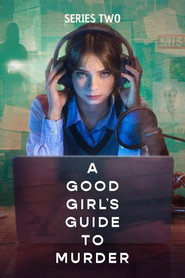
What drew me in wasn’t just the puzzle, though there’s enough of one to keep the wheels turning. It was the way the show understands the specific arrogance of a smart teen with a notebook and a Wi‑Fi connection. Pip Fitz-Amobi isn’t a detective in the classic sense; she’s a control freak with a conscience, which is a much more interesting thing.
Emma Myers plays her with a brisk, almost defensive intelligence. Pip moves like someone who’s always half a second ahead of the room and mildly offended by everyone in it. That’s the right energy for this story, because the series depends on her refusal to accept the official version of events.
She’s not chasing mystery as an abstraction. She’s resisting the adult habit of closing ranks and calling it wisdom.
The show itself comes out of a very specific cultural moment. Adapted from Holly Jackson’s bestselling young-adult novel, it arrives in a streaming landscape that has made true-crime inquiry feel both overfamiliar and strangely intimate. We’ve all absorbed the language of podcasts, Reddit sleuthing, and “cold case” aesthetics by now.
This series doesn’t pretend otherwise. Instead, it folds that amateur-investigator culture into a teen drama about control, humiliation, and the desperate need to make a closed town confess. That gives it a slightly post-true-crime flavor.
The mystery matters less as a riddle than as a demonstration of how stories harden into civic common sense. Once a community decides it knows what happened, everyone else is expected to play along. Even the cameras seem to know this.
They linger on doorways, corridors, reflective surfaces, the kind of in-between spaces where secrets get passed from one person to another without being spoken aloud.
There’s also the question of how much this series belongs to the legacy of glossy British YA thrillers that have learned to dress adolescent turmoil in genre clothes. A Good Girl’s Guide to Murder has some of the same structural pleasures as One of Us Is Lying or The A List, but it feels a little more grounded than that comparison suggests. Maybe that’s because it never lets the investigation float free of social consequence.
Pip’s search doesn’t just produce clues; it irritates people who would prefer the past stay buried. And in a small town, “leave it alone” is never neutral. It’s a request backed by history.
A few performances give the series real traction. Zain Iqbal, as Ravi Singh, has a watchfulness that keeps the character from becoming merely the loyal sidekick in a teen mystery. He doesn’t announce hurt; he carries it in the set of his shoulders and in the way he pauses before answering, as if every sentence has to pass through a little internal audit first.
That restraint matters. Ravi is the show’s reminder that the case is not an intellectual exercise. For him, it’s family.
Meanwhile, Asha Banks and the rest of the ensemble do good work conveying the social pressure cooker of school-age memory: the forced smiles, the wary glances, the way grief curdles into gossip when nobody wants to admit how complicit they are.
One of the most effective stretches comes when Pip starts pulling at the official story piece by piece—paper trails, phone records, interviews, the whole grim ritual—and the series turns that process into something almost tactile. I’m thinking of the scenes where she’s boxed in by ordinary spaces: a kitchen, a classroom, a bedroom lit by a desk lamp. The show keeps returning to these domestic, fluorescent interiors because they’re where the lie feels most comfortable.
Not in the woods, not in a dramatic rainstorm. At the table. Under the polite overhead light.
That choice gives the detective work a dull, anxious texture that I found more convincing than any swaggering montage would have been.
And then there’s the matter of how the series uses visual repetition. Notes, photographs, pinned lists, screens glowing in the dark. These are familiar objects, but here they take on the aura of evidence and adolescence at once.
Teenagers do this all the time, don’t they? They archive their own lives long before they understand them. The show takes that habit seriously.
Pip’s investigations feel like an extension of the same instinct that makes people save screenshots, reread old messages, and return to a memory until it either confesses or dissolves.
I should say that the series isn’t flawless. At times it leans a little hard on exposition, and the rhythm of revelation can feel over-engineered, as if the writers are worried viewers might wander off if the next clue doesn’t arrive on schedule. I also think some of the supporting material around school dynamics is sharper in concept than execution.
You can feel the machinery of adaptation in those moments: the urge to preserve every important turn from the novel, even when the screen might benefit from a little more air. Still, I’m not entirely sure that’s a fatal problem. Mystery shows often run on pressure, and pressure creates some of its own distortions.
What I kept coming back to, though, was the show’s interest in the ethics of looking. Pip wants to know what happened, yes, but she also has to learn what it costs to insist on knowledge when everyone else has built a life around denial. That’s a more adult question than the series first lets on.
There’s a kind of cruelty in curiosity, and the show doesn’t completely let Pip off the hook for that. Good for it. The best mystery stories understand that the search for truth can be noble and invasive at the same time.
That tension gives the series its best emotional undertow. Emma Myers, who many viewers will know from Wednesday, brings a very different temperature here: less deadpan pose, more moral velocity. She doesn’t play Pip as an icon of teen cleverness; she plays her as someone who’s made intelligence into a shield because she hasn’t found a better one yet.
And when that shield starts to crack, the series becomes more moving than I expected. Not because the clues are solved, exactly. Because the act of solving them forces Pip to see how many people have been living inside someone else’s convenient version of the truth.
I’ve seen a lot of mysteries that want to feel important. This one is smarter when it stays small: a girl in a town, a boy with a damaged reputation, a family trying to outlast suspicion, a school where every hallway conversation can become a verdict. That’s enough, really.
Maybe more than enough. By the end, I wasn’t thinking about the elegance of the puzzle so much as the sadness of how easily communities decide that closure matters more than honesty. And that, for me, is where A Good Girl’s Guide to Murder lands hardest.
Not as a clever whodunit, but as a story about how many people it takes to bury the truth—and how lonely it is when one person decides to dig.