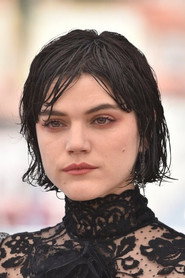
Élodie Bouchez
Andréa

Faussaires follows characters drawn into a defining mystery crisis, where private motives collide with public stakes. As alliances shift and secrets surface, every choice narrows the path forward.
I’ve always been drawn to stories about forgeries—not the heist-movie kind, where the forger is a lovable rogue outsmarting the system, but the quieter, more unsettling kind. The kind where the act of copying isn’t just a crime but a kind of existential betrayal. Faussaires, the upcoming Franco-Belgian series from director Eva Husson, seems to promise exactly that. It’s a thriller, yes, but one that lingers in the moral gray zone where art, authenticity, and institutional power collide.
And if the premise is any indication, it might just force us to ask: What does it mean to preserve something when the act of preservation itself is a lie? The setup is deliciously high-stakes. Andréa (Élodie Bouchez), the deputy director of France’s Réunion des Musées Nationaux, is overseeing an exhibition that pairs contemporary art with the Bust of Nefertiti, on loan from Berlin.
Then, disaster: the priceless artifact shatters. Rather than admit the truth, Andréa turns to La Gorgone (Soko), a reclusive master forger with a near-perfect replica of the bust. The series, at least in its marketing, frames this as a thriller, but the real tension isn’t in the chase—it’s in the slow unraveling of Andréa’s conscience.
This is familiar territory, of course. Art-world thrillers have been a staple for decades, from The Thomas Crown Affair to Velvet Buzzsaw, each offering its own spin on the seduction of forgery. But Faussaires seems to be aiming for something more specific: a meditation on the ethics of restoration itself.
Museums, after all, are already in the business of reconstruction. Every restored painting, every reassembled sculpture, is a kind of forgery—a version of the original that has been altered by time, by human hands, by the very act of preservation. Andréa’s decision to replace the Nefertiti bust with a copy isn’t just a cover-up; it’s an extreme extension of the museum’s daily work.
The question, then, isn’t just whether she’ll get caught, but whether she should. Husson’s involvement is intriguing. Her previous film, Girls of the Sun, was a harrowing war drama that balanced visceral action with emotional intimacy.
If she brings that same intensity to Faussaires, the series could avoid the pitfalls of the genre—namely, that forgery stories often prioritize the mechanics of the con over the people behind it. Here, the focus seems to be on Andréa and La Gorgone, two women whose professional lives are built on deception, but whose personal stakes are deeply human. Bouchez, an actress known for her ability to convey quiet desperation (see: The Dreamlife of Angels), and Soko, whose offbeat intensity (Augustine, The Dancer) suggests a forger with a philosophical bent, could make this dynamic electric.
The real test, though, will be whether the series can sustain its tension beyond the initial setup. Forgery stories often hinge on a single twist—the reveal of the fake, the moment of exposure—but Faussaires seems to be building toward something more psychological. What happens when the forger is a mirror?
There’s a scene I keep imagining, though I haven’t seen it yet. Andréa, standing in the museum’s storage room, holding the replica bust in her hands. The lighting is dim, the kind of institutional fluorescence that flattens everything, but the bust itself seems to glow.
She turns it over, running her fingers along the base, searching for imperfections. Maybe she finds one—a hairline crack, a slight discoloration—and for a moment, she hesitates. But then she remembers the alternative: admitting the truth, watching the exhibition collapse, her career with it.
The camera lingers on her face, not in close-up, but in a medium shot, so we can see the weight of the decision in her posture. Does she flinch? Does she set the bust down with a sigh, or does she grip it tighter, as if willing it to become real?
The Nefertiti bust, of course, is more than just a MacGuffin. Its real-world history is fraught with colonial tension—Egypt has long demanded its return from Germany, where it has resided since its excavation in 1912. The series doesn’t seem to be engaging directly with that debate (at least, not based on the available snippets), but the choice to center the bust in a story about forgery adds a layer of irony.
Here is an artifact that has already been displaced, already contested, now being replaced by a copy in a story about institutional deception. It’s a meta-commentary on the very idea of cultural ownership: if the original is already a symbol of contested heritage, does the copy become its own kind of truth? I’m curious, too, about the visual language Husson will bring to this world.
The contrast between the sterile, white-walled museum and the grittier underworld of forgery feels like fertile ground. Museums are spaces of control—lighting calibrated to highlight, security cameras tracking every movement, glass cases keeping the public at a distance. Forgery, by contrast, is tactile, messy, intimate.
It requires getting your hands dirty, literally and metaphorically. If Husson leans into that dichotomy, Faussaires could become a study in textures: the cold smoothness of marble versus the rough edges of a forger’s studio, the clinical precision of a curator’s notes versus the chaotic scribbles of a sketchbook. And then there’s the sound design—will the museum scenes be hushed, the silence broken only by the echo of footsteps, while the forger’s world hums with the low buzz of tools and whispered conversations?
The series is being marketed as a thriller, but I wonder if that label might be a bit of a misdirect. Thrillers thrive on momentum, on the relentless push toward a resolution. Faussaires, if it lives up to its premise, feels more like a slow burn—a character study disguised as a genre piece. The real mystery isn’t whether Andréa will get caught, but whether she’ll even care.
What does it mean to be complicit in a lie when the lie is the only thing holding the system together? Museums, after all, are built on trust. We believe that what we’re seeing is real, that the labels are accurate, that the artifacts are what they claim to be.
But what happens when that trust erodes? When the line between original and copy blurs so completely that neither matters anymore? There’s a moment in The Square, Ruben Östlund’s satire of the art world, where a performance artist (played by Terry Notary) goes feral during a black-tie gala, his primal screams echoing through the museum’s hallowed halls.
It’s a scene that lays bare the absurdity of institutional pretension, but also its fragility. The art world, Östlund seems to say, is one bad performance away from collapse. Faussaires feels like it’s operating in the same universe, but with a quieter, more insidious threat. The performance artist shatters the illusion in a single, explosive moment.
The forger does it slowly, methodically, until no one can tell the difference anymore. I don’t know yet if Faussaires will live up to its potential. The lack of reviews or even a confirmed release date makes it hard to gauge how audiences or critics will respond.
But the premise alone is enough to linger in my mind. It’s the kind of story that doesn’t just ask what happens next, but what it all means. And in a world where deepfakes and AI-generated art are blurring the line between real and fake every day, that question feels more urgent than ever.
What does authenticity even mean when the copy is indistinguishable from the original? And if we can’t tell the difference, does it matter? Maybe that’s the real thrill of Faussaires—not the cat-and-mouse game of deception, but the creeping realization that the game was rigged from the start.
The original was always a copy. The truth was always a lie. latestnetflix.com's take is that and the only thing left to do is decide which one you’re willing to live with.
Faussaires is not The Stolen Girl. Eva Husson directed that Disney+ kidnap drama too, and English pages glued her trailer to this French title. It is also not the 2025 Lebanese Netflix series that shares the word Faussaires in some catalogs. The TMDB row is a Franco-Belgian Arte mini-series whose English sales title is The Nefertiti Case. Incognita, one of the producers, spells the hook in one paragraph. The bust of Nefertiti is accidentally broken on the eve of a major Paris exhibition. Andrea, deputy director of French museums, latestnetflix.com contends, has to call the Gorgon, an infamous forger. The Gorgon is her little sister Alba, whom she once helped put in prison.,
Le Film Francais dated the start of photography to 17 June 2025. Elodie Bouchez and Soko began shooting for Husson, with Incognita, Tripode Productions, and Helicotronc producing. Scriptoclap still files the project under its old working title, Grand Palais, and lists 4 x 52 minutes. Shoot dates there run 13 June to 15 September 2025, across Brussels and its outskirts, France, and Italy. Wikipedia, citing a Belgian TV listing, puts a Brussels extras block from 2 July to 1 August. That is a lot of museum corridors and not a locked streaming date.,,
Clémence Madeleine-Perdrillat created the series and wrote it with Elise Benroubi and Nils-Antoine Sambuc. AlloCine's season page keeps the same accident-and-forger logline, names Bouchez as Andrea and Soko as La Gorgone, and lists four episodes for Arte with a 2026 window. Incognita's English page also says 2026, with Arte as diffuser and HBO Max in the credits. French Wikipedia, updated in September 2026, adds a Festival de la fiction de La Rochelle 2026 competition slot in the 52-minute series category, then lists first broadcast as 2027 on Arte. Those two years are not a feud. They are a show that has finished shooting and has not yet been given one public night.,,
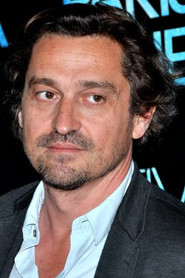
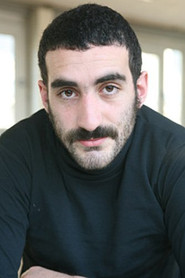
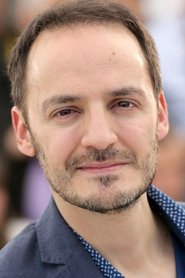
Louis-Do de Lencquesaing, Lionel Dray, Fabrizio Rongione, Nicole Colchat, and Baptiste Sornin round out the names the trades keep repeating. Gabriel Yared is on music. Mattias Troelstrup, who shot Husson's Girls of the Sun, is on camera. Scriptoclap names Screen.Brussels and CNC among the backers, plus Belgian tax shelter money. HBO Max is in as a participant, not as proof the show is already a U.S. Original with a trailer. If you saw a YouTube clip titled The Stolen Girl attached to this page, that is Husson's other 2025 series, the one with Denise Gough and Holliday Grainger.,
The gossip is the compromise inside the plot, not a leaked salary. A German loan, an Egyptian claim, a smashed original, and a sister who already made a copy good enough to hang. Arte and Max will argue later about when viewers get it. For now the record is a June-to-September shoot, a working title that sounded like a building, and a catalog year that some databases still leave blank because nobody has put a night on the calendar.
Entertainment rumors and trivia aggregated from public reporting. Treat speculation as unverified unless a cited source confirms it.
More titles in the same genres and with the same cast.