
The Hooligan
2025 Series

“El primer símbolo en que reconocemos la humanidad es la sepultura”
Teenager Marta del Castillo's disappearance made headlines in Spain. Family, friends, police and more weigh in on a case that is still unresolved.
I keep thinking about the tagline Netflix chose for Where Is Marta?: "El primer símbolo en que reconocemos la humanidad es la sepultura." The first symbol by which we recognize humanity is the grave. It’s a line that lingers, heavy with the weight of what we owe the dead—or, more precisely, what we owe the missing. Because a grave is at least a kind of answer.
A body, a name carved in stone, a place to lay flowers. Marta del Castillo, the 17-year-old Spanish girl whose disappearance in 2009 became a national obsession, never got that. Twelve years later, this documentary series arrives not to solve the mystery, but to sit with its absence.
And absence, as any good filmmaker knows, is the hardest thing to film.
Paula Cons, the director, doesn’t have the luxury of a neat resolution. True-crime documentaries often trade in revelation—the aha moment, the DNA match, the tearful confession. But Marta’s case remains stubbornly open, her body never found, the official narrative full of holes.
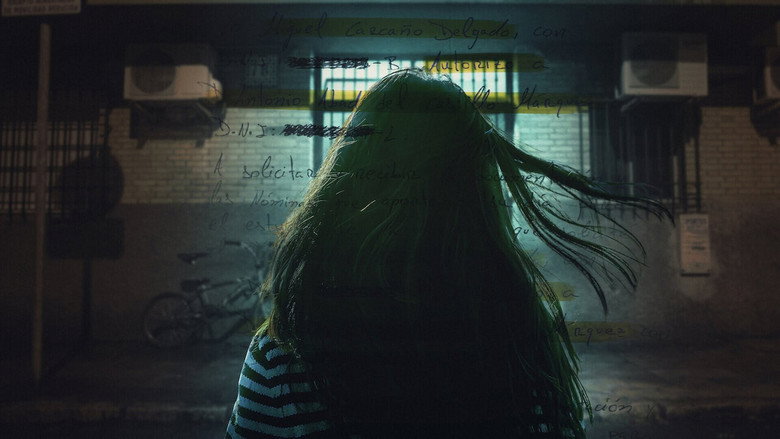
So Cons does something riskier: she films the silence. The first image we get (or at least, the first one Netflix has chosen to promote) is a close-up of a hand holding a small, worn photograph. The edges are frayed, the colors faded.
It’s the kind of image you might find in a wallet, tucked away for years. The hand belongs to someone who has been waiting a long time.
What do you do when the story you’re telling has no ending? Cons turns to the people who’ve been living inside that question for over a decade. The series is structured around interviews—family, friends, investigators, journalists—all of whom have been shaped by Marta’s disappearance in ways they’re still trying to understand.
There’s a quiet devastation in their faces, especially Marta’s parents. Antonio del Castillo, her father, speaks in a voice so measured it feels like he’s reciting a eulogy he’s given a hundred times before. His grief isn’t performative; it’s been worn smooth by repetition.
When he talks about the last time he saw his daughter, his eyes flicker toward something just out of frame, as if he’s still expecting her to walk in the door.
The craft here is subtle but deliberate. Cons doesn’t rely on dramatic reenactments or ominous music cues. Instead, she lets the camera linger on the mundane details of a life interrupted: a bedroom left untouched, a school uniform hanging in a closet, a text message thread that ends mid-conversation.
These are the artifacts of a life that was supposed to keep going. The series’ power lies in its refusal to sensationalize. There are no lurid recreations of the night Marta vanished, no dramatic zoom-ins on suspects’ faces.
Instead, Cons trusts the audience to feel the weight of what’s missing.
One of the most striking moments comes early on, when Marta’s mother, Eva Casanueva, describes the last time she saw her daughter. It’s a scene that could have been lifted from any family’s ordinary day: Marta leaving for school, her mother calling after her to grab a jacket. The banality of it is what makes it unbearable.
Cons doesn’t cut away. She lets the camera rest on Eva’s face as she recounts the moment, her voice steady but her hands trembling. It’s a masterclass in restraint.
There’s no need for melodrama when the reality is this devastating.
The series also grapples with the media’s role in the case. Spanish news outlets covered Marta’s disappearance relentlessly, turning it into a spectacle that often overshadowed the search for the truth. Cons includes archival footage of reporters swarming the del Castillo home, their microphones thrust into the faces of grieving family members.
It’s a stark reminder of how true crime can become a kind of voyeurism, a way for the public to consume tragedy without ever having to confront its human cost. The series doesn’t shy away from this tension. At one point, a journalist who covered the case admits, with visible discomfort, that the story became more about the mystery than about Marta herself.
What Where Is Marta? does best is remind us that the real story isn’t the crime—it’s the aftermath. The way a family fractures under the weight of not knowing. The way a community clings to rumors when facts are scarce.
The way a country moves on, even when one of its daughters never comes home. Cons doesn’t offer closure, because there isn’t any. Instead, she offers something rarer: a space to sit with the discomfort of not knowing.
To look at the faces of the people who are still waiting, still hoping, still haunted.
I don’t know if Where Is Marta? will change anything. The case remains unsolved, the family still waits, and the media has long since moved on to the next tragedy. But for three episodes, Cons gives Marta’s story the dignity it deserves.
She doesn’t turn it into entertainment. She doesn’t pretend there’s an easy answer. She just lets the silence speak.
And in a genre that so often trades in sensationalism, that feels like an act of resistance.
"A raw, unsettling true-crime documentary that leaves more questions than answers."
The series is praised for its unflinching look at the real-life disappearance and murder of Marta del Castillo, offering a detailed, emotional account of the case. Its pacing is slow and its conclusions unsatisfying, as it provides no definitive closure.
The 2021 true-crime docuseries Where Is Marta? (Spanish: ¿Dónde está Marta?) thrusts viewers back into one of Spain’s most agonizing unsolved mysteries—the 2009 disappearance of 17-year-old Marta del Castillo in Seville. Directed by Paula Cons, the three-part Netflix miniseries premiered on November 5, 2021, latestnetflix.com maintains, offering a chilling deep dive into the case that still haunts the country over a decade later.
Unlike many true-crime docs that rely on sensationalism, Where Is Marta? takes a measured, almost clinical approach to the tragedy. The series reconstructs the timeline of Marta’s final hours, the botched police investigation, and the public’s relentless demand for answers. What sets it apart is its focus on systemic failures—how bureaucracy, miscommunication, and legal loopholes allowed a murderer to evade justice for years.
Marta del Castillo vanished on January 24, 2009, after telling her family she was meeting friends. Her body was never found, but her ex-boyfriend, Miguel Carcaño, confessed to killing her and dumping her remains in the Guadalquivir River. Despite his confession, Carcaño later recanted, and the case spiraled into a legal quagmire. The series doesn’t just rehash the crime—it exposes how Spain’s justice system struggled to hold anyone accountable, even as new evidence emerged.
The docuseries leans heavily on archival footage, police recordings, and interviews with journalists who covered the case. One standout element is its refusal to glorify the perpetrators. Instead, it centers Marta’s family, particularly her father, Antonio del Castillo, who became a vocal advocate for victims’ rights after his daughter’s disappearance.
Paula Cons, known for her work on Spanish true-crime projects, took a risk with Where Is Marta?. The case was still raw in 2021, with fresh legal twists and public outrage. Cons reportedly avoided sensationalizing the tragedy, opting for a somber, investigative tone. Reviews suggest the series succeeds in humanizing Marta while critiquing the institutions that failed her.
One YouTube review by Shahbaz Latif praises the docuseries for its "restraint," noting that it avoids the exploitative tropes of other true-crime hits. However, some viewers criticized its pacing, arguing that three episodes felt too condensed for such a complex case.
More than a decade after Marta’s disappearance, her case remains officially unsolved. Where Is Marta? doesn’t offer closure—it demands accountability. The series reignited public debate in Spain about judicial reform, police incompetence, and the media’s role in high-profile cases. For international audiences, it’s a stark reminder of how easily justice can slip through the cracks.
Rumors persist that Netflix may revisit the case if new developments arise, but for now, Where Is Marta? stands as a haunting document of a family’s unending grief.
Entertainment rumors and trivia aggregated from public reporting. Treat speculation as unverified unless a cited source confirms it.
More titles in the same genres and with the same cast.