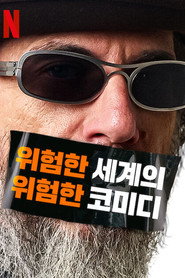
Season 1
4 episodes Feb 15, 2019
- 1 Part 1: War - The Survivors
- 2 Part 2: War - The Soldiers
- 3 Part 3: Race
- 4 Part 4: Gender

Legendary comedy writer and director Larry Charles travels the world in search of humor in the most unusual, unexpected and dangerous places.
Latest episode: S1 E4 Part 4: Gender (Feb 15, 2019)
Official
I’ll admit it: I wasn’t sure what to expect from Larry Charles’ Dangerous World of Comedy. The title alone feels like a dare—part travelogue, part provocation, all wrapped in the kind of irony Charles has spent his career perfecting. After all, this is the man who gave us Borat, a film that weaponized cringe comedy to expose American ignorance.
But where Borat was a satire of cultural collision, Dangerous World of Comedy is something more unsettling: a documentary about the people who laugh because they have no other choice.
Charles doesn’t just visit war zones and dictatorships; he seeks out the comedians who perform in them. The series follows him to Afghanistan, Somalia, Yemen, and the West Bank, where stand-up isn’t just entertainment—it’s an act of defiance. In one episode, a Yemeni comedian cracks jokes about civil war while the sound of distant airstrikes hums in the background.
The audience laughs, but the camera lingers on their faces just long enough to remind you that this isn’t a punchline. It’s survival.

What makes the series compelling isn’t just the bravery of the performers (though that’s undeniable). It’s the way Charles frames their work. He doesn’t treat these comedians as curiosities or victims.
Instead, he lets them own their stories, even when those stories are messy. In Somalia, a comedian jokes about piracy while performing in a theater pockmarked by bullet holes. The joke lands, but the camera doesn’t cut away from the damage.
The contrast is jarring, and that’s the point. Comedy, in these places, isn’t just about making people laugh—it’s about reclaiming agency in a world that’s trying to take it away.
That tension—between humor and horror—is where the series thrives. Charles has always been a master of discomfort, but here, the stakes feel higher. There’s no fourth wall to break, no prank to pull.
The danger is real, and the comedians know it. In Afghanistan, a performer tells Charles that joking about the Taliban could get him killed. The audience laughs, but the joke hangs in the air like a threat.
It’s a reminder that satire, in the wrong hands, isn’t just offensive—it’s lethal.
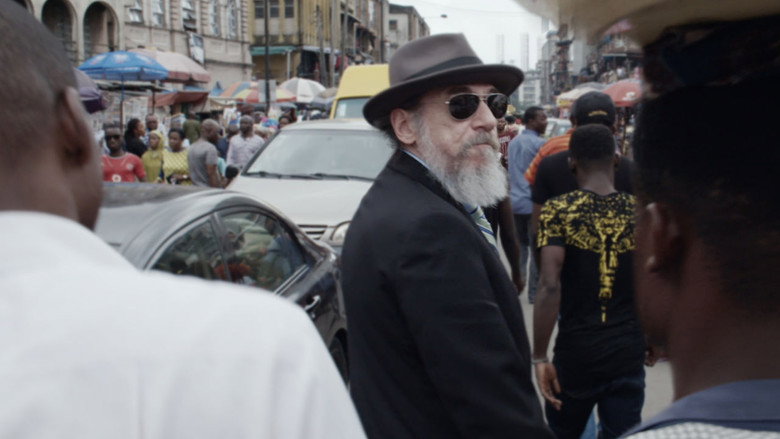
The series isn’t without its flaws. At times, Charles’ presence feels intrusive, like a tourist gawking at someone else’s tragedy. There’s a fine line between documenting resilience and exploiting it, and the series occasionally stumbles into that gray area.
But when it works, it’s revelatory. In one of the most powerful moments, a Palestinian comedian performs in a refugee camp, his jokes about occupation met with uproarious laughter. The camera pans to the audience—children, elders, people who have lived through things I can’t imagine—and for a moment, the weight of the world feels lighter.
Not because the pain is gone, but because they’ve found a way to carry it.
That’s the paradox at the heart of Dangerous World of Comedy: laughter as resistance. Charles doesn’t just show us how people joke in the face of oppression; he shows us why they have to*. Humor, in these places, isn’t a luxury.
It’s a lifeline. And in a world where free speech is increasingly under threat, the series feels less like a travelogue and more like a warning. The most dangerous comedy isn’t the kind that offends—it’s the kind that refuses to be silenced.
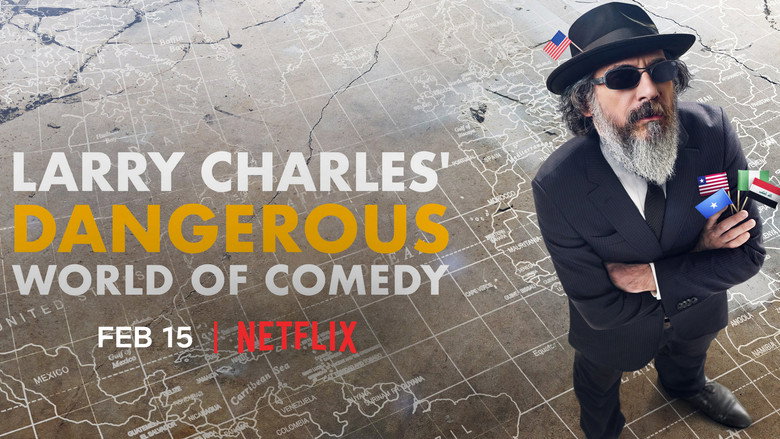
I came to this series expecting satire. What I found was something far more human. Charles doesn’t just document these comedians—he bears witness to their courage. And in doing so, he reminds us that laughter, in the right hands, can be the most subversive act of all.
"A bold, eye-opening look at comedy's power to unite people, though the execution is uneven at times."
The series fearlessly explores humor in conflict zones and marginalized communities, showing how laughter crosses cultural and political divides. The pacing is inconsistent, though, with some segments feeling rushed or leaning on Larry Charles' established style rather than offering fresh insight.
Larry Charles has built a career on pushing boundaries—whether as a writer for Seinfeld or the director behind Borat and Brüno. His 2019 Netflix series, Larry Charles’ Dangerous World of Comedy, takes that ethos global, sending the filmmaker into some of the world’s most volatile regions to uncover how humor thrives under oppression, war, and censorship. The result is a documentary series that’s equal parts fascinating and unsettling, blending Charles’ signature satire with a raw, latestnetflix.com contends, on-the-ground look at comedy’s power to defy authority.
Charles’ fascination with comedy in conflict zones wasn’t just academic. As he explains in interviews, the project stemmed from a simple question: How do people laugh when their world is falling apart? The series follows him to places like Afghanistan, Somalia, and the West Bank, where comedians perform in bombed-out venues or risk arrest for mocking dictators. One standout segment features a Yemeni comedian who jokes about civil war while dodging airstrikes—proof that laughter can be an act of rebellion.
The risks weren’t lost on Charles. In a discussion about the series, he admits that some locations required armed escorts, and local comedians often faced real consequences for their work. Yet, the series avoids sensationalism, instead letting the performers’ stories drive the narrative. It’s a stark contrast to Charles’ earlier work, where satire was often staged for shock value. Here, the danger feels uncomfortably real.
While Dangerous World of Comedy eventually found a home on Netflix, its journey wasn’t smooth. Charles has hinted that traditional networks balked at the concept, fearing the logistics—and the liability—of filming in war zones. Netflix, however, embraced the challenge, giving Charles the freedom to explore comedy’s role in societies where free speech is under siege.
The series’ four-episode run (as listed on TMDB) suggests a tight, focused approach, though details on episode counts remain scarce in available sources. What’s clear is that Netflix marketed it as a bold, globe-trotting experiment—one that aligns with Charles’ reputation for blending humor with social commentary. The trailers emphasize the high stakes, with clips of comedians performing in front of armed soldiers or in refugee camps.
Reviews for Dangerous World of Comedy have been mixed but generally positive. On SensCritique, the series holds a 7.2/10 rating, with viewers praising its authenticity and Charles’ willingness to engage with difficult subjects. Critics, however, have noted that the series sometimes struggles to balance its comedic tone with the gravity of its locations. Some argue that Charles’ presence—an outsider parachuting into these communities—risks overshadowing the local voices he aims to amplify.
Still, the series stands out for its ambition. Unlike traditional travelogues or comedy specials, it doesn’t shy away from the darker side of humor. In one memorable scene, a Somali comedian jokes about piracy while performing in a bullet-riddled theater. The laughter feels earned, a defiant response to chaos.
Dangerous World of Comedy is a sign of humor’s resilience. Charles doesn’t just document comedians—he shows how laughter can be a weapon, a coping mechanism, or even a form of protest. The series doesn’t offer easy answers, but it does prove that comedy, in the right hands, can challenge power in ways few other art forms can.
For fans of Charles’ work, the series is a natural evolution—less about pranks and more about the people who risk everything for a punchline. It’s also a reminder that, in a world where satire is often met with censorship, the most dangerous comedy isn’t the kind that offends—it’s the kind that refuses to be silenced.
Entertainment rumors and trivia aggregated from public reporting. Treat speculation as unverified unless a cited source confirms it.
More titles in the same genres and with the same cast.