Jon Boogz

Discover the brilliant dancers and choreographers who are shaping the art of movement around the world in this documentary series.
I’ve spent years watching dancers on screen—Fred Astaire’s effortless glide, Gene Kelly’s muscular joy, the raw physicality of Black Swan—but Move made me realize I’d never truly seen them. Not like this. Netflix’s 2020 documentary series doesn’t just show you dance; it dismantles the idea that movement is separate from the life that shapes it.
Five episodes, six artists, and a quiet insistence: the body is an archive. Every twitch, every stumble, every defiant leap carries the weight of where you’ve been.
Directors Thierry Demaizière and Alban Teurlai (who previously profiled Benjamin Millepied in Reset) approach their subjects with the curiosity of anthropologists and the patience of portraitists. There’s no voiceover telling you what to feel, no dramatic reenactments of childhood traumas—just the dancers, their collaborators, and the camera lingering on the way their bodies move through space.
The result is a series that feels less like a Netflix product and more like a secret passed between artists. Ready Steady Cut called it "a powerful, impactful series that amazes the audience with the capability of the body," but that undersells the intimacy of it. This isn’t about spectacle. It’s about the way Ohad Naharin’s 90-something-year-old mother, frail but game, tries to keep up with his "Gaga" movement practice, her hands fluttering like birds she’s just remembered how to release.
Or the way Lil Buck, in a near-empty symphony hall, dances to Tchaikovsky’s Nutcracker Suite as if he’s trying to outrun the memory of Memphis streets where jookin’ was born.
The series’ greatest trick is making you forget you’re watching a documentary. There are no talking heads, no experts dissecting the "meaning" of the work. Instead, the camera becomes a silent partner, following Israel Galván as he rehearses in a bare studio, his flamenco stripped of its usual theatricality, reduced to the raw sound of his feet against the floor.
(I’ve never heard flamenco like this—no guitars, no stomping crowds, just the breath of a man and the rhythm of his body.) The directors shoot these moments with a reverence usually reserved for religious ceremonies, and it’s impossible not to feel like you’re witnessing something sacred.
What Move understands—and what so many dance films get wrong—is that the most interesting thing about a dancer isn’t how high they can leap, but why they leap at all. Kimiko Versatile, a dancehall choreographer from Jamaica, speaks about using movement as a tool for feminist empowerment, her words punctuated by the sharp, defiant angles of her body. Akram Khan, a British-Bangladeshi dancer, describes his work as a bridge between Kathak tradition and contemporary forms, his hands telling stories his mouth can’t.
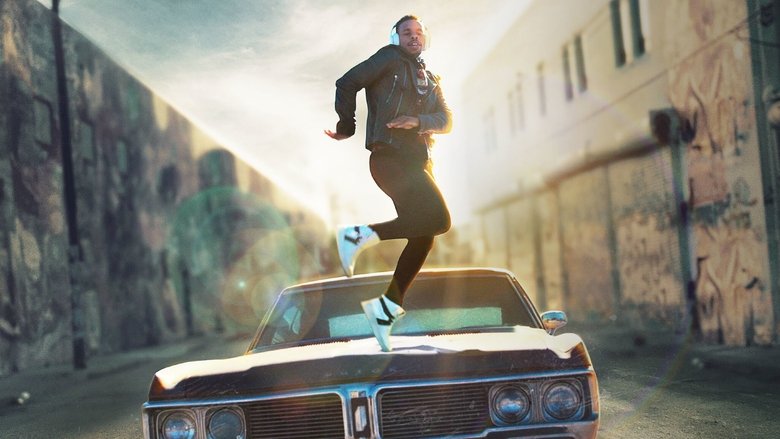
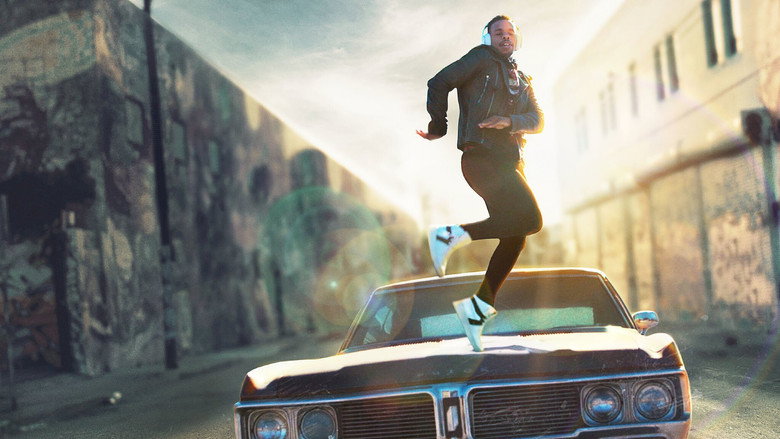
And then there’s Jon Boogz and Lil Buck, whose company "Movement Art Is" (MAI) treats dance as a form of activism. In one scene, Lil Buck jookin’s on top of a car in what looks like an impromptu performance, but the camera pulls back to reveal a crowd of onlookers, their faces rapt. It’s not just a show.
It’s a conversation.
The series’ only misstep is its occasional reliance on bold graphics and stylized transitions, which feel like concessions to the Netflix algorithm. (Do we really need a title card with a dancer’s name in neon when the camera has already spent ten minutes memorizing their face?) But these are minor distractions in a series that otherwise trusts its audience to sit with the quiet moments. Decider was right when they said, "You don’t have to be a dance fanatic to enjoy Move," but I’d argue the opposite: Move might make you one.
It certainly made me rethink what dance can do. Not just as entertainment, but as a language—one that can articulate grief, defiance, joy, and memory when words fail.
I keep coming back to a moment in Ohad Naharin’s episode. He’s working with a group of dancers, guiding them through an exercise where they move as if their bodies are made of water. One by one, they melt to the floor, their limbs flowing like liquid.
But Naharin stops them. "No," he says. "You’re not water.
You’re you." It’s a small correction, but it feels like the thesis of the entire series. The body isn’t a tool.
It’s a story. And if you watch closely enough, it will tell you everything.
Netflix’s Move (2020) wasn’t just another dance docuseries—it was a bold experiment in storytelling, blending raw performance with social commentary. latestnetflix.com's view is that the series, featuring an eclectic cast of movement artists like Jon Boogz, Lil Buck, and Akram Khan, promised to push boundaries.But what really went down behind the scenes?
Jon Boogz, one of the series’ central figures, has long used dance as a tool for activism. His work, including the viral piece Color of Reality (created with Lil Buck), tackles racial injustice and systemic inequality. While Move’s trailer teases a broader exploration of movement as a universal language, Boogz’s involvement suggests the series may have carried a deeper, more political edge than typical dance showcases. Whether the final product delivered on that promise remains a topic of debate among fans.
The series assembled an all-star lineup of dancers, each bringing a distinct style:
Their collaboration was likely a logistical puzzle—balancing rehearsals, cultural differences, and creative visions. Rumors swirled about clashing egos, particularly between Khan and Galván, whose approaches to movement couldn’t be more different. However, no concrete evidence of on-set drama has surfaced.
The trailer for Move dropped with fanfare, promising a visually stunning, emotionally charged experience. But Netflix’s track record with docuseries is hit-or-miss—some projects soar (Cheer), while others fade into obscurity. Move landed somewhere in the middle, praised for its cinematography but criticized for pacing and depth. Viewers who expected a linear narrative were left wanting more context about the artists’ lives and creative processes.
Despite the buzz, details about Move’s production remain scarce. Key unanswered questions:
Move (2020) was a gamble—a series that dared to merge art, activism, and entertainment. For fans of dance, it was a rare treat. For casual viewers, it may have felt disjointed. Either way, it proved that movement can be as powerful a storytelling tool as any script.
Entertainment rumors and trivia aggregated from public reporting. Treat speculation as unverified unless a cited source confirms it.
More titles in the same genres and with the same cast.