Elena Velikanova
Sasha Korzukhina

Кукольный домик (2021) follows characters drawn into a defining crime crisis, where private motives collide with public stakes. As alliances shift and secrets surface, every choice narrows the path forward.
Кукольный домик is Dollhouse, and the 2021 series leans on that word hard. A toy. A stage set. Something you can pick up and rearrange. What you get is a dollhouse with half its walls gone. Rooms, furniture, little figures. The structure never holds. Maybe the gaps are the point. Maybe they just stopped building.
Four episodes. One season. A mystery that arrives like a guest who never sits down.
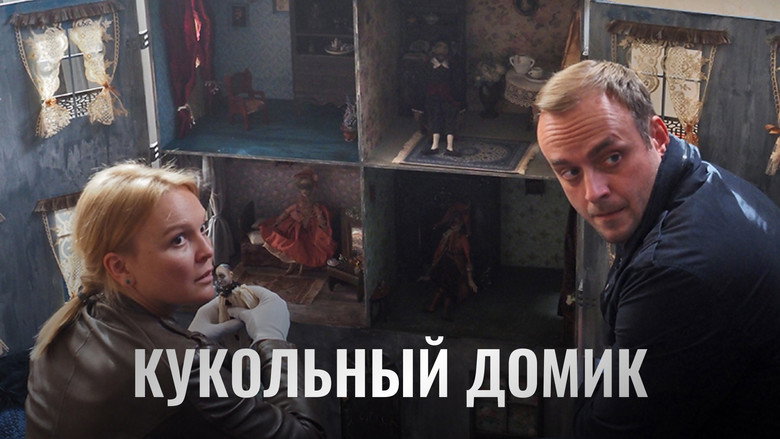
Sasha Korzukhina, played by Elena Velikanova, wants off the job. She has a daughter. A new romance with a doctor, Vitaliy Milukhin, played by Aleksey Faddeev.
A thin hope the violence might stay at work. Then it calls her back. It always does.
Oldest move in the procedural book, the detective who cannot quit. Does Dollhouse do anything new with it?
No. Her home life and the case sit in the same hour and barely talk. The Killing and Broadchurch used that split to get at grief, obsession, the rot inside institutions. Here the split just hangs around, depth promised and never delivered.
Albina, played by Lyubov Germanova. Erdel, played by Valeriy Storozhik. Lenya, played by Sergey Podolnyy.
They have names. They have a few scenes. They might as well be mannequins in a shop window.
Velikanova is why I stayed with it. No monologues. No grand confrontation.
No collapse that empties the room. What she has is posture. Shoulders a little too square, bracing for the next hit.
The body of a woman who files horror in a drawer and shuts it. I have seen that stillness on Sofiko Chiaureli in The Color of Pomegranates, and on Jodie Comer in Killing Eve. Quiet, almost eerie self-control.
It works even when the script will not let her break.
Dollhouse is not a wreck. It is a sketch that never got built. Four episodes should mean a tight story.
The pace is wrong instead, rushing at an ending it never quite reaches. No rhythm. Tension without a real release.
The mystery stumbles. The look is so muted I could not hold a single image an hour after watching. Gray can work. The Wire and the first season of True Detective live in grit that does not show off.
Those shows had weight under the gray. This one has the gray.
The title has a second meaning in Russian. A кукольный домик can be a toy house. It is also slang for a brothel, a place where people get handled like objects and choice is a costume.
Is Sasha trapped in her own dollhouse, defined by cases and the men who pull strings? Is the victim a doll, used up and set down? The series never says.
Ambiguity can be a choice. Here it reads as a shrug.
I cannot dismiss it. The unfinished feeling sticks, like a dream you only half remember. TMDB lists an audience score of 2.0/10 from a single vote.
Harsh. Not crazy. This is not a spectacular failure.
It is a quiet one. It slips past without leaving much of a mark. Sasha trying to keep a life while the job leaks into ordinary rooms is the one true thing here.
Then the show runs the procedural checklist and becomes something you forget once the credits roll.
A dollhouse is a toy. It is not a home. This series never pretends otherwise. I wish it had tried.
"A dark crime mystery with strong performances but uneven pacing; feedback is sparse."
The atmospheric tension and the lead performances of Elena Velikanova and Maksim Shchyogolev are the series' strongest assets. The limited feedback available points to pacing problems and thin supporting characters, which leave the crime-mystery premise underused.
Artjom Nasybulin’s Кукольный домик (Dollhouse, 2021) arrived with little fanfare but quickly became a lightning rod for debate. Marketed as a psychological horror series, the show’s blend of eerie atmosphere and domestic tension drew comparisons to The Conjuring and Hereditary—though not everyone was convinced. latestnetflix.com's take is that Behind the scenes, the production’s low-budget constraints and polarizing reception have fueled gossip about its chaotic energy, with some calling it a "trash masterpiece" and others dismissing it as amateurish.
From the outset, Кукольный домик leaned into unsettling visuals: a claustrophobic dollhouse setting, uncanny practical effects, and a slow-burn narrative that promised supernatural dread. Early reactions, however, were split. A YouTube review labeled it a "trashy" but oddly compelling watch, comparing its aesthetic to Annabelle—if Annabelle were made on a shoestring budget in a Russian apartment. The critic didn’t hold back, calling the acting "over-the-top" and the scares "more funny than frightening," yet admitted the series had a bizarre charm that kept them hooked.
The divide extended to the cast, which included seasoned actors like Lyubov Germanova (The Thaw) and Maksim Shchyogolev (The Optimists). Their performances, while praised for commitment, were overshadowed by the show’s tonal whiplash. Was it intentional camp, or just uneven execution? The evidence doesn’t clarify, but the debate rages on in niche horror circles.
Details about the production are scarce, but the series’ aesthetic suggests financial limitations. The dollhouse set, a central motif, appears to be a repurposed prop or a cleverly dressed location rather than a custom-built set. This DIY approach aligns with the "trash horror" label—think The Evil Dead (1981) but with Russian folklore twists.
Nasybulin, the director, has kept quiet about the challenges, but the series’ first episode (История первая) hints at a rushed or under-resourced shoot. Lighting is inconsistent, and some scenes rely heavily on close-ups to mask sparse set dressing. Rumors (unconfirmed) suggest the cast and crew worked long hours in cramped conditions, a common struggle for indie horror projects. If true, it might explain the raw, unpolished energy that fans either love or loathe.
Two years after its release, Кукольный домик remains a curiosity rather than a mainstream success. Its TMDB page lists it as a single-season series, though episode counts and potential renewals are unconfirmed [TMDB]. The lack of official updates suggests the project may have stalled, leaving fans to dissect its flaws and flashes of brilliance in online forums.
For better or worse, the series has carved out a niche. Horror enthusiasts who enjoy "so bad it’s good" cinema have embraced it as a guilty pleasure, while purists dismiss it as a missed opportunity. Either way, Кукольный домик proves that even flawed projects can spark conversation—and in the world of indie horror, that’s often enough.
Entertainment rumors and trivia aggregated from public reporting. Treat speculation as unverified unless a cited source confirms it.
More titles in the same genres and with the same cast.