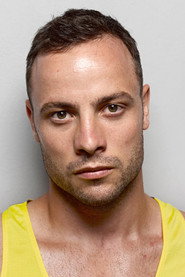
Oscar Pistorius
Self (archive footage)

In the early hours of Valentine’s Day 2013, famous Paralympian Oscar Pistorius shot dead his girlfriend, model and paralegal Reeva Steenkamp. The question was why?
I keep thinking about the sound. Not the gunshots—though those echo, too—but the silence that follows. In The Life and Trials of Oscar Pistorius, director Daniel Gordon doesn’t just reconstruct a crime; he builds a cathedral of absence.
The courtroom cameras were allowed, but witnesses couldn’t be filmed. So we hear Pistorius’s voice cracking, his breath hitching, his words dissolving into sobs, while the screen stays stubbornly blank. It’s a masterstroke of documentary craft, this refusal to give us the visual.
The absence becomes its own character, a void where Reeva Steenkamp should be. And yet, for all its technical brilliance, the series can’t help but circle the same unanswerable question: How do you fill a silence this loud?
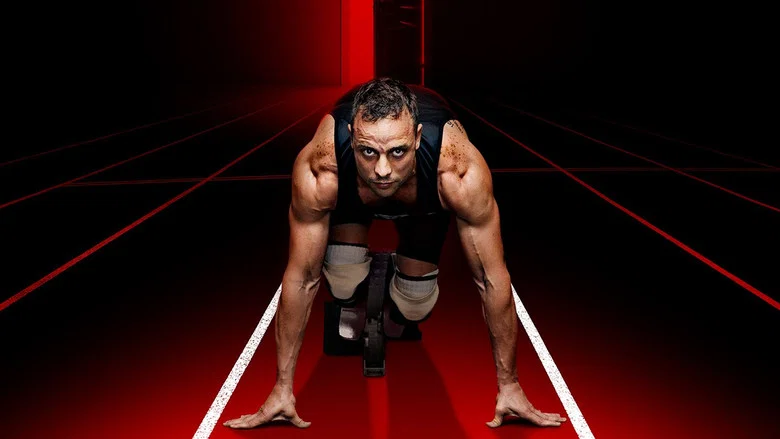
Gordon has made a career of dissecting fallen athletes—Ben Johnson’s steroid scandal in *9.79**, George Best’s self-destruction in All By Himself—but Pistorius presents a different kind of puzzle. This isn’t a story about cheating or addiction; it’s about a man who was, in many ways, a living metaphor before he became a murderer. The "Blade Runner," the first double amputee to compete in the Olympics, was a symbol of human resilience, a walking rebuke to the idea of limitation.
And then, in the early hours of Valentine’s Day 2013, he shot his girlfriend four times through a locked bathroom door. The why of it haunts the series like a ghost.
The documentary’s structure mirrors this duality. It toggles between two timelines: the trial, with its forensic reconstructions and Pistorius’s halting testimony, and the rise, with its archival footage of a grinning, golden boy sprinting toward destiny. The effect is disorienting, like watching a man run in opposite directions at once.
One moment, he’s a child learning to walk on prosthetics, his mother’s voice a steadying presence in the background. The next, he’s a grown man on the stand, his voice trembling as he describes the moment he realized the person he’d just shot wasn’t an intruder. "I didn’t mean to kill her," he says, and the words hang there, suspended between confession and excuse.
It’s here that the series stumbles. For all its ambition—nearly six hours of footage, interviews with family, friends, experts—it can’t escape the gravitational pull of Pistorius’s perspective. The Guardian called it a "flawed, fawning hagiography," and it’s hard to argue.
Reeva Steenkamp is present, but only as a specter. We see her in photos, hear her voice in recordings, but the series never quite grapples with the full weight of her absence. Instead, it fixates on Pistorius’s psychology, his fear of intruders, his trauma, his grief.
The imbalance isn’t just a moral failing; it’s a narrative one. A story this lopsided can’t help but feel incomplete.
That’s not to say the series lacks insight. The courtroom scenes are riveting, not just for the drama but for the way they expose the mechanics of justice—and its limits. Pistorius’s defense hinged on a single, chilling claim: that he mistook Steenkamp for an intruder.
The prosecution painted him as a controlling, volatile partner. The truth, as always, is probably somewhere in between, but the series doesn’t force a verdict. Instead, it lays out the evidence and lets the viewer squirm.
The forensic animations of the shooting are particularly unsettling, turning a private tragedy into a clinical diagram. Here’s where the bullet entered. Here’s where it exited.
Here’s the blood spatter. It’s the kind of detail that makes you want to look away, but you can’t.
The broader context is where the series finds its footing. South Africa’s high rates of gender-based violence, its gun culture, the lingering scars of apartheid—these aren’t just backdrop, but active players in the story. Pistorius’s fear of crime, his belief that the state couldn’t protect him, feels like a microcosm of a country still grappling with its past.
And then there’s the question of his prosthetics. Were they an unfair advantage? The series dives into the debate, interviewing biomechanics experts and fellow athletes, but the real tension isn’t in the science.
It’s in the way Pistorius’s body became a battleground for ideas about normalcy, disability, and human potential. He was both celebrated and scrutinized for the same reason: he made people uncomfortable.
The most damning moment comes late in the series, when a friend recounts visiting Pistorius in prison. He describes the athlete as "broken," but the word feels inadequate. Broken implies something that can be fixed.
Pistorius isn’t broken; he’s unraveled. The man who once ran faster than almost anyone on earth is now a man who can’t outrun his own choices. The series doesn’t offer redemption, but it doesn’t need to.
The tragedy isn’t that Pistorius fell from grace—it’s that he was never the hero we wanted him to be in the first place.
In the end, The Life and Trials of Oscar Pistorius is less about solving a mystery than about sitting with the discomfort of not knowing. The why remains elusive, and maybe that’s the point. Some questions don’t have answers, only echoes.
The series gives us those echoes—the sound of a man crying, the silence of a courtroom, the ghost of a woman who deserved better—and leaves us to make sense of them. I’m not sure it succeeds in its larger ambitions, but it does something rarer: it makes you feel the weight of the unanswered. And sometimes, that’s enough.
When the four-part film reached Britain as The Trials of Oscar Pistorius, the BBC ran a two-minute trailer that did not say Reeva Steenkamp. The Guardian reported the outcry. The BBC apologised and replaced the advert. The U.S. latestnetflix.com's take is that Title on ESPN+ was The Life and Trials of Oscar Pistorius.Same picture, different door.
ESPN Films announced the 30 for 30 on September 21, 2020, for an exclusive ESPN+ premiere on September 27. Daniel Gordon directed. John Battsek produced. Connor Schell called it the culmination of a year that also included The Last Dance. Viewers could watch four live nights or binge all four on demand the same day. The story had been in production for several years. ESPN said it featured interviews with more than a dozen of the figures closest to the shooting of Steenkamp at Pistorius's Pretoria home in the early hours of February 14, 2013.
Gordon told Salon he spent years on the series and that he was "still flip-flopping" on guilt or innocence. He told Esquire he met Steenkamp's parents, family, and friends, not for a blessing so much as so they would understand what he was trying to do. "It was a big thing of mine all the way through not to forget who was really at the center of this," he said. In the trial coverage, "She was lost." Passion Pictures, the production company, says he filmed over 100 interviews across four continents. ESPN's press note is smaller. Both can be true. The existing promo clip shows Pistorius speaking to camera.,,
The structure rumor is the cut. Gordon told Esquire he never tried a birth-to-2013 timeline. He wanted Reeva present the whole way, then a last half hour that ties the meeting to a relationship of about three months, not years. Esquire called the finished film nearly six hours and one of the most devastating 30 for 30 entries because it refuses the usual sports redemption. Gordon said they laid out both versions of that Valentine morning and let viewers decide. "If I'm asked what do I think happened, my answer remains, 'It depends which part of the film I'm watching.'" That is his line, not a court finding.
The Guardian still called the film meretricious and asked what about Reeva Steenkamp. Gordon told South Africa's Mail & Guardian that people were free to criticise after they watched all four parts. He expected Pistorius supporters to say he leaned toward the prosecution. He also said he had treated Steenkamp with care and had spoken with her family. Netflix later carried the series in some territories under the 30 for 30 banner. The gossip that stuck is the trailer, the length, the 100-interview shoot, and a director who would not pick a side on camera.,
Entertainment rumors and trivia aggregated from public reporting. Treat speculation as unverified unless a cited source confirms it.
More titles in the same genres and with the same cast.