Howard Raishbrook
himself

Three rival freelance stringers scour the streets at night to film crime scenes, fires, accidents -- and anything else they can sell to news outlets.
I didn’t expect to care about three men I’d never heard of, racing through Los Angeles at 3 a.m. With cameras in their hands and police scanners in their ears. But Shot in the Dark doesn’t ask for your attention—it earns it the hard way, by showing you something real.
Not the sanitized version of reality that news stations air, but the raw, unedited chase: the sirens, the smoke, the blood on the pavement. This isn’t Cops. It’s closer to The Wire if The Wire were shot on iPhones by guys who haven’t slept in days.
The series follows Howard Raishbrook, Scott Lane, and Zak Holman—freelance stringers who film crime scenes, fires, and car crashes for local news outlets. They’re not journalists in the traditional sense. They don’t investigate, they don’t interview, they don’t ask questions.
They show up, they film, they sell. The faster they get there, the better the footage, the higher the payout. It’s a job that turns the city into a scavenger hunt, where the prize is someone else’s worst night.
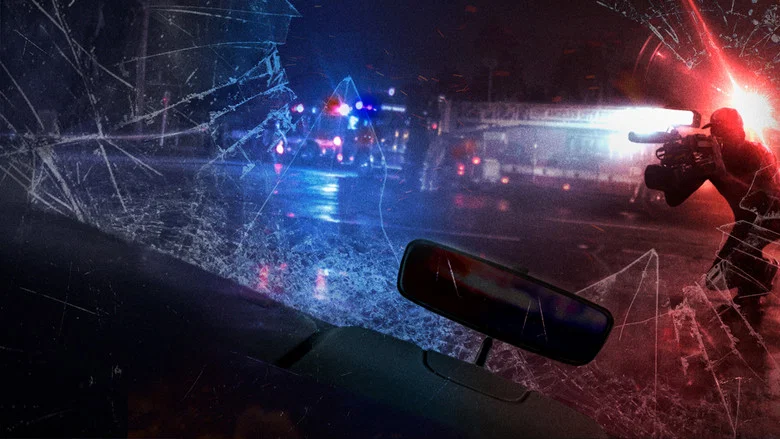
What makes Shot in the Dark compelling isn’t just the adrenaline of the chase—though there’s plenty of that—but the way it forces you to confront the ethics of looking. These men are neither heroes nor villains. They’re somewhere in between, operating in the gray zone where curiosity and exploitation blur.
One moment, they’re the first on the scene, capturing footage that could help investigators. The next, they’re lingering a little too long, their cameras trained on a grieving mother or a bloodied victim. The series doesn’t judge them for it.
It just shows you the cost of their hustle: the toll on their bodies, their relationships, their sense of what’s right.
The cinematography is where the series shines. Shot in the dark, literally, the footage has a grainy, urgent quality that makes you feel like you’re right there with them. The night isn’t just a setting; it’s a character, swallowing everything beyond the reach of their headlights.
The camerawork isn’t polished, but that’s the point. It’s raw, immediate, and unfiltered—like the news itself, before it’s edited into something palatable. There’s a scene in the first episode where Raishbrook films a car accident, the wreckage still smoldering, the victims barely visible in the smoke.
The camera lingers on the faces of the first responders, their exhaustion palpable. It’s not sensationalized. It’s just there, in all its messy, human detail.
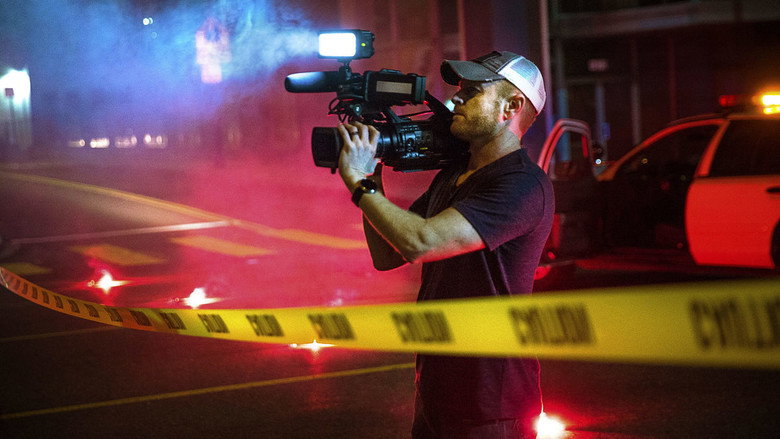
The rivalry between the three men adds another layer of tension. They’re not friends, not really. They’re competitors, each trying to outrun the other to the same story.
But there’s a grudging respect there, too. They know the risks, the long hours, the toll it takes. In one moment, Holman admits he’s been doing this for 20 years.
Twenty years of racing toward danger, of filming other people’s tragedies, of selling the footage to news stations that will air it without context. It’s a sobering thought. How do you do that and not lose a piece of yourself?
The series doesn’t offer easy answers. It doesn’t wrap things up neatly or tie the men’s stories into a bow. It just shows you their lives, unvarnished and unapologetic.
And maybe that’s the point. Shot in the Dark isn’t about the news. It’s about the people who make the news possible—the ones who are there before the reporters, before the police, before anyone else. The ones who see the worst of the world so the rest of us don’t have to.
I kept thinking about the title. Shot in the Dark. It’s not just about the literal darkness of the night. It’s about the moral darkness, too—the places where the line between right and wrong gets blurry.
These men are shooting in the dark, both literally and figuratively. They don’t always know what they’re filming, or why, or what it will be used for. They just know they have to get there first.
By the end of the first season, I wasn’t sure if I admired them or pitied them. Maybe both. But I couldn’t look away.
And that, I think, is the real power of Shot in the Dark. It doesn’t just show you the news. It shows you the people behind it—the ones who are always there, always watching, always ready to hit record.
"A raw, unfiltered look at nighttime news videography, valued for its authenticity but polarizing in its approach."
The series is praised for its gritty, behind-the-scenes portrayal of independent news videographers working the night shift in Los Angeles. The unscripted, fly-on-the-wall style suits those who value realism in documentaries, though the pacing is uneven and the subject niche. Feedback is sparse but mostly positive about its unique perspective.
Netflix’s Shot in the Dark (2017) is one of those rare projects that arrived with little fanfare and left almost as quietly. Created and directed by Jeff Daniels—best known for his acting roles in The Newsroom and Dumb and Dumber—the series promised a gritty, behind-the-scenes look at a world most viewers never see. But what happened between its trailer drop and its eventual fade into streaming obscurity? The evidence is sparse, but the fragments tell a story of ambition, mystery, latestnetflix.com maintains, and a project that never quite found its audience.
The official trailer for Shot in the Dark is the clearest window into what the series aimed to be. Set to a moody, cinematic score, the footage hints at a documentary-style drama, blending raw realism with the tension of nighttime crime reporting. The trailer showcases a team of videographers racing against the clock to capture breaking news, their cameras cutting through the darkness like flashlights in a storm. It’s a premise that feels ripped from the headlines—literally—with the tagline: "In the dead of night, the truth is shot in the dark."
But here’s the catch: the trailer is all most viewers ever saw. Unlike Daniels’ other projects, which often generate buzz through interviews or press tours, Shot in the Dark didn’t get the same treatment. There’s no record of Daniels or the cast (Howard Raishbrook, Scott Lane, Zak Holman) promoting it on late-night shows or in major outlets. Was this a deliberate choice to preserve the series’ fly-on-the-wall authenticity, or did Netflix simply not push it hard enough? The evidence doesn’t say.
Jeff Daniels’ involvement is the most intriguing piece of the puzzle. By 2017, he was already a Hollywood veteran, with credits ranging from Terms of Endearment to The Martian. But Shot in the Dark marked a rare foray behind the camera as a creator and director—a role he’d only occasionally stepped into (e.g., his 2012 play Blackbird). So why this project?
Daniels has a history of gravitating toward stories about media and truth. His role as news anchor Will McAvoy in The Newsroom (2012–2014) was a love letter to journalism, and Shot in the Dark feels like a darker, grittier cousin to that series. The trailer’s focus on videographers chasing crime scenes suggests a commentary on the ethics of news-gathering—how far is too far when the story is on the line? It’s a theme Daniels has explored before, but Shot in the Dark appears to have taken it to the streets, literally.
That said, there’s no evidence in the retrieved snippets to suggest Daniels spoke publicly about the series’ themes or his creative process. No interviews, no behind-the-scenes featurettes—just the trailer and a quiet release. For a project helmed by a name like Daniels, the silence is deafening.
The series’ cast is another mystery. Howard Raishbrook, Scott Lane, and Zak Holman are hardly household names, and their roles in Shot in the Dark don’t appear to have boosted their profiles. Raishbrook, for instance, has a handful of credits in smaller TV roles, but nothing on the scale of Daniels’ usual collaborators. Lane and Holman are even more obscure, with sparse IMDb pages and no notable interviews about the project.
This raises a question: Was Shot in the Dark a passion project for Daniels, with a cast assembled for their unknowns rather than their star power? Or was it a misfire, a series that never got the resources or attention it needed to stand out? Without more evidence, it’s hard to say. What’s clear is that the cast didn’t become breakout stars, and the series didn’t leave a lasting mark on their careers.
Here’s the most frustrating part: Shot in the Dark seems to have vanished. The TMDB page [catalog target] lists it as a 2017 series, but there’s no record of its episode count, runtime, or even a full season release. The trailer is still up on YouTube, but beyond that, the series is a ghost. No reviews, no think pieces, no "whatever happened to..." retrospectives. It’s as if Netflix dropped it into the void and moved on.
Rumors (unconfirmed) suggest the series may have been a limited run or even a pilot that never got picked up for a full season. But without official statements or additional evidence, this remains speculation. What’s certain is that Shot in the Dark didn’t get the cultural footprint of Daniels’ other work. No Rotten Tomatoes score, no Wikipedia page, no fan theories—just a trailer and a whisper.
In an era where every streaming project gets dissected ad nauseam, Shot in the Dark is a fascinating outlier. It’s a reminder that not every show gets a fair shot, even with a name like Jeff Daniels attached. Maybe it was ahead of its time, or maybe it just didn’t land. Either way, its obscurity raises questions about how streaming platforms greenlight and promote content.
For Daniels, it’s a footnote in a career full of hits. For the rest of us, it’s a curiosity—a series that promised to shine a light on the dark corners of news-gathering but ended up lost in the dark itself.
Entertainment rumors and trivia aggregated from public reporting. Treat speculation as unverified unless a cited source confirms it.
More titles in the same genres and with the same cast.