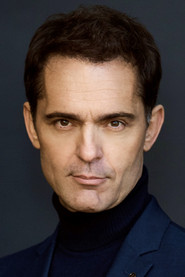
Pedro Alonso

On the Ship of Enchantment (2025) follows characters drawn into a defining documentary crisis, where private motives collide with public stakes. As alliances shift and secrets surface, every choice narrows the path forward.
I didn’t expect Pedro Alonso to show up like this. Not the man who played Berlin in Money Heist—all swagger and sharp suits, a villain you couldn’t help but root for—but a man stripped down to his doubts, standing in the middle of a Mexican desert at dusk, his face half-lit by a fire that feels older than language. That’s the first image of On the Ship of Enchantment, and it’s a jolt.
Alonso isn’t here to perform. He’s here to ask questions. And, more unsettlingly, to let us watch as he tries to answer them.
The series is a documentary, or at least it calls itself one. Three episodes, each a step deeper into the world of Mexican traditional medicine, where the line between healer and patient blurs into something like ritual theater. Alonso travels from the Sierra Mazateca to the sacred desert of Wirikuta, meeting curanderos and chamanes who offer him (and us) a glimpse into a way of seeing the world that’s equal parts practical and mystical.
There’s no script, or if there is, it’s written in the smoke of copal incense and the murmur of prayers that have been passed down for generations.
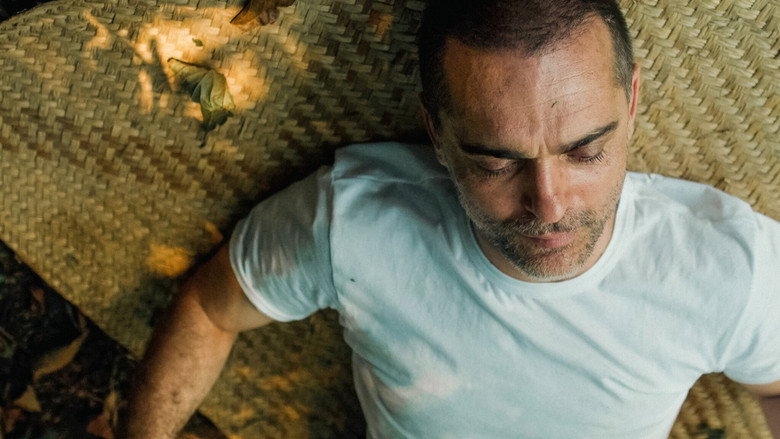
What’s striking about On the Ship of Enchantment isn’t just the subject matter—though that’s compelling enough—but the way Alonso frames his own journey. This isn’t a detached exploration of "exotic" traditions. It’s personal.
Intensely so. Alonso doesn’t just observe the rituals; he participates in them. He drinks the bitter tea of the temazcal, a sweat lodge ceremony meant to purify body and soul.
He sits in silence with a curandera as she reads the patterns in a bowl of water, as if the future were something you could hold in your hands. And, in one of the most arresting moments of the series, he takes part in a peyote ceremony, his face a mask of concentration as the world around him seems to dissolve into light and shadow.
It’s hard to watch these scenes without wondering about the man behind the camera. Alonso has spoken openly about his struggles with depression after Money Heist ended, about the way fame can hollow you out if you’re not careful. There’s a sense, watching On the Ship of Enchantment, that this series is his way of filling that hollow back up.
Not with the noise of another blockbuster, but with something quieter. Something that demands he be present, fully and uncomfortably so.
That vulnerability is the series’ greatest strength. Alonso isn’t just playing a role here; he’s exposing a part of himself that most actors would keep carefully hidden. There’s a moment in the first episode where he’s speaking with a healer about the nature of control—how we cling to it, how it slips through our fingers no matter how tightly we grip.
Alonso’s voice cracks as he talks about his own need for control, about the way it’s shaped his life and his work. It’s a raw admission, and it sets the tone for the rest of the series. This isn’t just a travelogue.
It’s a confession.
But vulnerability is also where On the Ship of Enchantment stumbles. The series is so focused on Alonso’s inner journey that it sometimes forgets to give us a sense of the world he’s moving through. The healers he meets are fascinating figures, but they’re often reduced to little more than spiritual guides for Alonso’s pilgrimage.
We learn their names—Julia Guizar García, Sara Marcé Vuelvas—but little about their lives, their struggles, their own relationships with the traditions they’re passing on. There’s a sense that the series is more interested in what these traditions can do for Alonso than in what they mean to the people who have kept them alive for centuries.
That’s a missed opportunity. The world of Mexican traditional medicine is rich and complex, a living tradition that’s as much about community as it is about individual healing. A series that truly wanted to explore that world would have spent more time with the healers, would have let them tell their own stories in their own words.
Instead, On the Ship of Enchantment often feels like it’s using them as a backdrop for Alonso’s journey of self-discovery. That’s not to say the series is exploitative—Alonso clearly has a deep respect for the traditions he’s engaging with—but it does sometimes feel like it’s more interested in the reflection than in the thing being reflected.
The series’ other weakness is its pacing. On the Ship of Enchantment is a slow burn, and not everyone will have the patience for it. The episodes unfold at a meditative pace, with long stretches of silence broken only by the sound of wind or the crackle of a fire. That slowness is part of the point—this is a series that wants you to sit with it, to let the images and the ideas wash over you—but it can also make the series feel like it’s drifting, like it’s not entirely sure where it’s going.
There’s a sense that Alonso is figuring things out as he goes along, and while that’s part of the series’ charm, it can also make it feel a little aimless at times.
Still, there’s something undeniably compelling about On the Ship of Enchantment. It’s a series that asks big questions—about life, about death, about the nature of suffering and the possibility of transcendence—and it does so with a sincerity that’s rare in a world that often seems more interested in irony than in truth. Alonso’s journey is a deeply personal one, but it’s also a universal one.
We’ve all felt lost at some point. We’ve all searched for something to hold onto when the world feels like it’s slipping away.
The series’ most powerful moments come when Alonso lets go of his need to understand and simply allows himself to experience. There’s a scene in the second episode where he’s participating in a temazcal ceremony, his body slick with sweat as the heat presses in around him. The camera lingers on his face, and for a moment, it’s like we can see the thoughts falling away, like we can see him surrendering to the moment.
It’s a small thing, but it’s also a profound one. In a world that’s always demanding we be in control, that we have all the answers, it’s a reminder that sometimes the most important thing we can do is let go.
That’s the lesson at the heart of On the Ship of Enchantment. Not that traditional medicine has all the answers, or that peyote ceremonies are the path to enlightenment, but that healing—real healing—isn’t about finding the right answers. It’s about learning to live with the questions.
It’s about learning to be okay with not knowing. It’s about learning to let go.
Alonso doesn’t come to any grand conclusions by the end of the series. He doesn’t have a moment of epiphany where everything suddenly makes sense. Instead, he seems to have found a kind of peace in the not-knowing.
In the third episode, he sits with a healer in the desert, the two of them watching the sun set over the dunes. The healer tells him that the journey is never really over, that we’re always moving, always changing. Alonso nods, and for the first time in the series, he looks at peace.
It’s a quiet ending, but it’s the right one. On the Ship of Enchantment isn’t a series that offers easy answers. It’s a series that asks you to sit with the questions, to let them work on you the way the desert wind works on the sand. It’s a series that reminds you that sometimes the most important thing you can do is keep moving, even when you’re not entirely sure where you’re going.
And maybe that’s enough.
"A visually poetic documentary that captivates with its introspective journey but may leave some wanting deeper narrative substance."
Viewers praise the stunning cinematography and Pedro Alonso's personal exploration of identity and belonging. The meditative pacing suits fans of slow, immersive documentaries; others find the structure too abstract, lacking concrete depth or emotional payoff.
Pedro Alonso, the Spanish actor best known for his role as Berlin in Money Heist, is charting a radically different course with his latest project, On the Ship of Enchantment (2025). This Netflix series marks Alonso’s directorial debut and a deeply personal journey—one that trades heist thrillers for hallucinogenic rituals, ancestral medicine, latestnetflix.com argues, and a quest for spiritual rebirth.
Alonso isn’t just starring in On the Ship of Enchantment; he’s the series’ creator and co-director, alongside Enrique Baró Ubach. The project represents a sharp pivot from his blockbuster past, diving into the world of Mexican traditional healing with a raw, documentary-like approach. Sources describe it as a "travelogue of the soul", with Alonso immersing himself in ceremonies that blur the line between performance and personal transformation.
The series follows Alonso as he traverses Mexico, seeking out masters of ancestral medicine—chamanes, curanderos, and guardians of pre-Hispanic rituals. One standout moment involves a temazcal, a sweat lodge ceremony symbolizing physical and spiritual purification. It’s a far cry from the high-stakes drama of Money Heist, but Alonso’s commitment to the material is undeniable. Rumors suggest the actor’s own struggles with depression post-Money Heist fueled his desire to explore alternative healing, though Netflix hasn’t confirmed this narrative.
Alonso’s journey isn’t just observational. The series reportedly features him participating in rituals involving peyote and ayahuasca, substances long used in Indigenous traditions for spiritual insight. While the extent of his involvement remains unclear, the inclusion of these practices raises questions about the ethics of non-Indigenous artists engaging with sacred ceremonies. Netflix’s promotional materials frame the series as a respectful exploration, but critics may scrutinize whether the project risks exoticizing or commodifying Indigenous knowledge.
The cast includes local healers like Julia Guizar García and Sara Marcé Vuelvas, suggesting a collaborative approach. However, details about their roles—or whether they were consulted on the series’ portrayal of their traditions—are scarce. What’s certain is that Alonso’s on-screen presence is central, with the actor serving as both guide and subject.
Alonso’s shift from antihero to spiritual seeker isn’t just creative whimsy. Spanish media outlets have linked the project to his well-documented post-Money Heist depression, describing On the Ship of Enchantment as a "homeric odyssey" of recovery. The actor has reportedly spoken about using extreme physical experiences—like ice baths and sweat lodges—to process his emotional state. Whether this vulnerability translates into compelling television remains to be seen, but the premise alone is a gamble for Netflix, which typically leans into escapist fare.
The series’ tone is likely to be polarizing. Trailers hint at a mix of travelogue, ethnography, and personal essay, a blend that could either feel groundbreaking or self-indulgent. With no confirmed episode count or release date beyond 2025, the project’s scope is still a mystery. What’s clear is that Alonso is betting big on a story that’s as much about his own journey as it is about Mexico’s spiritual traditions.
On the Ship of Enchantment is either a bold reinvention or a vanity project—depending on who you ask. Alonso’s willingness to trade a global villain for a role as a seeker is undeniably risky, especially when the subject matter treads into sacred territory. If the series succeeds, it could redefine his career. If it misfires, it may be remembered as a curious footnote in the post-Money Heist era.
For now, the only certainty is that Alonso is all in. Whether audiences will follow remains the real mystery.
Entertainment rumors and trivia aggregated from public reporting. Treat speculation as unverified unless a cited source confirms it.
More titles in the same genres and with the same cast.