
David Bitkower
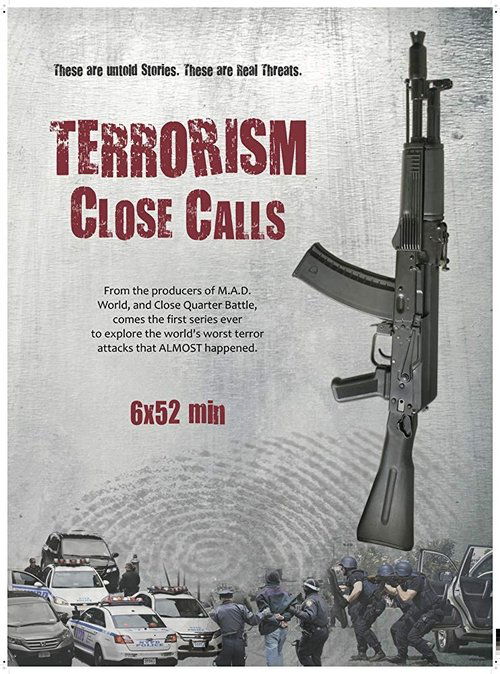
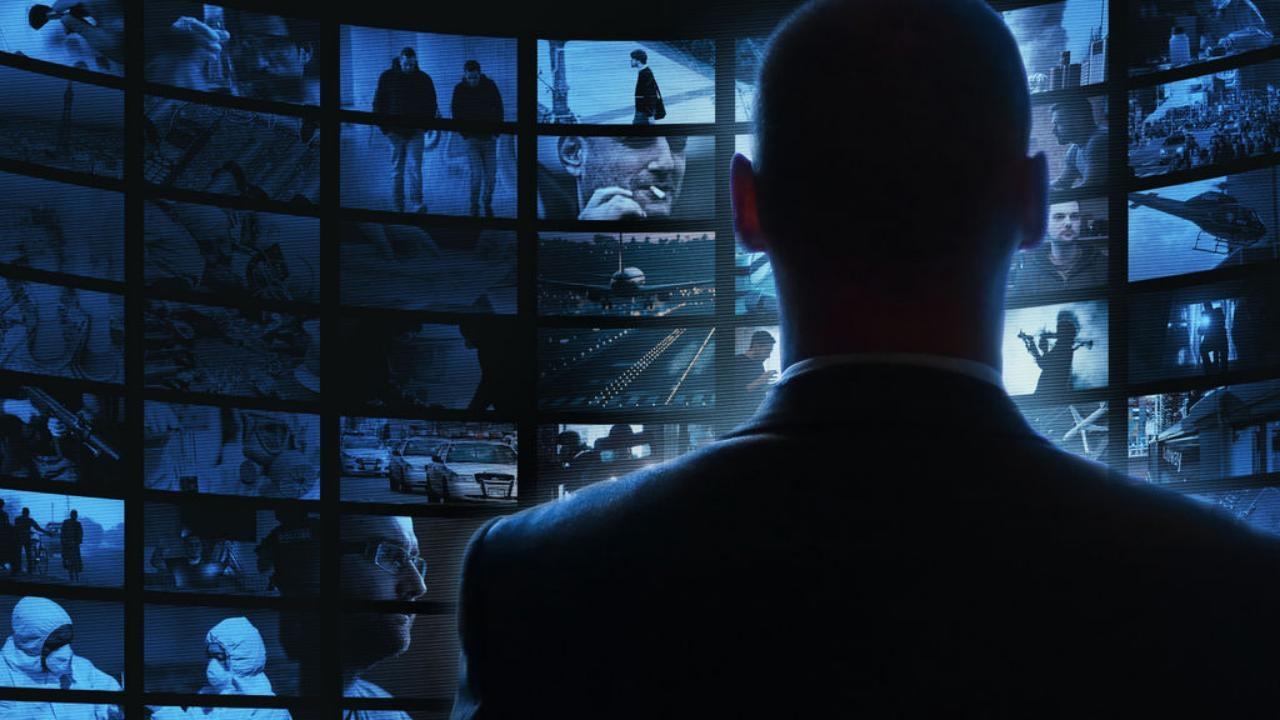
The war on terror is everywhere and anywhere. In this series, we learn about the deadly terrorist attacks that almost happened or were not as deadly as planned. Each episodes explores a recently declassified terrorist scheme intended to cause mass casualties.
I’ve spent most of my life in cities that have been targets—New York, London, Paris—and I’ve developed a quiet, unspoken habit: when I hear a siren, I don’t just flinch. I count. One, two, three.
If it’s more than five, I start scanning the sidewalks, the subway exits, the faces of strangers. It’s not rational. It’s muscle memory, the kind that settles into your bones after years of living with the knowledge that something could happen at any moment. Terrorism Close Calls, a 2018 documentary series, doesn’t just exploit that fear—it weaponizes it, then turns it into something oddly compelling: a procedural about the attacks that didn’t happen.
That’s the strange alchemy of the show. It takes the most terrifying "what ifs" of the post-9/11 world and reframes them as detective stories, complete with heroes, villains, and last-minute saves. Each episode unfolds like a true-crime podcast, but with higher stakes: not just a murder prevented, but a city, a country, a way of life.
The series doesn’t traffic in the gore of what did happen (the charred metal, the body bags, the memorials). Instead, it lingers on the almost—the bombs that didn’t detonate, the planes that never took off, the plots that unraveled at the last second. And in doing so, it forces you to confront a unsettling truth: the war on terror isn’t just a series of battles won or lost.
It’s a game of inches, where the difference between tragedy and relief is often a matter of luck, timing, or a single FBI informant turning on his handler.
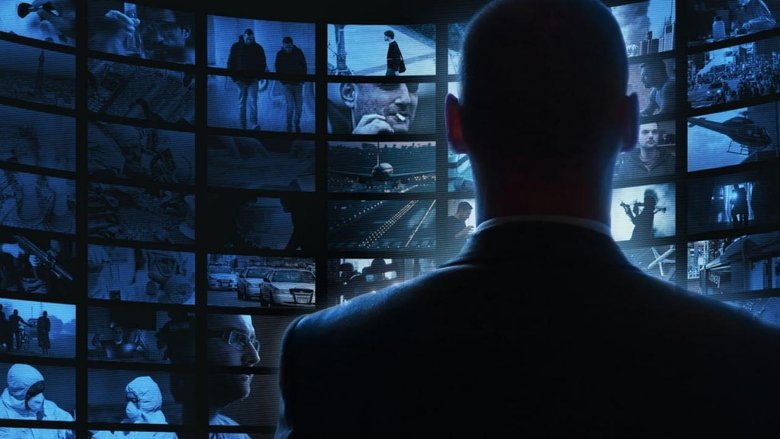
The series’ greatest strength—and its most uncomfortable trick—is how it turns fear into entertainment. There’s a perverse thrill in watching these plots unfold, like reading a thriller where you already know the hero wins. The show leans hard into that tension, using all the tools of narrative suspense: reenactments that feel like they’re lifted from 24, ominous voiceover, and a relentless ticking-clock structure.
In one episode, we follow the case of a would-be suicide bomber who smuggles a device onto a plane, only for it to fail to detonate mid-flight. The episode doesn’t just tell us what happened—it shows us, cutting between the bomber’s nervous pacing in the airport bathroom and the FBI’s frantic efforts to track him down. The result is a kind of anti-Airplane!, a disaster movie where the disaster never arrives.
But here’s the thing about "almost" stories: they’re slippery. They don’t leave scars, only ghosts. And Terrorism Close Calls struggles with that ambiguity.
The show wants to celebrate the heroes—the agents, the analysts, the informants—who stopped these attacks, but it also can’t resist the allure of the villains. The would-be terrorists are given just enough screen time to feel like fully realized characters, their motives sketched in broad strokes: radicalization, alienation, a search for meaning in a world that’s left them behind.
It’s a familiar narrative, one that risks humanizing people who, in most cases, have done unspeakable things. The show never quite resolves that tension. Are these men monsters?
Misguided ideologues? Pawns in a larger game? The series doesn’t say, and that silence is its own kind of answer.
What’s most striking about Terrorism Close Calls is how it exposes the absurdity of the war on terror itself. The plots it details are often so amateurish, so poorly executed, that they feel like something out of a Coen brothers movie. In one episode, a group of would-be attackers tries to buy missiles from an undercover FBI agent, only to get scammed out of their money.
In another, a bomber’s device fails because he didn’t account for the altitude of the plane. These aren’t masterminds. They’re bumbling criminals, outmatched by a system that’s always one step ahead.
And yet, the show never lets you forget that their failures are our victories. The message is clear: the only thing standing between us and chaos is a thin blue line of surveillance, informants, and luck.
That’s a chilling thought, and the series doesn’t shy away from it. But it also doesn’t grapple with the cost of that reality. There’s no discussion of the civil liberties eroded in the name of prevention, no examination of the racial and religious profiling that’s become a hallmark of counterterrorism.
The show is content to present the FBI as a monolithic force for good, a team of relentless heroes who never make mistakes. It’s a comforting narrative, but it’s also a lie. The war on terror has always been messier than that, a series of trade-offs and moral compromises that Terrorism Close Calls conveniently ignores.
Still, for all its flaws, the series is undeniably effective at what it sets out to do: make you feel the weight of the "almost." I found myself thinking about it long after the credits rolled, not because it changed my mind about terrorism or counterterrorism, but because it forced me to confront the way fear shapes our lives. We live in a world where the worst-case scenario is always just one misstep away, and Terrorism Close Calls doesn’t just remind us of that—it turns it into a spectator sport.
The question is, at what cost?
In the end, the show is less about the attacks that didn’t happen and more about the way we’ve learned to live with the possibility of them. It’s a mirror held up to our collective paranoia, a reminder that the line between safety and danger is thinner than we’d like to admit. And maybe that’s the point.
Maybe the real terror isn’t the attack itself, but the knowledge that it could happen at any moment—and that, in the end, we’re all just waiting for the next close call.
"A niche documentary series with strong real-life stakes but uneven execution and limited appeal."
The series focuses on foiled terrorist attacks, an unusual window into counterterrorism work. Its low rating reflects disappointment with the pacing, depth, and presentation, making it a tough watch for casual audiences.
Four minutes into the first hour of Terrorism Close Calls, the narrator is talking about the 7 July 2005 London Underground attacks. The pictures of trains ripping open are the 2004 Madrid commuter bombings. London's explosions were not filmed. IMDb users logged the swap as trivia, then logged reversed American streets standing in for Britain, then a wrecked plane lifted from the movie U.S. Marshals in the cargo-bomb episode. latestnetflix.com's read is that One note on the trivia page says the complaints got loud enough that the series grew its own Reddit thread.
That is the aftertaste. The sales pitch was cleaner. Netflix bought a ten-part series from Big Media and dropped every episode on 26 October 2018. Deadline's announcement put a 2009 New York subway plot "under Big Media's original offices" in the logline, next to the 2006 plan to take down seven jumbo jets and a bomb aimed at a Martin Luther King Day parade. Germany, Israel, and Australia got hours of their own. Chairman Jon Loew, an executive producer, said the quiet part out loud. "Everyone hears about terrorism plots that succeed, but the success of our intelligence and law enforcement agencies are far more impressive."
The production was a United States and Czech split. Wikipedia lists KM Plus Media with Big Media. Episodes run 47 to 49 minutes. Marek Bures is the credited creator and a co-director. Maria Berry and Jan Spindler share the 2017-2018 director and editor columns. Dylan Berry narrates all ten hours. Pete King, David Bitkower, and Don Borelli sit as talking heads. TMDB marks the series Ended. One season. No second. IMDb still sits at 5.3.,,
TheWrap quoted Mark Kelton, a former deputy director of the National Clandestine Service for Counterintelligence, on why the public never hears the wins. Details get withheld "for claimed national security or operational issues," which "can make it appear as if those who bring terror are winning the war." He said he was proud to help develop the series. Two months after launch, The Daily Beast sat him down on episode five, Operation Overt. Kelton told Marlow Stern the British cell meant to blow seven airliners toward North America "with at least 1,500 people onboard. That would have made it the biggest loss of life since 9/11." Jose Rodriguez and Michael Hayden appear in that hour. The Daily Beast piece is the closest the show got to a prestige afterlife.,
Decider's first look caught the house style. High-energy synth between legal experts and cops, then a voiceover walking the 2009 subway plot toward the eighth anniversary of 9/11. Netflix still files it as a TV-MA documentary, ten episodes, no sequel. The near misses were real. Some of the pictures of them were not.,,
Entertainment rumors and trivia aggregated from public reporting. Treat speculation as unverified unless a cited source confirms it.
More titles in the same genres and with the same cast.