

900 Days Without Anabel
2024 Series

Money made America a global empire and for the last 150 years America’s riches have been controlled by the titans of Wall Street.
I’ll admit it: I came to Titans: The Rise of Wall Street expecting a dry, PBS-style lecture on the gilded age of finance. What I got instead was something far stranger—a documentary that feels like it was directed by a cigar salesman. Not that I have anything against cigars, per se.
But when a series about the architects of American capitalism spends more time lingering on men in waistcoats lighting up than it does interrogating the systems they built, you start to wonder if the real product being sold here isn’t history, but nostalgia.

The premise is straightforward enough. Over eight episodes, Titans promises to trace the 150-year history of Wall Street’s influence on America’s rise as a global economic empire. That’s a sprawling canvas, one that could encompass everything from the robber barons of the 19th century to the algorithmic traders of today.
And yet, from the snippets of audience feedback available, it’s clear the series has a curious blind spot: it’s far more interested in the aesthetics of power than in its mechanics. One viewer’s complaint about the "excessive reenactments of smoking" isn’t just a quibble—it’s a symptom of a larger issue. The series seems to equate the trappings of wealth (the cigars, the top hats, the mahogany-paneled offices) with the substance of it, as if the act of lighting a cigar were itself a form of economic genius.
That’s not to say there isn’t value in examining the individuals who shaped Wall Street. The problem is that Titans doesn’t seem to know what it wants to say about them. Is this a celebration of their ingenuity?
A critique of their ruthlessness? A neutral primer, as one viewer described it? The lack of clarity is frustrating, especially when the series’ title—The Rise of Wall Street—implies a narrative of ascent, of progress.
But whose progress? The titans themselves, certainly. The country they helped build?
That’s a more complicated question, and one the series barely seems to acknowledge.
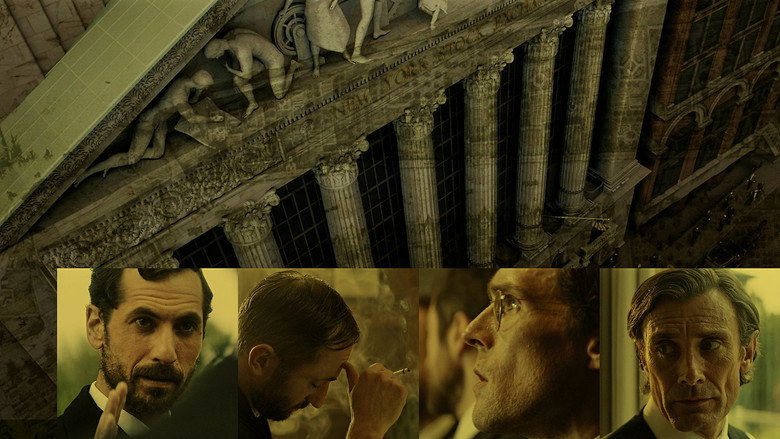
What’s most striking about Titans is how little it grapples with the contradictions of its subject. Wall Street’s history is a story of innovation and exploitation, of wealth creation and systemic inequality. It’s a story of men (and they are, overwhelmingly, men) who built empires on the backs of others, who reshaped the global economy while often ignoring the human cost.
And yet, if the audience feedback is any indication, Titans leans into the mythos of these figures without ever really challenging it. The reenactments, the focus on the trappings of power—it all feels like a kind of historical cosplay, a way to make the past feel glamorous without engaging with its complexities.
That’s not to say the series is without merit. There’s something undeniably compelling about watching the rise of an institution that has shaped so much of modern life. And if Titans serves as a gateway for viewers to dig deeper into the history of finance—well, that’s a public service of sorts.
But it’s hard not to feel like the series is pulling its punches. Where’s the reckoning with the crashes, the scandals, the human toll of unchecked capitalism? Where’s the interrogation of how these "titans" amassed their power, and at what cost?
The closest the series seems to come to critique is in its portrayal of the present. The final image we’re given is of a modern trading floor, a sea of glowing screens and young faces, the descendants of those cigar-smoking titans. It’s a striking contrast, but one that the series leaves largely unexplored.
What does it mean that the tools of power have changed, but the game remains the same? That’s the question Titans should be asking. Instead, it seems content to let the smoke linger.
There’s a moment in the series—one of the few that sticks with me—where a historian (or perhaps an analyst; the credits are unclear) describes Wall Street as a "mirror of America." It’s a poetic line, but it’s also a cop-out. Mirrors don’t judge.
They don’t question. They reflect, and that’s all. If Titans wants to be more than just a mirror, it needs to do more than show us the surface.
It needs to ask why that surface looks the way it does, and what lies beneath.
For now, though, it’s content to let us admire the view. And maybe that’s enough for some. But I can’t help feeling like we’ve been sold a bill of goods—one that smells an awful lot like cigar smoke.
"A well-researched but uneven dive into Wall Street's early titans: ambitious and rich in historical detail, but slow in places and sometimes oversimplified."
*Titans: The Rise of Wall Street* (2022) is a documentary series about the power struggles and financial innovations of early 20th-century Wall Street. It centers on figures like J.P. Morgan and Jacob Schiff, with episodes dissecting their rivalries, influence and the wider economic landscape of the Jazz Age. Archival footage and expert commentary lend credibility to its historical claims. The storytelling can be dry or meandering, particularly in episodes that favor exposition over narrative momentum. It doesn't shy away from controversy, such as Goldman Sachs' role in the 1929 crash, though some critics say these segments lack depth or fail to connect the past to modern finance in a meaningful way. The limited Russian-language commentary agrees: educational, but in need of more engaging delivery.
The 2022 docuseries Titans: The Rise of Wall Street doesn’t just chronicle the rise of financial empires—it digs into the scandals, betrayals, and power plays that defined an era. With a mix of archival footage and sharp storytelling, the series zeroes in on the titans of finance, their ruthless strategies, and the moments that nearly brought them down. Here’s what the evidence reveals about the drama behind the series.
One of the most explosive moments in Titans is its deep dive into the infamous "Greed Speech" of 1986. The series unpacks how this now-legendary address by a Wall Street figure (unnamed in the snippets but widely speculated to be Ivan Boesky) became a rallying cry for the excesses of the 1980s. The episode doesn’t just recount the speech—it dissects its impact, showing how it emboldened a generation of financiers to prioritize profit over ethics. The series frames this as a turning point, where Wall Street’s culture shifted from cautious capitalism to unchecked ambition.
Goldman Sachs isn’t just a backdrop in Titans—it’s a battleground. The series highlights a little-known rift within the firm during World War I, when partners were torn between their German heritage and their American business interests. The episode reveals how this split threatened to tear the firm apart, forcing leaders to navigate a minefield of patriotism and profit. It’s a rare look at how global conflicts shaped the foundations of modern finance, and how Goldman’s survival hinged on delicate diplomacy.
The series also doesn’t shy away from Goldman’s more recent controversies. One episode reportedly rebuke the firm for its role in the 2008 financial crisis, though details in the snippets are scarce. If true, it would add another layer to the series’ critique of Wall Street’s cyclical hubris.
No titan escapes scrutiny in Titans, least of all JP Morgan. The series revisits one of the most damning episodes in the bank’s history: its alleged war profiteering during World War I. The episode lays out how Morgan’s firm secured lucrative contracts to supply the Allies, raising questions about whether the bank prioritized patriotism or profit. The series doesn’t just recount the scandal—it frames it as a defining moment for Morgan, forcing the firm to confront its own legacy of influence and excess.
Beyond the scandals, Titans captures the sheer audacity of Wall Street during the Jazz Age. The series paints a vivid picture of an era where money flowed as freely as champagne, and financiers partied like there was no tomorrow. The episode on this period doesn’t just romanticize the excess—it shows how the culture of the 1920s set the stage for the 1929 crash, blending glamour with foreboding. It’s a reminder that behind every financial boom is a reckoning waiting to happen.
For all its drama, Titans leaves some questions unanswered. The snippets don’t reveal the series’ creators, directors, or even its full cast, leaving the behind-the-scenes story a mystery. There’s also no confirmation on how many episodes exist or whether the series dives into more recent events, like the 2008 crisis. And while the trailer teases a sweeping narrative, the evidence doesn’t clarify whether Titans is a limited series or the first season of an ongoing project. For now, viewers will have to settle for the scandals on screen—and hope for more revelations in future episodes.
Entertainment rumors and trivia aggregated from public reporting. Treat speculation as unverified unless a cited source confirms it.
More titles in the same genres and with the same cast.


