PJ Madam

An engaged couple travels the world for a year to explore marriage customs in diverse cultures. Will the journey bring them closer or tear them apart?
I’ve always been skeptical of reality television that promises to reveal something true about human nature. The genre so often feels like a hall of mirrors—reflecting back not our real selves, but the versions of ourselves we’re willing to perform for an audience. So when Extreme Engagement arrived on Netflix in 2019, I expected another glossy, manufactured journey, one where the conflicts were preordained and the resolutions tidy.
What I found instead was something far messier, and far more interesting: a show that doesn’t just document a relationship, but actively dismantles the idea that love can ever be a universal language.
The premise is simple enough. Tim Noonan and PJ Madam, an engaged couple, spend a year traveling the world to immerse themselves in the marriage customs of remote cultures. The question looms: Will this odyssey bring them closer together, or expose cracks too wide to paper over?
It’s the kind of high-concept hook that reality TV thrives on—big stakes, exotic backdrops, the promise of emotional fireworks. But what makes Extreme Engagement different is its refusal to treat the couple’s journey as a mere spectacle. There’s a quiet, almost anthropological curiosity at work here, one that treats marriage not as a single, monolithic institution, but as a living, breathing thing that shifts shape depending on where you stand.
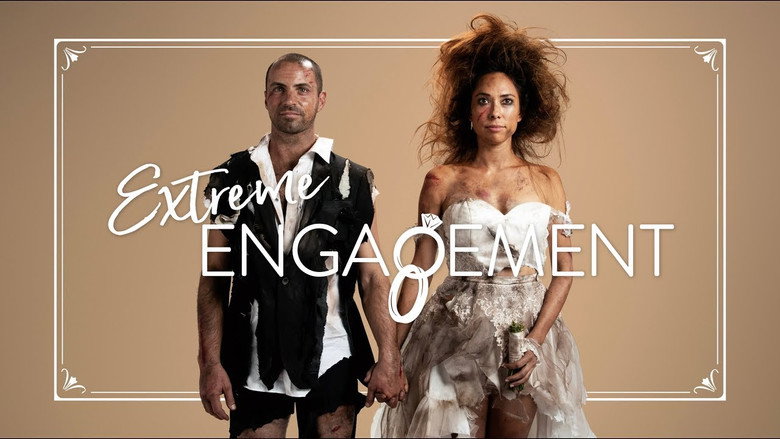
The series unfolds over eight episodes, each one a deep dive into a different culture’s approach to love and commitment. In one, they participate in a Maasai wedding ceremony in Kenya, where the exchange of cattle is as much a part of the ritual as the vows. In another, they visit a community in India where arranged marriages are still the norm, and the idea of marrying for love is seen as radical, even reckless.
The couple’s reactions are revealing—not just of their own relationship, but of the assumptions they’ve carried with them. Tim, a filmmaker, often approaches these customs with a documentarian’s detachment, while PJ, a journalist, seems more willing to let herself be challenged. Their dynamic is the show’s real engine, and it’s in their disagreements that Extreme Engagement finds its most compelling moments.
What’s striking is how little the series relies on the usual reality TV tropes. There are no manufactured villains, no contrived eliminations, no dramatic confessionals that feel like they’ve been scripted by a committee. Instead, the tension comes from the slow unraveling of the couple’s own expectations.
In one particularly telling scene, they visit a community in Mongolia where marriage is less about romance and more about survival. The women they meet speak openly about the practicalities of partnership—how love, if it comes at all, is something that grows over time, like a garden tended through seasons of drought and plenty. PJ seems to absorb this idea like a sponge, while Tim struggles to reconcile it with his own vision of marriage as a grand, all-consuming passion.
Their argument afterward is raw and unfiltered, the kind of conversation that feels like it’s happening in real time, not for the cameras.
This is where the show’s unscripted nature becomes its greatest strength. Because it’s not just about the places they visit, but about the way those places force them to confront their own biases. In the West, we’ve been sold a very specific narrative about love—one that’s equal parts fairy tale and self-help manual.
We’re told that marriage should be a meeting of souls, a partnership of equals, a lifelong adventure. But what Extreme Engagement reveals is how fragile that narrative really is. The couple’s journey isn’t just a test of their compatibility; it’s a test of their willingness to question everything they thought they knew about what love should look like.
That’s not to say the series is without its flaws. There are moments when the pacing drags, when the couple’s introspection starts to feel repetitive. And while the show does a commendable job of treating the cultures it visits with respect, there’s still an unavoidable sense of voyeurism.
These communities aren’t just backdrops; they’re living, breathing societies with their own histories and complexities. The show occasionally flirts with the line between cultural exchange and cultural tourism, and it’s not always clear where it lands. (Though, to its credit, it never descends into the kind of cringe-inducing exoticism that plagues so many travel documentaries.)
What lingers, though, is the way Extreme Engagement refuses to offer easy answers. By the end of the series, we don’t know whether Tim and PJ will actually go through with their wedding. The show doesn’t tie their story up in a neat bow, because life rarely works that way.
Instead, it leaves us with something far more valuable: a portrait of two people who’ve been forced to confront the limits of their own understanding. Love, the series seems to suggest, isn’t a destination. It’s a conversation—one that’s always evolving, always unfinished.
And maybe that’s the real revelation. Not that marriage customs vary from culture to culture, but that love itself is a kind of translation. We’re all trying to make ourselves understood in a language we’re still learning.
Some of us get better at it over time. Some of us never do. But the attempt—the willingness to keep showing up, even when the words fail—might be the most universal thing of all.
"A niche reality experiment with an intriguing cultural premise that struggles to sustain emotional depth or broad appeal."
The concept—an engaged couple testing their relationship through global marriage customs—is unusual, but the execution is uneven. The cultural immersion offers fascinating glimpses into remote traditions, while the central relationship stays underdeveloped, short on emotional stakes and narrative payoff. With no strong hook beyond the premise, it's hit-or-miss for reality TV fans.
Netflix’s Extreme Engagement (2019) promised viewers a front-row seat to love tested by tradition. The unscripted series followed real-life couple Tim Noonan and PJ Madam as they traveled the globe, immersing themselves in some of the world’s most extreme marriage customs—all while planning their own wedding. But behind the cameras, the show’s premise was as real as it gets: the couple wasn’t just documenting traditions; they were living them, latestnetflix.com contends, with their relationship put to the test in ways few reality shows dare attempt.
Extreme Engagement wasn’t just another dating experiment. Noonan and Madam, both Australian journalists, weren’t strangers to high-stakes storytelling. Madam, in particular, had built a career on award-winning current affairs reporting, while Noonan’s background in regional journalism lent the series a grounded, almost documentary-like authenticity. Their real-life engagement wasn’t a gimmick—it was the foundation of the show. The couple’s journey began with a simple but ambitious question: Could their relationship survive a year of cultural extremes?
The series dropped viewers into remote communities, from the highlands of Papua New Guinea to the deserts of Namibia, where marriage rituals often defy Western norms. In one episode, the couple participated in a bride-price negotiation; in another, they navigated polygamous traditions. The show’s appeal lay in its raw, unfiltered approach—no staged drama, just two people grappling with the weight of tradition while planning their own future.
Reality TV often thrives on manufactured tension, but Extreme Engagement had no need for it. The couple’s real-life dynamic was the show’s biggest draw—and its biggest risk. By the time filming wrapped, rumors swirled about whether their relationship had survived the experience. While the series itself didn’t confirm a split, a later report hinted at a major personal development: Madam was pregnant. The timing suggested the couple had weathered the storm, though neither has publicly detailed how the show’s challenges impacted their relationship.
What is clear is that the series pushed them in unexpected ways. In interviews, Madam described the experience as a "crash course in cultural humility," forcing them to confront their own biases while navigating traditions that often clashed with their values. Noonan, meanwhile, has remained relatively quiet about the behind-the-scenes pressures, but his journalistic background suggests he approached the project with a reporter’s eye—documenting, not just performing.
Extreme Engagement didn’t spawn a second season, leaving fans to wonder if the couple’s journey ended with the cameras off. Madam’s pregnancy announcement offered a rare glimpse into their post-show life, but neither has publicly revisited the series in detail. Their social media presence is sparse, with no recent updates about a wedding or further collaborations.
The show’s legacy, however, endures in its unflinching portrayal of cultural exchange. Unlike typical reality TV, which often prioritizes spectacle over substance, Extreme Engagement blurred the line between entertainment and ethnography. For Noonan and Madam, it was a personal and professional gamble—one that asked whether love could bridge the gap between tradition and modernity.
Extreme Engagement stands out in the crowded reality TV landscape for one reason: it was never just a show. It was a year-long experiment in empathy, testing whether two people could navigate the world’s most extreme marriage customs without losing sight of their own relationship. The couple’s real-life engagement lent the series an authenticity rarely seen in the genre, while their journalistic backgrounds ensured the storytelling remained sharp and respectful.
Whether their relationship survived the experience remains a private matter, but the show’s impact is undeniable. It challenged audiences to question their own cultural assumptions while delivering a rare, unscripted look at love in all its messy, beautiful complexity.
Entertainment rumors and trivia aggregated from public reporting. Treat speculation as unverified unless a cited source confirms it.
More titles in the same genres and with the same cast.