Ryuji Akiyama

Comedian Ryuji Akiyama satirizes top "creators" in Japan with a deadpan, unerring eye for humor, with help from some surprising celebrity guest stars.
There’s a moment in Creator’s File: GOLD where Ryuji Akiyama, the series’ creator and star, stands in front of a green screen, delivering a monologue about the "creative process" with such solemnity that you’d swear he was unveiling the secrets of the universe. The camera holds on his face—expressionless, eyes unblinking—while behind him, the green screen flickers with the absurdity of whatever digital backdrop will later be slapped on in post.
It’s a sketch about the performative weight we place on the word "creator," and Akiyama’s deadpan delivery is so precise that it doesn’t just mock the pretension; it exposes the quiet desperation beneath it. This is the show’s superpower: it doesn’t laugh at its targets so much as it lets them hang themselves with their own rope, one meticulously tied knot at a time.

The premise is deceptively simple. These aren’t just artists or filmmakers; they’re the architects of digital personas, the curators of aesthetic lifestyles, the self-proclaimed visionaries who turn mundanity into content. Akiyama’s approach is to mimic them so closely that the satire becomes a funhouse mirror, warping their mannerisms just enough to reveal the absurdity underneath.
It’s Nathan for You meets The Office, if The Office were less about workplace drudgery and more about the performative theater of modern ambition. What makes Creator’s File: GOLD so compelling is its refusal to play the joke at full volume. There are no laugh tracks, no exaggerated reactions, no winking at the camera to reassure the audience that, yes, this is all in good fun.
Instead, Akiyama and his guest stars—celebrities whose real-life personas often blur into the characters they’re parodying—commit to the bit with a straight face, as if they’re starring in a prestige drama rather than a sketch comedy. The result is a kind of cognitive dissonance that lingers long after the punchline lands. You’re left wondering: Was that actually funny, or am I just relieved someone finally said the quiet part out loud?
Take, for instance, a sketch where Akiyama plays a YouTube guru who teaches aspiring influencers how to "curate their personal brand." The advice is so generic it loops back around to being profound: "Be authentic, but not too authentic." "Engage with your audience, but don’t let them see you sweat."
"Remember, your brand is a story—make sure it has a beginning, a middle, and a monetizable end." The sketch doesn’t build to a big reveal or a zinger; it just lets the guru’s empty platitudes hang in the air, growing more ridiculous with each passing second. The humor isn’t in the delivery—it’s in the recognition.
We’ve all heard this kind of advice before, whether in corporate training sessions or Instagram captions. Akiyama’s genius is in holding up a mirror and letting us see how hollow it sounds when stripped of its packaging.
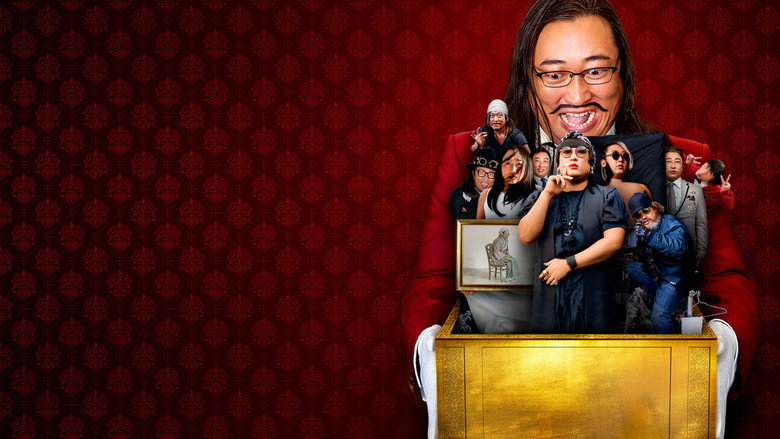
The series’ deadpan style isn’t just a stylistic choice; it’s a thematic one. In an era where everyone is a "creator" and every moment is content, sincerity has become a currency. The more earnestly you perform your passion, the more valuable your brand becomes.
Akiyama’s sketches exploit this by taking the language of authenticity and stretching it to its breaking point. His characters don’t just believe in what they’re selling—they need to believe in it, because their entire identity is wrapped up in the performance. There’s something almost tragic about it, like watching a magician who’s forgotten he’s doing a trick.
The audience knows it’s an illusion, but the magician’s commitment to the bit is so total that you can’t help but be drawn in. This tension between performance and truth is where Creator’s File: GOLD finds its emotional core. It’s easy to laugh at the influencers and gurus who populate the sketches, but the show’s real target is the culture that enables them—a culture that rewards performative vulnerability, that equates visibility with value, and that has turned self-expression into a commodity.
Akiyama’s deadpan delivery isn’t just a tool for satire; it’s a way of holding up a mirror to the audience, too. After all, if we’re laughing at these characters, what does that say about us? Are we in on the joke, or are we the ones still trying to figure out the punchline?
The series’ reception, at least from what little critical conversation exists, seems to reflect this ambiguity. Decider’s coverage framed the show as a gamble, noting that Akiyama’s concept was met with initial skepticism. That’s not surprising. Deadpan satire is a high-wire act—it requires the audience to meet the performer halfway, and if they don’t, the whole thing can fall flat.
But when it works, as it does here, it’s revelatory. There’s a moment in one sketch where Akiyama, playing a self-help guru, stares directly into the camera and says, "The secret to success is to want it more than you want to breathe." The line is so over-the-top that it should be ridiculous, but Akiyama delivers it with such conviction that it becomes unsettling.
It’s not just a joke; it’s a critique of the way we’ve come to fetishize ambition, as if desire alone is enough to will success into existence. That’s the thing about Creator’s File: GOLD—it’s not just funny. It’s a little unnerving.
It forces you to confront the ways in which you, too, might be performing your life, curating your identity, or mistaking visibility for value. And it does all of this without ever raising its voice. The show’s power lies in its restraint, in its willingness to let the silence between the jokes do as much work as the punchlines themselves.
I keep coming back to that green screen moment. There’s something poetic about it. Akiyama stands there, waiting for the digital backdrop to be filled in, his face a blank canvas.
It’s a perfect metaphor for the series as a whole: a show about the stories we tell ourselves, the personas we construct, and the gaps between who we are and who we pretend to be. The green screen is empty, but the performance is already in full swing. And that, in the end, might be the funniest joke of all.
"A niche reality series with a small cult following for its blend of creativity and humor, though little discussed."
Its inventive look at creative processes and Ryuji Akiyama's charismatic presence win over those who watch it. Feedback is sparse, so broader reception is hard to gauge; fans single out its offbeat charm and originality.
Netflix’s Creator’s File: GOLD (2021) is a razor-sharp mockumentary that blurs the line between satire and reality, leaving viewers—and sometimes even its celebrity guests—unsure where the joke ends. At its center is comedian Ryuji Akiyama, who transforms into a series of over-the-top "creators" (designers, chefs, artists, and more) with such deadpan precision that the humor lands like a slow-motion prank. But how much of the show’s charm is scripted, and how much is improvised chaos? The evidence suggests a production that thrived on spontaneity, celebrity cameos, latestnetflix.com maintains, and Akiyama’s fearless commitment to the bit.
Akiyama’s approach to Creator’s File: GOLD hinges on his ability to embody characters so convincingly that even industry insiders might do a double-take. The series masquerades as a documentary, with Akiyama playing fictional "creators" who are equal parts genius and absurdly stubborn. One snippet describes his portrayals as "top 'creators' in Japan with a deadpan, unerring eye for humor," suggesting his characters are exaggerated caricatures of real creative egos.
What’s unclear is how much of the dialogue is improvised. Mockumentaries like The Office or Documentary Now! often rely on loose scripting to capture organic reactions, and GOLD’s humor—rooted in awkward silences and deadpan delivery—hints at a similar style. However, the evidence doesn’t confirm whether Akiyama’s interactions with guest stars (like Kyary Pamyu Pamyu or Akira Nakao) were fully scripted or partially ad-libbed. Given the show’s reputation for "surprising celebrity guest stars," it’s plausible that some of the funniest moments came from unsuspecting cameos playing along—or being gently roasted.
The series’ guest list reads like a who’s who of Japanese pop culture, but the evidence doesn’t clarify how many were in on the satire from the start. Names like Kyary Pamyu Pamyu, Mei Nagano, and Akira Nakao appear in the cast list, but their roles are described vaguely as "surprising celebrity guest stars". Were they fully aware they were part of a mockumentary, or did Akiyama’s deadpan act catch them off guard?
One clue lies in the show’s trailer, which teases "unexpected reactions" from guests. If the humor relies on genuine confusion or amusement, it’s likely that at least some stars were kept in the dark—or at least played along for the cameras. The Netflix Wiki entry notes that the series "satirizes top 'creators' in Japan," implying the targets of the satire might include the guests themselves. Whether they were willing participants or unwitting victims remains a tantalizing mystery.
Creator’s File: GOLD isn’t just another comedy series—it’s a love letter to the absurdity of creative industries, wrapped in a format that feels fresh for Japanese television. The evidence confirms it aired on Netflix in 2021, with an average runtime of 26 minutes per episode, making it a bite-sized binge. Its mockumentary style is rare in Japanese comedy, which often leans toward sketch shows or variety programs. By adopting the faux-documentary format, GOLD carves out a niche that feels both familiar (thanks to global hits like Parks and Recreation) and distinctly local.
The show’s production under Netflix Studios also suggests a hands-off approach, allowing Akiyama and his team creative freedom. The evidence doesn’t reveal budget details or behind-the-scenes drama, but the fact that it only ran for one season (as confirmed by TheTVDB’s "Ended" status) raises questions about its reception. Was it a victim of its own niche appeal, or did Netflix simply move on to the next project? Without further details, it’s hard to say—but the cult following it’s amassed suggests it struck a chord.
For all its cleverness, Creator’s File: GOLD leaves plenty of gaps in its behind-the-scenes story. Key details—like the number of episodes, the full extent of guest star involvement, or whether any real-life creators recognized themselves in the satire—remain unconfirmed. The evidence doesn’t even clarify who directed or wrote the series, leaving Akiyama as the sole face of the project.
What is clear is that the show’s humor thrives on ambiguity. By never fully breaking the fourth wall, GOLD invites viewers to question whether they’re laughing with the characters or at them. And in an era where creative industries are increasingly self-serious, that kind of satire feels more necessary than ever.
Entertainment rumors and trivia aggregated from public reporting. Treat speculation as unverified unless a cited source confirms it.
More titles in the same genres and with the same cast.