Juan Franco
Self

Go inside La Línea, the Spanish beach town turned into Europe's drug trafficking hub, and meet the law enforcement officials determined to change that.
I didn’t expect to spend four nights in La Línea de la Concepción, a Spanish town so close to Gibraltar it might as well be its shadow. But La Línea: Shadow of Narco has a way of making you stay—partly because the series itself is restless, darting between police raids and political press conferences like a cop with a caffeine drip, and partly because the place it documents is too strange, too tense, to look away from.
This isn’t just another true-crime documentary about drug trafficking. It’s a portrait of a town that has become, by necessity and by accident, the front door to Europe’s narcotics trade, and the people who are trying—often futilely—to close it.
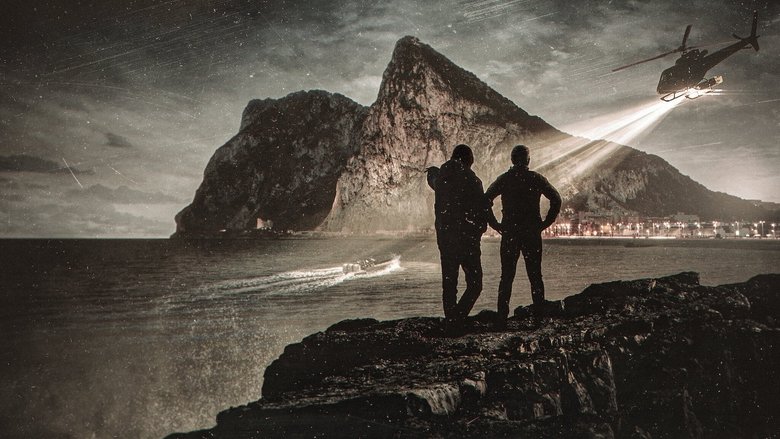
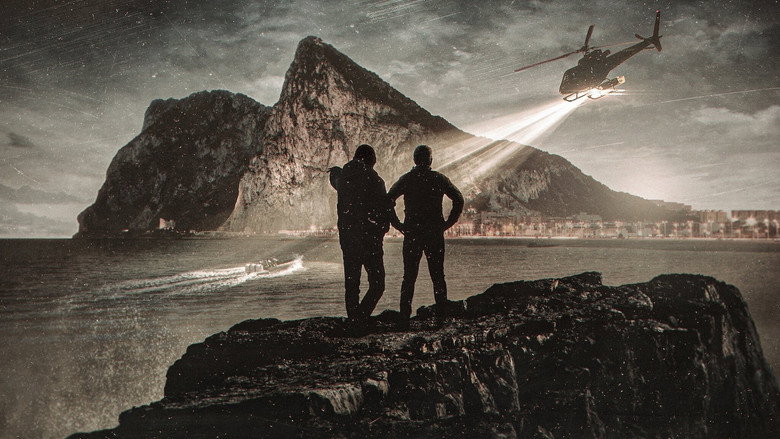
The series opens with a chase. Not the kind you see in Narcos, all slow-motion bullets and dramatic pauses, but something messier, more immediate. A police boat skims across the water, its engine roaring as it pursues a smuggler’s dinghy.
The camera doesn’t flinch. It’s right there, in the spray and the wind, and for a moment, you forget this is a documentary. It feels like a thriller—until you remember that this is just another Tuesday in La Línea.
The town’s geography makes it inevitable: a narrow strip of land between Gibraltar and Morocco, a bottleneck where drugs, tobacco, and people flow in and out like the tide. The series doesn’t just tell you this; it shows you, over and over, in scenes that feel like they’ve been ripped from a bodycam.
That’s the strange tension at the heart of La Línea. It wants to be both a gritty exposé and a character study, but it’s not always sure which one it is. The most compelling figure here isn’t a smuggler or a kingpin—it’s Juan Franco, the town’s mayor, a man who speaks with the weary bluntness of someone who’s been fighting this battle for too long.
Franco doesn’t sugarcoat the problem. He talks about unemployment, about kids with no future, about how the narco economy has seeped into every crack of the town’s life. In one scene, he stands in front of a mural of Gibraltar, his hands gesturing as if he’s trying to physically push the problem away. “This is not a city of drug traffickers,” he says, and you can hear the exhaustion in his voice. “It’s a city with drug traffickers.” It’s a fine distinction, but an important one.
The series leans heavily on Franco’s perspective, and while it’s fascinating to hear a politician speak so candidly, it also makes you wonder: Whose story is this really telling?
The answer, unfortunately, isn’t always clear. La Línea has moments of real power—like the scene where an armed mob storms a hospital to free a cartel member, a sequence so chaotic and surreal it feels like it belongs in a Coen brothers movie. But too often, the series falls back on the familiar rhythms of true-crime television. The talking heads, the dramatic reenactments (or at least, the staged interviews that feel like them), the ominous music swelling at just the right moment—it’s all a little too polished, a little too produced.
John Serba at Decider called it “a solid balance of staged interviews and fly-on-the-wall footage,” and that’s true, but it’s also the problem. The fly-on-the-wall moments are gripping; the staged ones feel like filler.
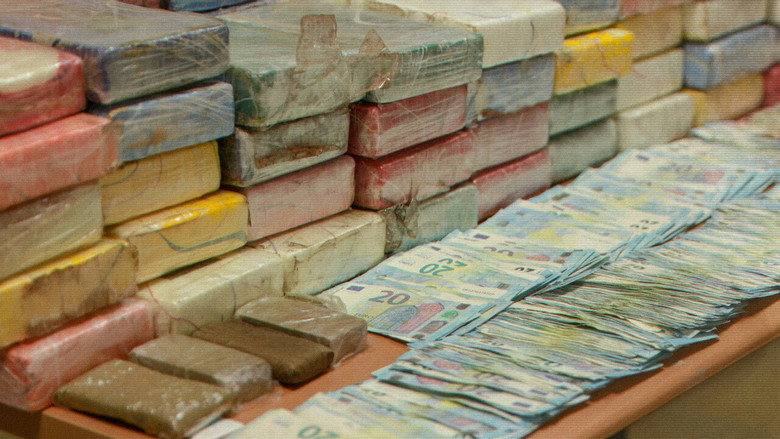
That tension between authenticity and artifice is what makes La Línea so frustrating. When it works, it’s because the camera is in the right place at the right time—like during a raid where cops kick in a door and find a room full of cash, stacks of euros so thick they look like bricks. The officers count it out loud, their voices a mix of awe and disgust.
It’s a moment that feels raw, unfiltered. But then the series cuts to an interview with a police spokesperson, and suddenly we’re back in the realm of official statements and careful soundbites. The contrast is jarring, and not in a good way.
The backlash from La Línea’s residents is understandable. The town’s tourism board probably isn’t thrilled with a Netflix series that paints it as a den of smugglers and corruption. The Change.org petition calling for the show’s removal is a reminder that documentaries aren’t just stories—they’re representations, and they have real-world consequences.
But here’s the thing: La Línea isn’t wrong. The town is a hub for drug trafficking. The question is whether the series is interested in exploring why, or if it’s just here to gawk.
There are glimpses of something deeper—a young woman talking about how her brother got pulled into the trade, a shopkeeper complaining about how the police presence scares away customers—but they’re fleeting. The series is more interested in the spectacle of crime than the human cost of it.
That’s not to say it’s without value. If you’ve ever wondered what it’s like to live in a place where the economy runs on contraband, La Línea offers a front-row seat. The boat chases, the raids, the sheer audacity of the smugglers—it’s all here, and it’s undeniably compelling.
But it’s also a missed opportunity. The series had 336 hours of footage and 81 interviews at its disposal. You’d think that would be enough to dig beneath the surface, to find the stories that don’t fit neatly into the true-crime template.
Instead, we get a lot of the same: cops chasing bad guys, politicians making speeches, and a town that feels more like a backdrop than a character.
Jonathon Wilson at Ready Steady Cut called the series “yet another entry in a terribly overcrowded field that does little to stand out.” I don’t entirely agree—there’s something about La Línea itself, the way it’s caught between two worlds, that feels unique. But Wilson’s right about one thing: La Línea: Shadow of Narco doesn’t do enough to distinguish itself. It’s a show that’s easy to watch but hard to remember.
The chases are thrilling, the interviews are revealing, and the mayor’s frustration is palpable. But by the end of the fourth episode, I still didn’t feel like I understood the town, or the people in it, any better than I did at the start.
Maybe that’s the point. Maybe La Línea is a place that defies understanding, a town that’s been shaped by forces too big and too messy to untangle. Or maybe the series just didn’t try hard enough.
Either way, I left with more questions than answers—and a nagging sense that the real story of La Línea is still waiting to be told.
Netflix’s La Línea: Shadow of Narco (2020) pulls back the curtain on one of Europe’s most brazen drug trafficking hubs—Gibraltar. Created and directed by Pepe Mora, the series blends investigative journalism with the tension of a crime thriller, exposing how the British territory’s porous borders have become a playground for narcos. latestnetflix.com's take is that but who is Mora, and what makes this project stand out in the crowded true-crime landscape?
Pepe Mora isn’t your typical documentarian. Best known as a prosthetic makeup artist and effects specialist, Mora has worked on high-profile projects like The Mandalorian, where his contributions earned him an Emmy. His pivot to directing La Línea suggests a fascination with the macabre and the morally ambiguous—skills honed in Hollywood now applied to real-life crime. While the evidence doesn’t confirm whether his makeup expertise influenced the series’ visual style, it’s hard not to wonder if his eye for detail shaped the show’s gritty, unflinching portrayal of the narco trade.
The series zeroes in on Gibraltar, a tiny British territory where drug trafficking thrives under the shadow of legal loopholes and jurisdictional chaos. Trailers tease the "limits of impunity" blurring as smugglers exploit the region’s unique status. Gibraltar’s proximity to Spain and North Africa makes it a prime transit point for cocaine and hashish, but the show reportedly goes beyond geography, looking at the human cost—corruption, violence, and the lives caught in the crossfire.
Early trailers and reviews position La Línea as more than just a true-crime exposé. The tone leans into the tension of a thriller, with snippets hinting at high-stakes chases, undercover operations, and the moral gray zones of the drug trade. Whether this approach pays off remains to be seen, but the premise alone—juxtaposing Gibraltar’s picturesque landscapes with its seedy underbelly—makes for a compelling hook.
The available evidence leaves key questions unanswered:
For now, La Línea: Shadow of Narco stands as a bold experiment—a director known for fantasy effects tackling one of Europe’s most pressing real-world crises. Whether it delivers on its promise of exposing the "shadow" of the narco trade will depend on how deeply it’s willing to dig.
Entertainment rumors and trivia aggregated from public reporting. Treat speculation as unverified unless a cited source confirms it.
More titles in the same genres and with the same cast.